
 •
Rating:
•
Rating:
THE REVIEW
Among the main proponents of that Swedish scene that between the late '80s and the early '90s shook the world's metal scene, Dismember have always been authentic champions of consistency or perhaps musicians completely unable to vary their formula. No one has ever really understood this.
They took their first steps in a Sweden whose national (and popular) idols were the heavily coiffed Europe, the five from Stockholm, together with their comrades Entombed, Grave and a thousand others, at least had the merit of shining a spotlight on a scene, the Swedish one precisely, that until that moment in the rock field seemed to have produced very little. Starting from the lessons of various Celtic Frost, Slayer, and Sodom, then all little more than teenagers, they managed, paradoxically also thanks to the lack of resources, to forge a sound so unique and particular that, in its own way, it would have set a standard, that of the Stockholm Scene. That deafening noise, made of hardcore, extreme metal, and Motorhead, would go on to define a way of understanding and living music, enjoying a good five years of success but at the same time showing a certain inability, at least on the part of the historic names, to renew themselves or at least attempt to modify and update that formula which at first had been so revolutionary. If the world around marched on and, in order, absorbed all the missed musical revolutions of the time, namely Grunge, Alternative/Post/Nu-Metal, Power Metal revival, and so on, in Stockholm and its surroundings it seemed to be eternally in a time limbo oscillating between 1990 and 1992. While on one hand, it's even nice that at least when you spend your money you already know what you're buying, on the other hand, one frankly has to wonder what sense there is in eternally playing the same record. In reality, it is not exactly like that, it's objective that here and there some changes of course have occurred over the years, for example, if the first "Like an Everflowing Stream" was "swedish" 100%, "Massive Killing Capacity" from 1995 showed some pleasant melodic openings and a more refined sound, while records like "Hate Campaign", recorded in lean years, were and remain superfluous.
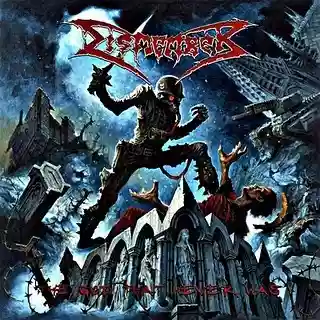
This "The God that Never Was," released in 2006, was one of the last outputs from Dismember before their breakup a few years ago and, despite being the seventh in their discography, it is also one of those that is listened to with the most pleasure, between reminiscences of the rawest vintage thrash and tributes, at the guitar level, to the eternal masters Judas Priest and Iron Maiden. An examination of the individual tracks would be useless, just as for a band like theirs, an analysis of every single album would be unnecessary, each time the umpteenth piece of a mosaic with well-defined outlines already from the start. After this record, paradoxically one of the most appreciable of a long and articulate discography, the band began to show signs of fatigue, with the historical drummer and founder Fred Estby leaving the sticks, effectively opening a crisis that would leave them, not before one last testament, the dignified "Dismember," in the limbo of total inactivity for several years: no records, no concerts, until the final farewells a couple of years ago. The Dismember thus were this: the postcard of an era as pioneering as it is romanticized today, made of cassette demos, rigorously sent by mail, photocopied fanzines, and dusty vinyl records, an era, and a sound, that they themselves have endlessly paid tribute to, unable, or perhaps simply not willing, to detach themselves from a stylistic model as fresh then as dated today, but in its own way still vital and exciting. Pioneers in their own way.
Fred Estby, drums Martin Persson, bass, guitars David Blomqvist, bass, guitars Matti Kärki, vocals
1. The God That Never Was 2. Shadows of the Mutilated 3. Time Heals Nothing 4. Autopsy 5. Never Forget, Never Forgive 6. Trail of the Dead 7. Phantoms (Of the Oath) 8. Into the Temple of Humiliation 9. Blood for Paradise 10. Feel the Darkness 11. Where No Ghost Is Holy
Loading comments slowly
Summary by Bot
Dismember's 'The God That Never Was' (2006) stands as a strong example of the band’s consistent Swedish death metal style. While the band never drastically changed their formula, this album balances raw thrash roots with nods to classic metal influences. Despite later signs of fatigue and lineup changes, this release remains one of their most enjoyable. The review highlights the band's significant role in the Stockholm metal scene and their dedication to a signature sound.Tracklist Lyrics Videos
Dismember
Dismember are a Swedish death metal band from Stockholm, formed in 1988 and central to the city’s pioneering scene alongside Entombed, Grave and Unleashed. Their 1991 debut Like an Ever Flowing Stream helped define the Sunlight Studios ‘chainsaw’ sound; highlights include Indecent & Obscene (1993) and Death Metal (1997). They disbanded in 2011 and reunited in 2019.10 Reviews
