
 •
Rating:
•
Rating:
THE REVIEW
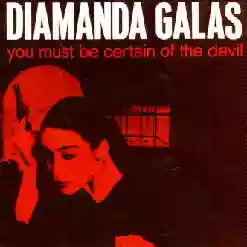
Diamanda Galàs is without a doubt one of the most original musicians and composers of our time, who has established herself with a strong personality and a complex message, often misunderstood due to attitudes and statements not shared by the media (in particular).
She is not very popular in the USA, where many minorities, including the Greek one—which she belongs to—are completely shut out of the system. After working exclusively in the avant-garde scene between the late '70s and '80s, between 1991 and 1994 with two albums like Plague Mass and The Sporting Life (written and performed with John Paul Jones), she was taken into consideration not only by the specialized press but also by an increasingly larger audience. In 1988, she reached a significant turning point by crafting, for the first time, songs much more similar to the canonical song form.
The attempt, sometimes forced, to fit her overwhelming nature into 4-5 minute tracks succeeds for the most part.
The single Double Barrel Prayer—her first single in her entire career—is the most striking demonstration of this new guise. At the conceptual level, it might seem like an attempt at commercializing the work, but the artist's quest still eludes such judgments.
In this LP, for the first time, besides having a properly "rock" band as support, she reinterprets two songs from the Afro-American tradition. Swing Low Sweet Chariot is the manifesto of the new Diamanda Galàs: an unparalleled soprano. An interpretation laden with tension and anguish for that song black slaves sang returning exhausted from the cotton fields.
Swing low, sweet chariot
Coming for to carry me home
Let My People Go, to which she brings some more personal modifications, is the only track accompanied only by the piano, with reminiscences that are sometimes gothic, sometimes more "epic" than usual. Looking at her original tracks, one always notices a versatile approach to vocality, marked by arrangements that are very different from one track to another. The single probably makes one think of some nightclub with goth/flashy cravings, the title track to a circus full of improbable gospel choristers, Malediction instead veers towards unexpectedly funky tones. The only thing to criticize is probably the length: only 8 tracks.
An album that probably the more rock-oriented singer-songwriters of the '90s know very well.
Loading comments slowly
Summary by Bot
Diamanda Galás delivers one of her most original and complex works with 'You Must Be Certain Of The Devil.' This album marks her transition to more structured songs, featuring rock influences and powerful reinterpretations of traditional Afro-American songs. While the short tracklist leaves some longing, the album's intensity and vocal versatility are undeniable. It appeals especially to fans of experimental and avant-garde music.Tracklist Lyrics Videos
Diamanda Galás
Diamanda Galás (born 1955) is a Greek-American singer, composer, and pianist known for extreme extended vocal techniques, avant-garde performance, and politically charged works addressing themes such as madness, illness, death, and war.16 Reviews
