
 •
Rating:
•
Rating:
THE REVIEW
The Devo are one of those historical groups, but for some reason, they are often, if not forgotten, relegated to the background among music enthusiasts. Yet at least their wonderful debut, "Q:Are we not men?...“ is an album that, in my opinion, has nothing to envy from the masterpieces of more renowned bands in the genre, such as Joy Division or Talking Heads (this latter band, incidentally, had many points of contact with our group).
Perhaps, however, remaining too faithful to their motto of de-evolution*, they gradually began to soften, as often happens with the waning of youthful fervor, their sound in search of a greater audience response. Not that in their early days they were at the level of the complexity of Pop Group or Pere Ubu, but their new-wave was a nifty energy mix, a neurotic, lively, and in some ways cold and robotic rock (krafwerkian inspirations, indeed, are not lacking).
The second album, even though partly abandoning the punk neuroses to move more towards synthesizers, is a worthy successor, albeit inferior to the first. But it is the third album that marks the most profound shift, pushing even more towards pop, and for one last time, melody and sophistication will still manage to coexist in a precarious balance. Still, from the next one, Devo will increasingly aim to become a ridiculous synth-pop band, where they were once avant-garde and fiercely satirical.
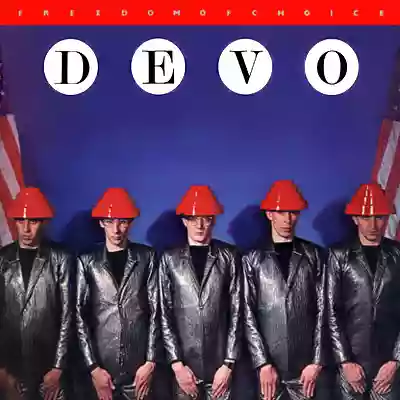
Now, despite these perhaps excessively harsh criticisms suggesting otherwise, the album in question is not at all bad; rather, it remains very enjoyable in its intelligent disengagement; for many, it is even the band's best album (even though this is probably mostly among casual music listeners, not hardcore enthusiasts like us DeBaserioti), and moreover, the one capable of giving the group their first and only real great hit with the general public, namely "Whip it“ (which indeed led to their drift into the treacherous waters of commercial music, in an attempt to replicate its success), and in the end, all the elements remain, albeit slightly diluted, that made "Are we not men?“ great. It's a shame it didn't last; but instead of losing ourselves in the regret of what might have been, but wasn't, let's rediscover and enjoy instead the first masterpiece, as well as the two excellent subsequent records from this great, though inconsistent, formation.
*Well, the term explains itself quite well, but for those who don't know, I'll specify: Devo claimed that the world, contrary to what is commonly stated, was going backwards and gradually devolving, hence the whole deal with costumes, synchronized and robotic movements, social critique, alienation, reification, homogenization, etc., etc.; yes, more or less always the usual stuff claimed by those who criticize the system, but with a more intriguing and choreographed concept.
Loading comments slowly
Summary by Bot
Devo's 'Freedom Of Choice' marks a significant shift towards synth-pop while maintaining intelligent satire and melody. Though not as groundbreaking as their debut, it remains an enjoyable and influential record. The album features 'Whip It,' their greatest commercial success, reflecting their transition to a broader audience. Despite mixed critical views, it is appreciated for its unique blend of robotic energy and pop sophistication.Tracklist Lyrics Videos
Devo
Devo is an American band from Akron, Ohio, known for a conceptual “de-evolution” philosophy expressed through satirical, robotic new wave that emerged in the 1970s and helped shape the era’s audiovisual language.12 Reviews
