 •
Rating:
•
Rating:
THE REVIEW
One never composes with one's own neuroses. And considering that Devin Townsend is notoriously a rather bizarre character, constantly tormented by his ill-defined psychotic paranoias, we could describe his works as highly personal catharses. At least from an objective point of view. What you might perceive subjectively by listening to this album, unfortunately, cannot be conveyed in a few lines.
The Canadian, who is a superb singer and guitarist, was also hired by Steve Vai for the recordings of "Sex And Religion," only later earning acclaim among metallers with his violent "Strapping Young Lad."
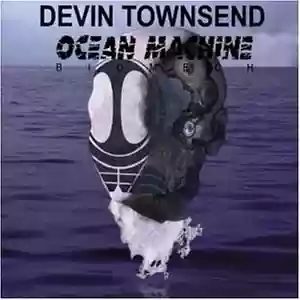
"Ocean Machine" (1997, but released in 2000 in Italy) marks the beginning of his most joyful artistic period: from this album onwards, he will also pursue (alongside heavier productions) a greater exploration of sound and melody. "The Ocean Machine" is a composition that is, at times, insistent, as exemplified by the splendid "Life." In other moments, it decisively overwhelms the perceptions of those who allow themselves to be carried away by its sound, evocative of images and memories of uncertain journeys, both physical and mental. In pieces like "Funeral," one can appreciate arrangements specifically built around an idea of perpetual and monolithic movement. That of ocean waves, to which the opening riffs of "Funeral" refer, or the paths traced by the bridges of "Voices In The Fan." In "Greetings," the guitars open once again, leading us with almost “Mozartian” audacity towards the airy effects of the refrains.
Personally, I find the vocal interpretation of "The Death Of Music" truly personal and profound: an almost chill-out episode that begins very quietly and offers almost ethereal atmospheres. The album opens by quoting the verses of Alfred Tennyson, a nineteenth-century English poet (or at least that's what Google decreed). A “voice from the abyss” recites the verses heralding a storm: "Oh Earth, what changes hast thou seen? There, where the long street roars Hath been the stillness of the sensual sea The hills are shadows And they flow from form to form And nothing stands like clouds That shape themselves and go". Devin's guitars begin to thunder. The movement described by the rhythms is slow and undulatory. It proceeds increasingly insistent, but never filtered by “stoner-like” effects such as “big muff.” Then the refrains advance, glimmers of light among the clouds dense with the rhythmic tapestry described above. And so it goes until the luminous refrains of the already mentioned "Life." I could go on at length, but it's useless to attempt to sketch the description of such an un-stereotypical feeling.
Focusing on the subsequent chapters of what is now called the “Devin Townsend Band,” one notices that the allure of the atmospheres in this CD remains almost entirely unmatched. The subsequent releases also contain flashes of genius here and there (by the way, a new album, "Synchestra," has just been released), but this "Ocean Machine" can be classified as a true masterpiece.
Perhaps not very well known, Townsend deserves to be heard at least by rock lovers.
Loading comments slowly
Summary by Bot
Devin Townsend's Ocean Machine: Biomech is described as a highly personal and cathartic work blending powerful compositions with evocative and atmospheric elements. The album is praised for its unique sound exploration and deep emotional layers, highlighted by standout tracks like "Life" and "The Death of Music." Considered a true masterpiece, it marks the start of Townsend's joyful and melodic artistic period.Tracklist Lyrics Videos
Devin Townsend
Devin Townsend is a Canadian musician, singer, songwriter, multi-instrumentalist, and record producer. After recording with Steve Vai in the early 1990s, he founded the extreme metal band Strapping Young Lad and launched a prolific solo career, including the Devin Townsend Project. He is known for genre-blending, expansive production, and a distinctive vocal range.06 Reviews
