
 •
Rating:
•
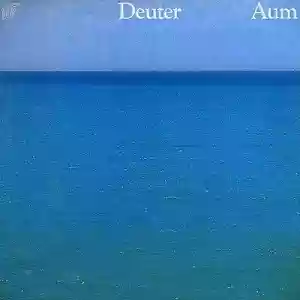
Rating: Aum is an album that does not assert itself: it emerges slowly, like a breath that finds its rhythm only after making space for itself in silence. Released in 1972, it is Georg Deuter’s second work and marks a crucial turning point in his artistic trajectory, suspended between the most free and experimental era of krautrock and an already deeply meditative sonic vision, destined to flourish in the following years under the label – then still entirely undefined – of New Age.
Compared to his debut D, which was more instinctive and psychedelic, Aum appears as a more introspective work. The compositions unfold as continuous suites, yet they are constructed from fragments, from moods, from inner images. There is no sense of rock urgency, no desire for narrative progression: instead, the music seems to follow a circular, ritual movement, inviting deep listening and a suspension of time.
The beginning is almost imperceptible: natural sounds, distant echoes, acoustic strings that surface like discreet presences. From here, Deuter builds a sonic landscape in which Western instruments and Eastern influences coexist without hierarchy. Flutes, sitar, tribal percussion, and primitive electronics do not converse according to traditional compositional logic, but overlap like layers of consciousness. The result is never descriptive; rather, it is evocative: instead of leading the listener, the music walks alongside them.
When rhythm emerges, it does so in a hypnotic and insistent form. The percussion takes on an almost shamanic character, while the electronic drones create a static backdrop, only apparently cold, that favors a state of concentration and surrender. There is no conflict, but inner tension; no climax, but a slow perceptual transformation.
Side B, occupied by a single long suite, represents the album’s most immersive moment. This is where Aum fully unfolds its hypnotic strength: a long central stretch dominated by bass and guitar treated with echo, accompanied by sea sounds and aquatic reflections, creates a temporal suspension that many remember as the emotional peak of the album. Ocean waves, acoustic guitars, deep pulses and expansive electronics intertwine in a continuous flow that seems to follow the rhythm of breath. Here and there, flashes of electric guitar and crystalline chimes emerge, like signposts that orient the journey without ever interrupting it. The ending, dominated by the sitar, does not truly close: it dissolves.
Aum clearly anticipates the meditative and contemplative music that will make Deuter a central figure in New Age, but still retains a certain shadow, a rawness at its core that makes it more restless and profound than much of his later output. It’s no surprise that for many listeners this album became a formative companion, discovered at a young age as a doorway to a new sensibility capable of uniting introspection and perceptual openness. It’s a record that does not seek to relax, but to prepare: for listening, for concentration, for presence.
This is not an album for background or quick consumption. Aum requires time, silence, and willingness, but rewards with the feeling of encountering a work surprisingly ahead of its time for 1972, the product of a creativity that was free and not yet tamed by genres or market expectations.
Listened to all the way through, Aum ceases to be a simple record and takes the shape of a sonic ritual: a slow crossing, made up of repetitions, fades, and returns, that leads towards an inner space more than towards a conclusion. It promises neither sudden illuminations nor spectacular catharsis, but a dim and persistent light that only ignites for those willing to walk without haste. This is music that does not accompany the journey: it is the journey.
Tracklist and Videos
Loading comments slowly
