
 •
Rating:
•
Rating:
THE REVIEW
Delirium have never been just another band on the Italian music scene. Born in Genoa in the early '70s, able to delve into the heart of prog while also making it to the pop charts with “Jesahel”, they’ve always remained a kind of dual creature: on one side, the historical legend of Italian progressive, on the other a band that has resurfaced in waves over time, with new lineups and fresh ideas, up to the current incarnation I.P.G.
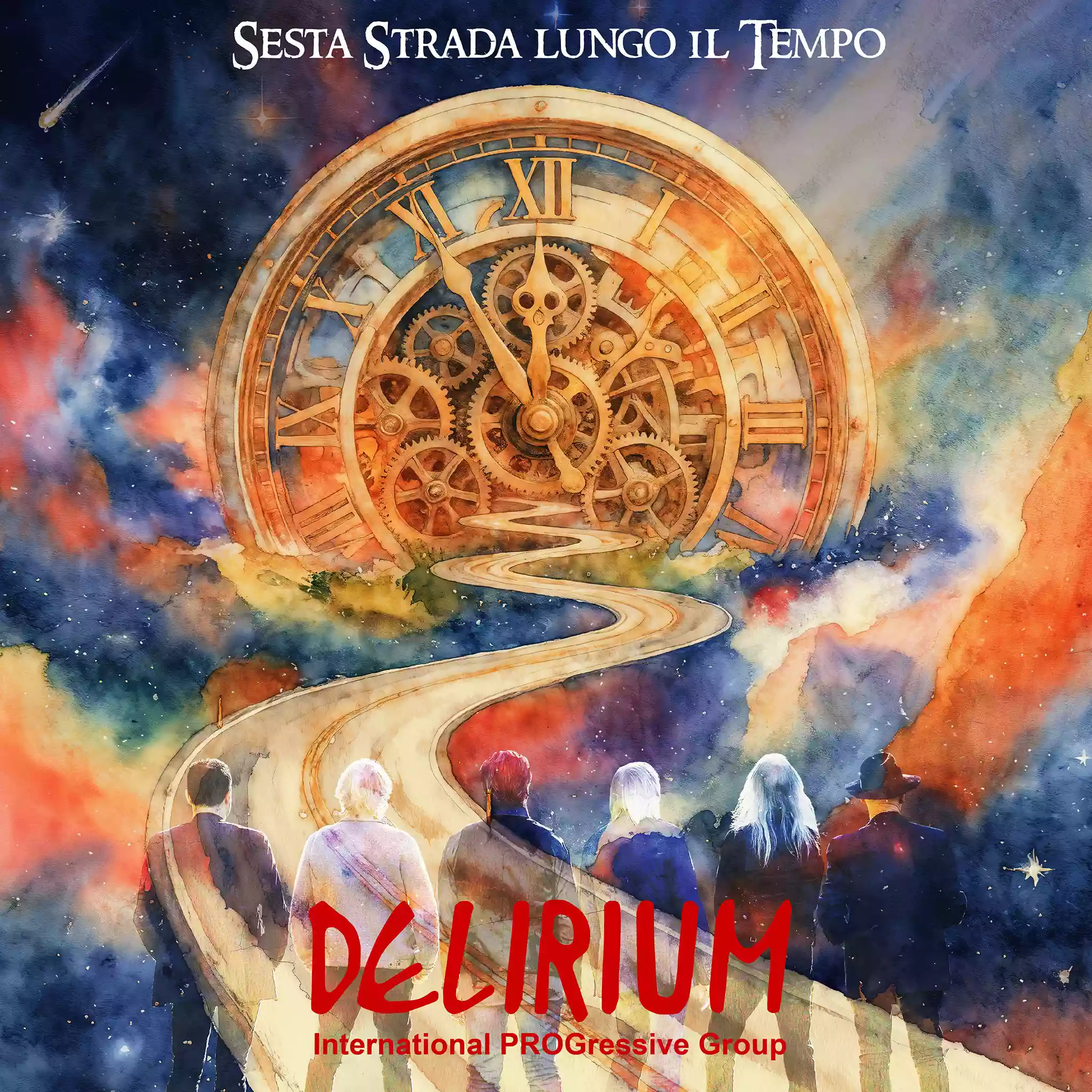
With Sesta Strada lungo il Tempo we find ourselves faced with an album that doesn’t even try to hide its intentions: telling stories, crossing through lives, bringing together characters and fragments of existence within the great theme of passing time. And it does so with a very “old school” approach, but not simply out of nostalgia: here prog is still a narrative, almost theatrical, form. The opening is already a pretty clear statement. “Schiavo della Viltà” is a suite of around 22 minutes, and it’s the true core of the album. You’ll find everything inside: changes in atmosphere, sections that feel like small, separate movements, spoken parts, symphonic openings, and that typical Delirium writing style alternating more lyrical moments with tense, dynamic ones. It's not just a “long” song: it’s truly constructed as a mini-opera.
From there, the album moves into more “human” episodes, if we can put it that way: “Io Clochard”, “Il Riposo del Pirata”, “Parole nel Vento”. All titles that, even on their own, paint a picture of the street, marginality, journeys, people out of sync. It’s as if the album observes time not from above, but from the roadside. Musically, the group works because they don’t try to update themselves in a forced way. Ettore Vigo’s keyboards and Martin Grice’s woodwinds keep the historical roots alive, while guitars and the rhythm section provide a more modern push, without betraying the original spirit. The vocals often shift into a narrative rather than strictly “sung” register, which really aids the concept album dimension.
The production by Black Widow Records is clean but not polished to excess, and this works in the album’s favor: it doesn’t sound plastic, maintaining a physicality that suits this kind of storytelling.
This isn’t an album aiming for surprise or revolution. Nor does it want to be. Sesta Strada lungo il Tempo is more a work of continuity: it takes what Delirium have always been and puts it back into circulation, with an opening suite that serves as a kind of manifesto, and the rest flowing like a collection of connected tales.
In the end, Delirium keep doing what they’ve always done best: telling time’s tale without trying to chase it.
Loading comments slowly
Summary by Bot
The review offers an in-depth look at Delirium's latest album, 'Sesta Strada lungo il Tempo.' It highlights the group’s successful blend of international influences in progressive rock. The reviewer praises the musicality and evolution in the band's sound. A 4 out of 5 rating suggests the album is impressive but not without minor flaws. Recommended for fans of sophisticated, international progressive music.
DELIRIUM (International Progressive Group)
Delirium are an Italian progressive rock group formed in Genoa in the early 1970s. Known for the hit “Jesahel”, they blend theatrical, narrative prog with melodic sensibilities and have continued activity in various lineups, including the current I.P.G. incarnation.00 Reviews
