
 •
Rating:
•
Rating:
THE REVIEW
Flipping through the pages of this spectacular compendium of words describing sounds, I realized that I'm missing. And above all, one of the memories of my adolescence is missing: what I propose is not a genre I listen to, the Deep Purple is not a band I follow, The Book Of Taliesyn is not commercially among their best albums, and it's certainly not the most enjoyable on a first listen.
So? - you might say - So I would still like to take you back in time to (re)listen to this sublime example of music thoughtfully written and interpreted "generously". It was my current bassist who gave me a tape containing this album from 1968 (the album, not the tape). I don't remember the emotions I felt on the first listenings, but it's an album that got into my veins, and listening to it again, I feel the pleasant and reassuring sensation I get from touching my woman's backside.
When I speak of "generosity," I mean the ability of a band to give and expose themselves shamelessly and uncensored, that air of "good the first time!" after a rough but unrepeatable take in a somewhat boozy recording studio. And speaking of studio details: this is THE ALBUM of the first historic lineup known as Mark I: Evans on vocals, Blackmore on guitar, Simper on bass, Lord on organ, and Paice on drums.
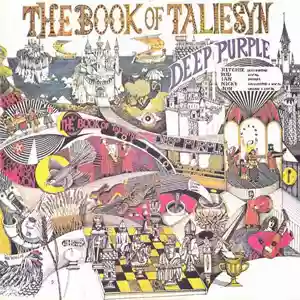
The frame has some unsettling references to medieval bards, ancient books, and the court of King Arthur, complete with a cover that looks like a work by Hieronymus Bosch. We all know how low Blackmore has gone in recent times with that damn medieval mania... Anyway, back to the record, here and there we find scattered, along with original pieces, some reinterpretations in a typically Deep Purple-esque or Deep-purplian key, whatever suits you.
Just for pedantry's sake (I don't think it's needed) to define the style of Deep Purple Mark I, suffice it to say that on the powerful rhythm base, Lord and Blackmore's intertwining becomes increasingly consciously complementary, two musicians coming from a classical background but with a modern taste for experimenting with sounds and aggressive tempo changes and atmospheres that gradually free themselves from the rotten beat common to early Pink Floyd and also from the neoclassicism that the situation would impose. Perhaps this is the infinite grace of this album: maintaining a precariously delicate balance between new and traditional, between hard rock and beat, between psychedelia and neoclassicism. In short, there's no point in listing musical genre names that ultimately fail to convey the idea of a not at all cohesive and coherent work.
How can you not love Evans' echo-filled voice in the first track? In "Listen, Learn, Read On" (you gotta turn the page, read the Book of Taliesyn!) there's already everything and the opposite of everything: the very recognizable rhythm section, Lord here limits himself to supporting the harmonic structure for Blackmore's elemental riffs and... my God, his solos of absolute delight, always seeking the fifty-fifth note or something like that. As for the track's lyrics, it's better to leave it be, a total idiocy, but I suppose it falls within the concept of "shamelessly giving themselves."
Anthem is one of Deep Purple's best pieces in my opinion: dark atmospheres, excellent melody and harmony even if a bit baroque, excellent execution aided by orchestral accompaniment, the great Lord here takes the upper hand.
Hard Road (Wring That Neck) is a fun yet virtuous blues jam that live often became a monstrous 30-minute piece, here the particular interplay that Lord and Blackmore could create is more noticeable, responding to and recalling each other and returning to the main theme to add something more each time. Shield is another of the best progressive pieces where you can enjoy all the different band members giving their all: very suggestive, excellent harmonies permeated by that playful air that lightens up and makes everything sublime.
More standard, however, among the covers, is Kentucky Woman, an interpretation that had more success in the USA and presents a more canonical and perhaps more radio-friendly hard rock. Exposition/We Can Work It Out is another acidified cover with a completely unnecessary intro attached, nothing particularly exciting except for the playful spirit with which the five tackle a "standard."
I conclude this first review of mine with the cover I've always dreamed of having recorded myself: River Deep Mountain High, which begins with a quote from the famous "Also Spracht Zarathustra" by Strauss. In my opinion, here the entire spirit of the album is summarized, and something more is added to Blackmore's guitar's fascinating personality, my personal hero: we follow him drawing wide circles that gradually shrink, rise and fall hypnotically to dissolve in breathtaking dives, always in a constant balance on the verge of dissonance and who knows what modal scales unknown to us. A rebirth.
Well, I know that my attachment to every single note just described is something beyond music, but I hope I've piqued your curiosity. This album is often underestimated due to the "haste" with which it was produced, but by doing so, one makes the same hateful mistake: the "haste" in judgment.
Loading comments slowly
Summary by Bot
This review highlights Deep Purple's 1968 album The Book of Taliesyn as an experimental and generous work by the Mark I lineup. It describes the album's unique blend of hard rock, psychedelia, and neoclassical elements, emphasizing standout tracks and band interplay. Although not their most commercially successful album, it captures a raw and captivating musical spirit. The reviewer expresses a deep nostalgic and emotional connection to the album, encouraging listeners to appreciate its nuances and artistry.Tracklist Lyrics Videos
Deep Purple
English rock band formed in 1968, pioneers of hard rock. Best-known for classic lineups (notably Mark II) and landmark releases such as Machine Head and the live double Made in Japan.82 Reviews
