
 •
Rating:
•
Rating:
THE REVIEW
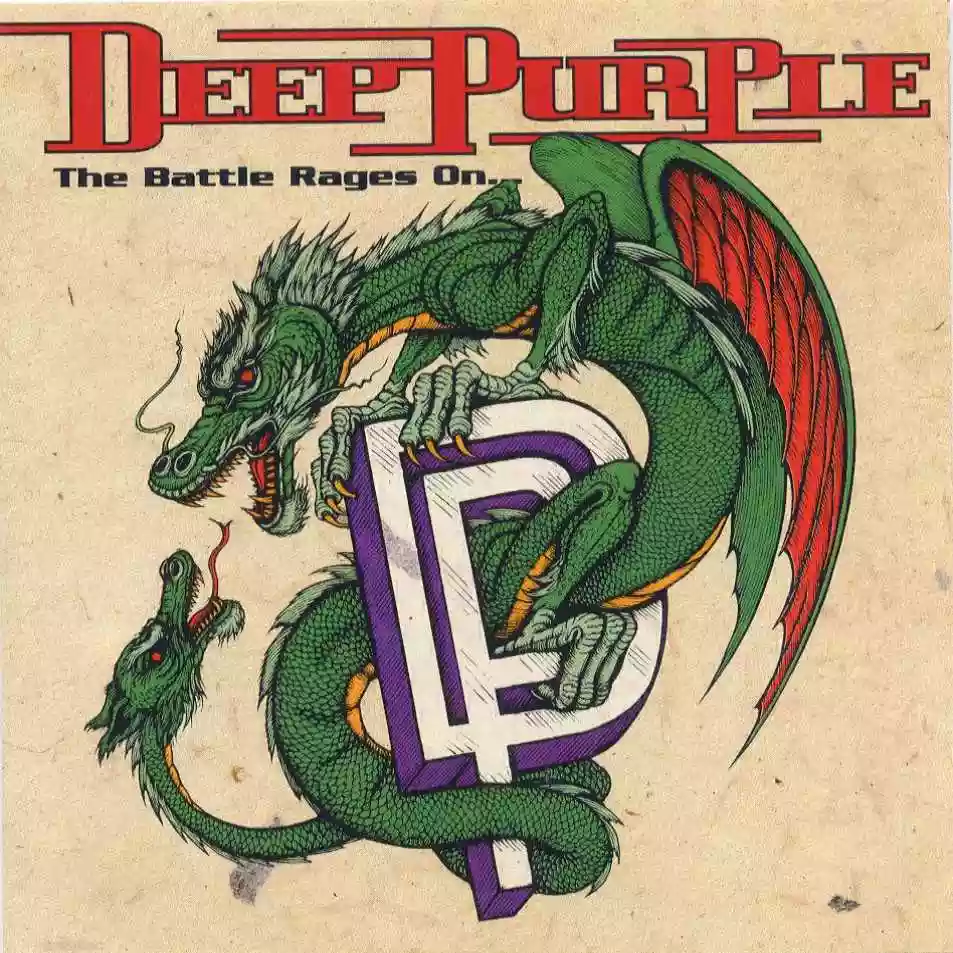
Here we go again. Deep Purple can't remain stable for three years. "The Battle Rages On..." was already ready in 1993 when Lord, Glover, and Paice preferred to fire the controversial Turner to bring back the old friend Gillan. Imagine how happily Blackmore might have received this decision. Even Gillan himself declared several times that he wasn't very happy to return with the Man In Black, expressing it with phrases like: "When Joe Lynn Turner was fired from the group, the other members, except for Blackmore, started pressing me to return with them. At the time, I thought I would slit my throat rather than return with Deep Purple." With all these premises, "The Battle Rages On..." promises to be a disappointing work due to the internal disagreements. Instead, the Mk. IIc gives us a worthy last record halfway between the epic and the blues.The title track seems to recall the influences of "Perfect Stranger." This type of track will be the main subject of the subsequent and last album of Rainbow: "Stranger Us All." In the second track, we find a song dense with blues nuances: "Lick It Up." The overall judgment is mediocre due to the imperfect combination of the track with Gillan's voice. The peak of the album is reached with the next song: "Anya." Blackmore introduces it with one of his majestic phrasings. Then Lord comes strongly with a breathtaking melody. In all the 6 plus minutes, it doesn't drop in level. Splendid! Also, note a similarity (not blatant) with "Ariel," also from "Stranger Us All." These details aim to show that the main inspirer and composer of the pieces is indeed the Man In Black.
The album does not drop in level. "Talk About Love" is supported by a solid riff, the guitar riff that introduces it. The song then develops with Paice accompanying it with a very "bluesy" rhythm. For those who did not fully appreciate the previous work "Slaves And Masters," "Time To Kill" will not satisfy much, as the song was certainly written for Turner and only at the last moment replaced by Gillan's voice. Underwhelming track.
"Ramshackle Man" is a classic piece in which Lord first, and then Blackmore, unleash all their blues influences. Good work, but nothing more. The next "Twist In The Tale" is surprising. The track proposes itself at a sustained pace with a good dose of aggression that was still missing from this CD. To listen to!
"Nasty Piece Of Work," track 8, sees Gillan engaged in a song halfway between the epic and the blues rhythms that, however, result in mediocre. Note that in this and the next two tracks, Gillan significantly exploits the double recording of the voice in two tones. One low and the other an octave higher. The best effect is with "Solitaire," the last majestic track worthy of this lineup. Usually, Gillan adapted poorly to such songs; here, he instead proves to be up to it and to move, despite having lost his biting voice for years. To conclude the CD is "One Man's Meat" characterized, once again, by blues rhythms and cadences.
The duration of this mark is practically irrelevant. And it was evident that coexistence between Gillan and Blackmore was almost impossible. But the interesting thing is that the breakup was testified by a DVD ("Come Hell Or High Water") indeed, almost to show the whole world how much Blackmore couldn't take it anymore and how definitive the separation was. Let me describe the initial scene, which is hilarious: Paice starts "Highway Star" with his classic drum roll, and gradually Glover and Lord join in. Gillan enters and runs from side to side of the stage. The track starts, but Blackmore isn't there! Like a true lunatic, he lets the four poor souls play until it's time for his classic solo when he finally deigns to enter and alternates glances from the white Strat to Gillan. Besides appearing really upset, he heads towards the camera, which was strangely being used by Gillan's girlfriend, and throws a glass of beer at it.
Blackmore will leave Deep Purple immediately after just a few days, and what happens after is now known to all.
Loading comments slowly
Summary by Bot
This review of Deep Purple's album The Battle Rages On highlights the band's persistent lineup instability, especially the return of Ian Gillan amid tensions with Ritchie Blackmore. Musically, the album blends epic and blues influences with some standout tracks like 'Anya' and 'Solitaire.' Despite some mediocre moments and an imperfect fit between vocals and songs, the record remains a worthy final chapter for this lineup. The review also recounts memorable backstage conflicts that led to Blackmore's departure.Tracklist Lyrics Videos
Deep Purple
English rock band formed in 1968, pioneers of hard rock. Best-known for classic lineups (notably Mark II) and landmark releases such as Machine Head and the live double Made in Japan.82 Reviews
Other reviews
By claudio carpentieri
Listening to this album gives us the certainty of being pleasantly inundated by a well-crafted hard rock product closely tied to the publications of the previous decade.
Blackmore’s enchanting acoustic introduction leads us by the hand into 'Anya,' ... the most beautiful track on the album.
