
 •
Rating:
•
Rating:
THE REVIEW
A mere five years have passed since Ritchie Blackmore and Jon Lord went on June 4, 1969, to the Ivy Lodge Club in Woodford, London, to listen to Episode Six and seek confirmation of the praises sung by their friend (and member of Episode Six), Mick Underwood, in favor of a then-little-known singer named Ian Gillan.
Six albums - from the first "Concerto For Group And Orchestra" to the latest studio album "Who Do We Think We Are" - have been released, becoming a delightful feast for critics and the public alike, united by the pleasure of finally paying attention to a band capable of naturally transfiguring a simple riff and a neat harmonic structure into an epic and exuberant sound, which will shape the distinctive traits on which to build its own unmistakable sound emblem. A simplicity accompanied by a brilliant capacity for improvisation (mostly on guitar and keyboards) during live performances, helping the band to distance itself from overzealous but commendable "forms of noise" typical of bands like Pink Floyd or even Cream, showcasing awe-inspiring performance and compositional skills that are, in any case, undeniable. The indisputable professional calibre of Deep Purple's Mark II, which has brought together professional musicians with an uncontrollable inclination to always look forward, and which, unfortunately, over time, cemented the internal disagreements between Blackmore (supported by Lord), Gillan, and Glover, leading the latter two to leave the band.
The fact remains that none of the remaining members ever thought such a situation would lead to a definitive breakup, preparing for auditions of new musicians as well as listening to the numerous demo tapes arriving at the record label. The first choice falls on Glenn Hughes, bassist and vocals for Trapeze - already active with some albums - making Blackmore consider moving forward with the band without the need for a singer-diva, if it weren't for the silent determination of Lord to further explore the knowledge of that young provincial with a passionate and roaring voice who until then worked in a boutique in Redcar (Yorkshire) and who will go down in history as David Coverdale.
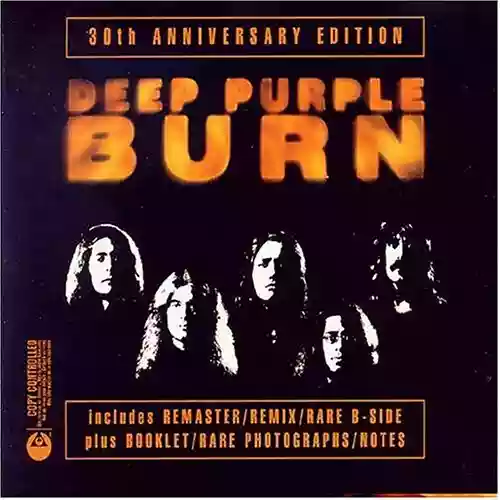
With the last recruitment and after regaining determination, flair, and vibrancy, the new Deep Purple enter the studio in November 1973 to finally put on tape the much-anticipated successor to the honest "Who Do We Think We Are," which will see the light in the following February. There is no doubt that it is Purple's intention to set things straight right away with the rousing introduction of the title track, almost as if to claim they are back to stay. The song develops around extraordinary duets between guitar and keyboard, with the support of the powerful rhythm section, alternating Coverdale's roars and Hughes' modulated shouts tackling a lyric (initially titled "The Road") that recalls fires and curses (The sky is red, I don't understand, past midnight I still see the land. People are sayin' the woman is damned, she makes you burn with a wave of her hand. The city's a
Loading comments slowly
Summary by Bot
This review highlights Deep Purple's 1974 album Burn as a powerful return after lineup changes, introducing David Coverdale and Glenn Hughes. The album showcases strong guitar and keyboard interplay with energetic vocals. The band maintains their signature sound while evolving, reinforcing Deep Purple's place in rock history. The song 'Burn' is praised for its dynamic performance and lyrical imagery.Tracklist Lyrics Videos
Deep Purple
English rock band formed in 1968, pioneers of hard rock. Best-known for classic lineups (notably Mark II) and landmark releases such as Machine Head and the live double Made in Japan.82 Reviews
Other reviews
By Jy
We are immediately 'attacked' by the deadly riff of the title track, BURN.
This piece is a lava flow of pure hard rock, where one can notice a devastating rhythmic carpet by Paice and a series of truly unmissable guitar-keyboard duels.
By matteowolf
It’s Burn, one of the most powerful hard-rock tracks, a heroic gallop that seems to be Blackmore’s first real nod to his Renaissance-Music project.
This very slow blues... starts with a masterful Blackmore riff, continues with Coverdale’s wonderful and heart-wrenching singing, perfectly aligning with the lyrics about a broken heart.
By luludia
If rock’n’roll is a good and proper thing, the hard stuff of the seventies is just a game of ‘mine is bigger than yours.’
That scream is a beautiful thing, otherwise it ends like in certain nightmares where you want to scream, but you can’t.
