
 •
Rating:
•
Rating:
THE REVIEW
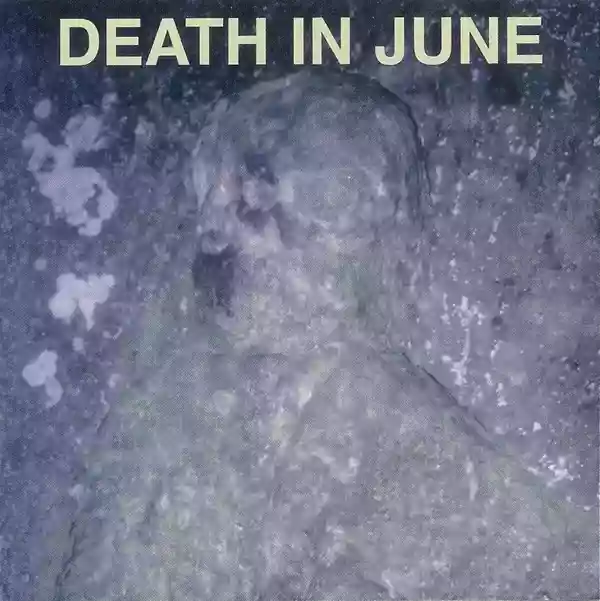
In 1998, Death In June reached the peak of their career. The stunning Rose Clouds Of Holocaust had been released 3 years earlier, further confirming Douglas P.'s increasingly introspective vein, who over time had carved out the congenial role of a "chansonnier" in black. The music was an apocalyptic folk of crystalline purity that, at that moment, had reached its formal perfection. In 1996, the excellent Kapo! had been released in collaboration with Richard Leviathan of Ostara and Strength Through Joy. Thus, there was a lot of anticipation among the followers of Death In June for the release of the new album. However, when they listened to it, at best they were baffled, and at worst they were disappointed. What happened was that Douglas P., perhaps running out of inspiration, decided to seek the help of Albin Julius of Der Blutharsch, at the time a champion of uncompromising martial-industrial. The iconography of Blutharsch was right-wing with references to fascism and Nazism, aspects that created quite a few controversies for this project. Musically, the result tips the scale towards Blutharsch so much that, even today, I consider Take Care And Control to be the best album ever released by Albin Julius. Therefore, we find the samples and orchestrations that had characterized his sound up to that point. However, on a symbolic and existential reference level, Douglas P.'s hand is undeniably felt. The first part of the album is stunning: "Smashed to Bits (in the Peace of the Night)" is epic, tragic, and esoteric with its apocalyptic orchestrations, while "Little Blue Butterfly" is more subdued with the presence of ethnic elements. There is also a quote from Fassbinder's film Querelle of Brest, taken from the book by Jean Genet, a fetish author for Douglas P. and gay culture. "The Bunker" is a track of infinite sadness with its desolate atmospheres that, though speaking of war, almost turns into a praise of misanthropy. With "Kameradschaft," we finally find the classic Death In June-style ballad, and it is no coincidence that the song will be repeatedly performed live. The second part is slightly inferior and sounds more tired, although there are gems like the long "The November Men," very atmospheric, and "The Odin Hour." The closing (very much in Blutharsch style) is entrusted to the fascist march of "Circo Massimo." The collaboration between the two will continue in the following (and always good) Operation Hummingbird, and then their paths will diverge. Currently, it even seems that the leader of Death In June has disowned these works. A pity, because personally, I liked this album immediately: I was fascinated by its esoteric and decadent atmosphere in which the spirit of Death In June hovered strongly.
Loading comments slowly
Summary by Bot
Released in 1998, 'Take Care and Control' marks a significant yet controversial collaboration between Death In June and Albin Julius of Der Blutharsch. While some fans were baffled or disappointed, the album features a unique blend of apocalyptic folk and martial-industrial sounds. Its esoteric and decadent atmosphere captures Douglas P.'s introspective style. The first half stands out with powerful tracks, while the second half is slightly less impactful but still notable. This album remains a personal favorite despite mixed receptions.Tracklist
01 Smashed to Bits (In the Peace of the Night) (04:48)
02 Little Blue Butterfly (04:04)
03 The Bunker (03:08)
04 Kameradschaft (04:22)
05 Frost Flowers (03:10)
06 A Slaughter of Roses (03:13)
07 The November Men (07:43)
08 Power Has a Fragrance (03:46)
09 Despair (02:23)
10 The Odin Hour (03:59)
11 The Bunker, Empty (02:56)
12 Wolf Angel (02:59)
13 Circo Massimo (06:16)
Death in June
British music project led by Douglas Pearce (Douglas P.), formed in 1981, known for apocalyptic folk, martial/post-punk inflections, influential 1980s–1990s albums and contentious wartime imagery.36 Reviews
