
 •
Rating:
•
Rating:
THE REVIEW
"Stage." The White Duke had almost completed the Berlin puzzle. One might even say that the heart of the Central European mosaic had already been put into action.
This live album documents the tour following the release of "Heroes" in 1977. However, to fully understand it, one must briefly consider the two preceding albums, in which the Duke entered the European avant-garde scene, developing mechanistic suggestions derived, in the musical field, from a certain "common feeling" towards a modern world (imagined as) devoid of humanism, crushed by the omnipresence of artificial creatures and the atomic nightmare. These trends, or needs of the soul, could not find expression in America; Europe was required; and it is here that Bowie decides to move, after the soul binge.
In Paris, he recorded most of "Low," with Brian Eno providing the final touch, and then in Berlin, Hansa by the wall, with Robert Fripp and Brian Eno (from the start, however). The intellectual humus found fertile ground in Germany, especially (but not solely) in the classical works of Kraftwerk and Neu!; artistically, the reference is certainly Orwell, cybernetics, and the depiction of the world à la "Metropolis." Needless to say, Berlin masterfully encapsulated these cultural urges, in the contradictions existing between an aristocratic past, yet completely destroyed, and a present marked by the tragedy of the Wall: in short, the kind of air that must have been breathed in 4th-century Rome, as described by Thomas Couture in "The Romans of the Decadence," displayed at the Orsay, just to give an idea. Furthermore, Bowie, not yet the White Duke, had a soft spot for such themes: see "Drive-in Saturday" or the album "Diamond Dogs."
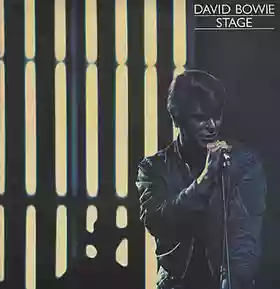
"Stage," released in 1978, is nothing more than the live testament of this ideal environment. We find Bowie perfectly at ease, portraying the role of a detached post-modern intellectual. He appears before the audience in very wide pants, a white shirt, and a vaguely thirties hairstyle. A style, in short, that enhances the prevailing attitude throughout the concert: the aloof and aristocratic detachment, icy atmosphere, and formal perfection.
The tracks presented by the Duke come primarily from "Low" and "Heroes," apart from the segment dedicated to the mythical Ziggy Stardust. There are also instrumental compositions performed that, on the two mentioned albums, were found on the B-sides, including "Warsawa," "Sense of Doubt," and "Art Decade." Not missing, on the other hand, are the most representative pieces of Bowie as the Duke, such as "Speed of Life", the opening track from "Low"; "Heroes," simply one of the most moving love songs of all time, and "Beauty and the Beast," built on a simple riff, with cold keyboard gusts chasing each other. Not to mention the tormented "Breaking Glass," immersed in (plastic) soul reminiscences and a decided robotic pace.
The end of the concert, unfortunately not of the disc, was entrusted to the manifesto song "Station to Station," here masterfully performed. Composed and recorded in America, it encapsulates and embodies the cry of love for old Europe: "It’s not the side effects of the cocaine, I think it must be love […] the European Cannon is here!"
Behind the icy suggestions, the album oozes emotions, not easy to describe. Music rarely translates into images as in this case… hence the above need for references.
Sincerely, Lautrec
Loading comments slowly
Summary by Bot
The review highlights David Bowie’s 1978 live album 'Stage' as a powerful testament to his Berlin-era evolution. It emphasizes the album’s connection to avant-garde themes and the contrast between cold mechanistic sounds and emotional depth. Featuring key tracks from Low, Heroes, and Ziggy Stardust, the album portrays Bowie’s detached yet aristocratic stage persona. The live recording encapsulates the complex cultural atmosphere of Europe during this period.
David Bowie
David Bowie (David Robert Jones) was an English singer, songwriter and actor famed for continual reinvention and theatrical personas. A pivotal figure in glam rock, he later shaped art-rock and electronic music with the Berlin Trilogy (with Brian Eno and Tony Visconti). His final album, Blackstar, appeared in 2016 shortly before his death.110 Reviews
