
 •
Rating:
•
Rating:
THE REVIEW
A Passing Snapshot
or cover-girls for BowieWhat is "Pinups"?
Pinups, like the young ladies who proudly and boldly flaunted their soft nude bodies to Playboy readers each month. Pinups, like the young actresses who for little money winked from the glossy pages. Pinups, like the girls who waved the handkerchief to signal the start of a deadly motorcycle race. Pinups, like the actresses in Elvis films, or the starlets who flooded post-war tabloids.
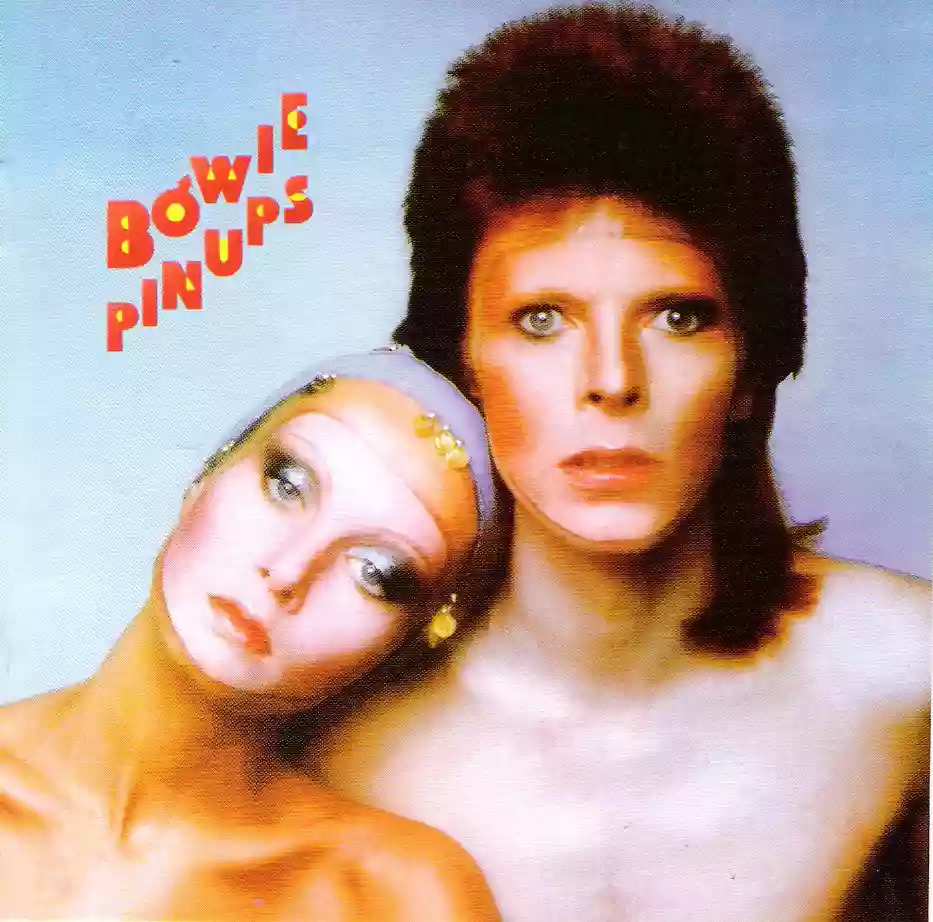
"Pinups", according to David Bowie, are the '60s, which means the most underrated covers of his entire career. The album (1973) seems forcedly nestled into the journey of the English artist, furthermore appearing monotonous and weak when compared to the illustrious predecessors and the subsequent history of transformations. Listening closely and turning up the volume, I wonder if this record could be considered an ideal transition from the arrogant glam-rock of "Aladdin Sane" to the decadent soul of "Diamond Dogs" and then "Young Americans". Indeed, all the elements that made the musical aspect of the Ziggy Stardust character unique are present, but also previews of the turn to the "Philly sound." Compact and distorted guitars, falsetto vocals, and string dissonances are accompanied by saxophones played full throttle, raucous screams, and at times slightly funky rhythms. He sheds the drugged ghosts of his mod period by throwing the Pink Floyd of Syd Barrett, the Yardbirds, the Who, the Easybeats, and the Kinks—just to mention the most famous ones—into the meat grinder of his rough and roaring arrangements. The screeching pick that transitions from "Rosalyn" by the Pretty Things to "Here Comes The Night" joins a comic and intermittent scream, and the effect is sublime, much like the subsequent entrance of the horns. "See Emily Play" truly sounds grotesque, its tail remains psychedelic and absurd thanks to the free-jazz digressions of the great pianist Mike Garson. Tracks like "Everything's Alright" or "Friday On My Mind", halfway between boogie and paranoia, entertain and make one dance: is "Pinups" nothing more than a joke? Or is it the cornerstone of the glam evolution? Perhaps not, not all the tracks measure up: "I Can't Explain", "Don't Bring Me Down", "Shapes Of Things", and "Where Have All The Good Times Gone" feel like a caprice dismissed too quickly. . . but who are we to judge such a refined and roguish game at the same time? And then there's "Sorrow", unforgettable, languid, velvety, like Bowie's gaze as he approaches Amanda Lear in the crazed filming of the "1980 Floor Show" (1973 Midnight Special, The Marquee Club).
So what is "Pinups"? The hallucinated duet with Marianne Faithfull, a perfect and poisonous kitsch fruit unfortunately absent from the album? A farewell to the simplicity and innocence of the early '70s? A gaze that can no longer hold up to the camera and sinks into an abyss of illusions? The androgynous washed-out portrait of Bowie and Twiggy or Norma Jean Baker, who perhaps deserved the Oscar? What is "Pinups?"
from "See Emily Play" (Syd Barrett)
"Emily tries but misunderstands
She's often inclined to borrow somebody’s dreams
until tomorrow (. . . )
Immediately after dark Emily cries
Gazing through trees in sorrow, silent until tomorrow (. . . )
Wears a dress made of mist flowing down to the ground
Drifted on by a river forever and ever
Emily"
(from Velvet Goldmine)
Loading comments slowly
Summary by Bot
David Bowie's 'Pinups' is a cover album highlighting underrated '60s classics, serving as a bridge between his glam-rock phase and his later soul influences. The album showcases distorted guitars, falsetto vocals, and energetic saxophones, blending Bowie’s unique style with tracks from bands like the Yardbirds and the Kinks. While some songs feel like fleeting whims, others such as 'Sorrow' are unforgettable highlights. Overall, 'Pinups' is an intriguing snapshot of Bowie’s evolving artistry.Tracklist Lyrics
David Bowie
English singer-songwriter and actor David Bowie (born David Robert Jones, 1947–2016) was a pioneering, genre‑shifting artist known for his personas, musical experimentation and a career spanning pop, rock and avant‑garde projects.109 Reviews
