
 •
Rating:
•
Rating:
THE REVIEW
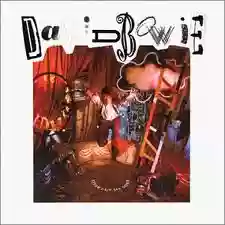
Summer 1987. A time when, as a 17-year-old acne-ridden teenager disinterested in any sporting event, I would transform my parents' allowance into vinyl and cassette tapes in a nanosecond, as did my peers. It was precisely then that I returned home triumphant with the Duke's latest LP, hand in hand with my inseparable friend Sandro. I don't think my peers need to make an extra effort of imagination to go back to those roaring years. So, I undressed the record from the cellophane and placed it on the turntable, positioning the needle on the first groove.
An "alienating" refrain rose from the speakers, shouting "Day in day out" punctuated by the most reverberated snare drum ever and an imposing layer of synths and improbable horns from which, occasionally, a sharp solo by a young Pete Frampton emerged. Sandro and I looked at each other with disappointment. The needle moved to the second groove, and I had the reassuring feeling that Bowie had returned to that of "Loving the Alien," which, albeit not my favorite "alien," slipped by pleasantly. The start of "Time Will Crawl," with its melancholic keyboard ostinato, didn't displease me, and so the song, a typical pop ballad, was quite consistent with his recent works. The rest of the album seemed to me to settle on a quality that unfortunately confirmed the direction already taken with his previous "Tonight," of which I loved several tracks. I continued my journey into "Never Let Me Down" and finally understood the reason for so much irritation—arrangements so pompous and redundant that they overshadowed even the most worthy composition. My listening stopped with the self-celebratory "Zeroes," another pop ballad that, apart from sounding similar, had nothing to do with the refined "Heroes," once more stuffed with the omnipresent keyboards of Erldal Kizilcay.
I judged the album to be pretentious, and the pretext seemed to be that Glass Spider Tour, for which I already had a ticket. The aforementioned album sounded like a bad omen. A few days later, I listened to the same exact tracks from the lawn of the Comunale in Turin, where I watched in amazement as Peter Frampton, with his fluffy blonde hair so fashionable then, manhandled his Strat and duetted with Carlos Alomar, precise in rhythm and frigid in his perfectly post-atomic look. Suddenly, everything was shrouded in magic, and every single track on the album seemed like a masterpiece, supported as it was by themed choreography, the comings and goings of dancers, Klaus Nomi-like mimes, basically a concentration of the best New York avant-garde teetering between Soho and Broadway. Then, when late at night the lights dimmed, and the piano released the intro of "Time," a shiver ran through me from side to side, and 25 years later, it's still there. That wasn't just any concert, but an exploration of two decades of metamorphosis, where the piano-driven lyrics of Aladdin Sane chased the velvety philly sound of "Young Americans," and then the abrasive approach of "Bang Bang" or the funk of "Scary Monster." A night that, given the increasingly persistent rumors of the Duke's retirement, the new generations might never see. In conclusion, a questionable album generated a memorable tour, and even if Bowie later managed to redeem himself with "Heartling," etc., I like to remember him like this, a sprite in a red suit born from the jaws of a giant glass spider, the same spider that in 1972 consecrated him as an international star.
Loading comments slowly
Summary by Bot
The review reflects on the 1987 David Bowie album 'Never Let Me Down,' initially disappointing due to its overproduced arrangements. However, the live Glass Spider Tour performance transformed the songs into compelling experiences, showcasing Bowie’s artistic evolution. Despite the album's flaws, the tour remains memorable.Tracklist Lyrics Videos
David Bowie
English singer-songwriter and actor David Bowie (born David Robert Jones, 1947–2016) was a pioneering, genre‑shifting artist known for his personas, musical experimentation and a career spanning pop, rock and avant‑garde projects.109 Reviews
Other reviews
By joshua
"Even the greats can have catastrophic failures."
"A more sincere and less fashionable album... with utterly forgettable and less inspired tracks."
