
 •
Rating:
•
Rating:
THE REVIEW
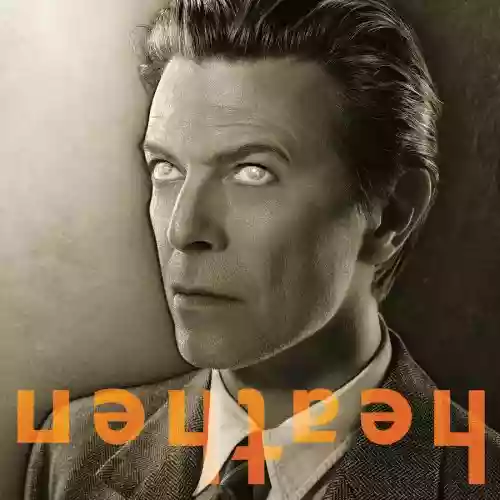
I don't like to consider "Reality" as David Bowie's last album of original songs. Partly because it wouldn't be a worthy conclusion to an extraordinary career, and partly because when I think of the Duke's last studio work, "Heathen" and "Reality" come to mind simultaneously. Because I believe that with the first, Bowie intended to offer an album worthy of his great masterpieces, essentially taking a step back at least to "Scary Monsters," while the second was conceived as a pretext to embark on a world tour. In fact, "Reality" turned out to be a concert album, perhaps the catchiest and most accessible album he ever recorded. Certainly, if you think about a sacred monster like David Bowie singing those songs, it might make you cringe a little, but if you're not familiar with his work, that's the impression you get. I'd like to review both albums at the same time, because I consider them complementary (also due to the short time between their release), but I have to choose one. And I choose "Heathen."
I approached this album (and subsequently the artist) when I saw him as a guest on the show "Quelli che il calcio." It was 2002. He performed "Cactus" and I was blown away. I found the song beautiful, and that artist exerted an incredible fascination on me. I knew I had a music great in front of me, but I was only just getting to know him at that moment. Subsequently, much to my disappointment, I discovered that "Cactus" was a cover of the Pixies. But never mind. I much prefer the Duke's version. When I bought the album, I became increasingly fascinated by this artist. The work itself wasn't the easiest. Some songs were a bit complex and not easy to interpret. But, damn, what songs. You didn't hear such lyrics and arrangements around. The first that hit me was the first single "Slow Burn," which features Pete Townshend (The Who) on guitar, and with that vocalizing in the chorus, it's nothing short of captivating. Then the lighter "Afraid" and "Everyone Says Hi." Perhaps too easy, but impeccable songs. Very evocative is "I Would Be Your Slave," a well-structured ballad prayer. Then "A Better Future" with a very pressing rhythm and certainly the masterpiece that gives the album its title: "Heathen (The Rays)." A monumental song with a masterful arrangement. Besides the already mentioned "Cactus" cover, there's also a forgotten Neil Young song "I've Been Waiting for You," which has too intrusive an arrangement, and "I Took a Trip on a Gemini Spaceship," a 1969 song by The Legendary Stardust Cowboy, a name that inspired him for the Ziggy Stardust icon. Another album masterpiece is "Slip Away," a great song with Bowie in the role of the crooner and with beautiful piano work. The song is also known by the title "Uncle Floyd" and was supposed to be recorded on the album planned for 2000/2001 which was to be titled "Toy." I close with the song that (strangely) opens the album. "Sunday," a very suggestive song, a bit boring until it revives in the last 30 seconds, but it lets us know right away that we are far away from the bland works of the '90s. When thinking of David Bowie's masterpieces, I surely think of almost all the albums from the '70s up to "Scary Monsters" in 1980.
And then I would jump to this "Heathen" which in 2002, after more than 30 years of career, made it clear that the Duke still had inspiration. Which definitely seemed to wane the following year with "Reality," but as I said, these are two albums that should be judged simultaneously. One as the true masterpiece album, and the other perceived for a live dimension.
See you next time...
Loading comments slowly
Summary by Bot
The review praises David Bowie's 'Heathen' as a return to form and a worthy addition to his legacy. It highlights the album's complex yet captivating songs, notable collaborations, and thoughtful covers. The reviewer contrasts 'Heathen' with Bowie's subsequent 'Reality' album, viewing them as complementary works but favors 'Heathen' for its artistic depth and originality. Key tracks like 'Slow Burn', 'Heathen (The Rays)', and 'Slip Away' are emphasized as standouts.Tracklist Lyrics Videos
David Bowie
English singer-songwriter and actor David Bowie (born David Robert Jones, 1947–2016) was a pioneering, genre‑shifting artist known for his personas, musical experimentation and a career spanning pop, rock and avant‑garde projects.109 Reviews
Other reviews
By turkish
Bowie has been everything, done everything, played everything. And he’s still here, with his magnificent voice.
He knows what rock ’n’ roll is, they’ve lived it and can still churn out decent music.
By Mr_Iko
The White Duke never ceases to amaze!
An album of exquisite craftsmanship that will undoubtedly amaze even the longtime fans of the indomitable fashion-maker David.
By Dune Buggy
"Heathen" is my tireless Bowie album, absolutely magnetic like the trip-hop magnets of "Sunday."
Three songs are absolutely indispensable to understand that with this album Bowie wanted to gracefully conclude a phase of his discography.
