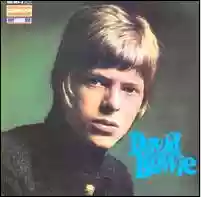

 •
Rating:
•
Rating:
THE REVIEW
The thing that most contributed to shaping one of the greatest musicians and performers of all time, in an artistic-musical evolution that has accompanied the life of every lover of good music, was the desire to change skin, a life choice of that talented being who goes by the name of David Bowie.
But who was he when he still wasn't the one who acted in Pieraccioni's "Il mio west," when he still wasn't the superstar of "Let's Dance," when he still wasn't the "hero" of the Berlin trilogy that gave a wink to all the punks as they were? When he still wasn't impersonating Ziggy Stardust, and he wasn't the Thin White Duke? Imagine, he wasn't even the dreamer of "Space Oddity" in '69. He wasn't a successful man, he was just a refined and brilliant musician. He was shaping folk ballads, like two of his early singles, "Rubber Band" and "Love You Till Tuesday."
He seasoned everything with a traditional flavor, of British exquisiteness that took shape among trumpets, horns, folk strumming and even waltzes ("Little Bombadier"), all creating stylish ballads and a myth, so different from the glam-man of 1972, yet still great. "Uncle Arthur," the opening song of this precious album, is halfway between a traditional ballad and a funny nursery rhyme, adorned with medieval reminiscence English horns, as is "Rubber Band" and "Silly Boy Blue" in its opening; very interesting for a discerning ear are the aforementioned single "Love You Till Tuesday", "There is a Happy Land".
And what a wonderful voice, can we say it? And again, on the traditional-popular path, "Come and Buy My Toys", developed on the piano like an old ragtime, complete with sampled noises at the end, "Join the Gang", lively and very "beat," "Maid of Bond Street", a ballad with piano, horn, and accordion, "Please Mr. Gravedigger", the final track, with bells, thunder, various footsteps, not to mention that clear and immense voice like few others (and Bowie even sneezes).
Folk to dream and delight us. All this is "David Bowie," from the homonymous composer.
Loading comments slowly
Summary by Bot
This review highlights David Bowie's debut album as a refined mix of folk ballads and British musical traditions. It emphasizes his artistic evolution before his glam rock persona and later successes. The album is praised for its charming melodies, traditional instrumentation, and Bowie's distinctive voice. Early singles like 'Rubber Band' and 'Love You Till Tuesday' reveal a talented musician shaping his identity.
David Bowie
English singer-songwriter and actor David Bowie (born David Robert Jones, 1947–2016) was a pioneering, genre‑shifting artist known for his personas, musical experimentation and a career spanning pop, rock and avant‑garde projects.109 Reviews
