
 •
Rating:
•
Rating:
THE REVIEW
Cold evening in Milan.
Projected by the lamp on the wall beside me, my shadow sees me with tired eyes. In front of me, resting on the well-worn kitchen table, an open notebook on the day's last exercise. I'm listening to music, I feel like warming up; in the headphones, a penetrating beat, a typewriter. In my heart, still that breath of melancholy.
Certain situations sometimes come about without you being able to do anything about it; however small they may be, they leave something behind; it seems to you that there's something to be forgiven for, a small personal atonement. Or, if they fail to do so, they at least insinuate doubt into you, and then you think that sometimes even the warmest hearts have turned cold due to a destiny greater than theirs.
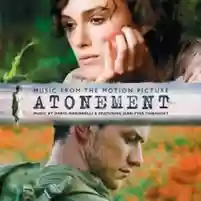
Based on a famous novel by Ian McEwen, "Atonement" is the film with which Joe Wright, a young and talented director from across the Channel, participated in the recent Venice festival, moving many attendees with his harrowing tale of a faded love. If the protagonist is indeed the girl, Briony, who with her curious naivety initiates the events, the truth is that it was the sad eyes of her sister Cecilia that reflected mine, wet with tears ready to streak the pale cheeks I find myself with. Cecilia is Keira Knightley, and this certainly influences my (not) lucid writing. My peer English actress, after the beautiful "Pride and Prejudice", this time with the lesser-known James McAvoy (Robbie), returns to work with the director for a film more ambitious and mature than the previous one.
I am moved by a beautiful film - that's how it should be. I don't know why I find Joe Wright's films so beautiful; perhaps it's the allure of an actress with an angelic face, surely emotion. The truth is some credit goes to a composer from Pisa again; Dario Marianelli manages to capture the dampness of the countryside in the pallor of the English sun, writing pages that smell of paper worn by years. The piano is the soul of unhappy love, the violins are a song of heath.
The soundtrack of "Atonement" escapes the bright melodies and the lively piano dances that sublimed the stories of Elizabeth and Mr. Darcy and insinuates itself into more impervious terrains, in a state of perpetual waiting. The ivory keys are struck by the excellent Jean-Yves Thibaudet heavily, the strings of the larger strings of the "English Chamber Orchestra" are agitated with weightiness; the impression in the early stages, consistent with the film's plot and the author's intent, is that of a closed, claustrophobic environment, in some respects associable with certain novels by Christie, particularly the marvelous "Ten Little Indians", set after all in the same years as the story. On this reverberation of anguish, beyond the lament of the violins, what's unsettling is the agitated, unstoppable ticking of a typewriter, the unsuspected author of the tragic unfolding of what had been.
This not being a film review - which I must say is wonderful - I do not believe this is the place to delve into themes and events; however, what needs to be said is that a monstrously inevitable force will lead Cecilia, Robbie, and a restless Briony to come to terms with their destiny. War descends on Europe with its stench of destruction; the piano softens the dark, heavy tones and, light in taking flight yet melancholy, sadly narrates a story, tears of violin, sob of double bass. One must mention "Elegy for Dunkirk," a poignant song of weary soldiers: the scene it accompanies is of rare evocative beauty, a suggestion of a thousand feelings.
When finally everything is complete, the piano will darken again. However, you no longer hear anguish or waiting, but inevitable melancholy: the notes of the violins become very high while memories return to the symbols of what could have been a sweet happiness and turned out to be an atonement in the moonlight. Fade, last tears of ivory.
to my mother, who watched the film with me and whom I adore.
Loading comments slowly
Summary by Bot
This review praises Dario Marianelli's deeply emotional and melancholic soundtrack for the film Atonement. The piano and strings capture the haunting beauty and inevitable sadness of the story. Jean-Yves Thibaudet's piano playing and the English Chamber Orchestra's strings create an evocative atmosphere of waiting, anguish, and memory. The music complements the film’s powerful themes of love, war, and destiny with a poignant depth.Tracklist Videos
01 Briony (01:46)
02 Robbie's Note (03:07)
03 Two Figures by a Fountain (01:17)
04 Cee, You and Tea (02:27)
05 With My Own Eyes (04:41)
07 Love Letters (03:12)
08 The Half Killed (02:11)
09 Rescue Me (03:21)
11 Come Back (04:28)
13 The Cottage on the Beach (03:25)
14 Atonement (05:24)
15 Clair de lune (04:52)
Dario Marianelli
Dario Marianelli (born 1963, Pisa, Italy) is an Italian composer known for acclaimed film scores. He won the Academy Award for Atonement and is noted for his collaborations with director Joe Wright.02 Reviews
