
 •
Rating:
•
Rating:
THE REVIEW
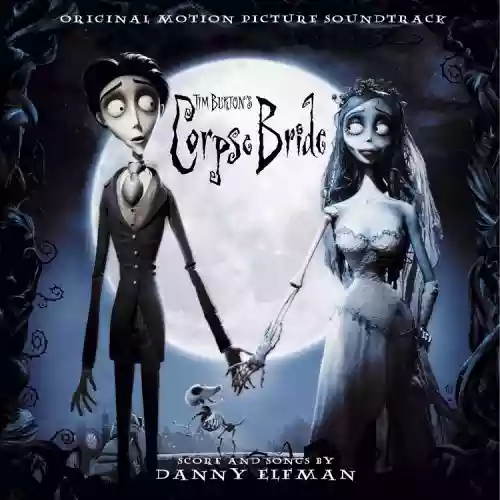
The Corpse Bride-Original Motion Picture Soundtrack
Danny Elfman
A story of vows, wedding promises (kept and unkept), deceptions and betrayals, misunderstandings, dead people and living people and their union, cemented, incredibly enough, precisely by their differences. Another jewel to embed in the Burton production, "The Corpse Bride" (2005) is inspired by an ancient Russian fairy tale whose narration unfolds against a backdrop of a dark and gloomy environment, at times almost gothic, typical of Tim Burton’s films. And it is from these atmospheres that the music accompanying the unfolding of the film is born, once again written by Danny Elfman.
The sound of instruments like the piano, the organ, the winds (including sax and trumpet) and especially the harpsichord, creates a soundtrack dark and melancholic in some parts, cheerful and carefree in others. Just as the film suggests, the two different types of timbral choices and instruments within the work are primarily intended to emphasize the huge difference between the world of the living, gloomy in its settings and pompous in the behavior of the characters populating it (among which we remember Victor, the male protagonist of the film, Victoria, his betrothed, and Lord Barkis, a fallen nobleman who, behind his refinement and calm coldness, hides enormous wickedness), and that of the dead (of which the female protagonist of the film, Emily, the "Corpse Bride," is part), extremely colorful and lively.
Keeping this stylistic choice in mind, we find in the album excellent compositions: the initial "Main Theme," which introduces us to the story, with an extremely dreamy, almost fairytale rhythm while maintaining within it a delicately dark element, delineated by the sound of the harpsichord contrasting with flutes and sweet keyboards; "Victor Piano Solo," a touching piano solo played by Victor, punctuated with notes from which all the young man's worry for the imminent meeting with the promised bride, never met before (it is indeed an arranged marriage by the respective families), emanates; and, always sticking with the theme of small piano improvisations, we cannot fail to mention "The Piano Duet," a small hidden gem that provides the backdrop to one of the most important scenes of the film: the transport of the music is such that the two performers (Victor and Emily) end up playing together (at "four hands") on the piano, thus establishing a sweet and delicate sonic conversation from which the protagonists end up understanding they are made for each other, despite the differences (perhaps precisely because of this, we would venture to say).
Alongside these, it is necessary to mention two sung pieces ("According To Plan" and "The Wedding Song") that sink their roots in choral theatrical operettas and the intense "Tears To Shed" in which Emily gives voice to all her despair for Victor's refusal to marry her, ending up lamenting her condition of being "dead" (the reason behind the young protagonist's initial refusal).
A special mention goes to the heart-wrenching "Finale" which accompanies Emily's spirit's flight, finally free from bonds, towards a pale moon. Based on music with fairytale-like and childlike echoes, an innocent choir rises, counterpointing a beautiful violin progression that reaches its climax at the moment of the young bride's body's disintegration and the subsequent elevation of her soul to the sky.
Loading comments slowly
Summary by Bot
Danny Elfman’s soundtrack for Tim Burton’s Corpse Bride masterfully captures the film's gothic and whimsical essence. The music blends dark melancholic tones with lively, colorful melodies to represent the worlds of the living and the dead. Standout pieces include the dreamy Main Theme and the touching Piano Duet that highlights the connection between characters. The score’s theatrical and emotional layers enrich the narrative with heartfelt operatic songs and poignant instrumental compositions. Overall, a captivating and fitting soundtrack for the film’s dark fairy tale.Tracklist Lyrics
02 According to Plan (03:45)
03 Victor's Piano Solo (01:18)
04 Into the Forest (04:35)
05 Remains of the Day (03:26)
06 Casting a Spell (01:25)
07 Moon Dance (01:28)
08 Victor's Deception (04:00)
10 Victoria's Escape (02:31)
11 The Piano Duet (01:53)
12 New Arrival (00:42)
13 Victoria's Wedding (03:15)
14 The Wedding Song (03:01)
15 The Party Arrives (03:21)
16 Victor's Wedding (02:08)
17 Barkis's Bummer (02:07)
18 The Finale (02:35)
19 End Credits, Part 1 (01:50)
20 End Credits, Part 2 (02:33)
21 Ball & Socket Lounge Music #1 (Band version) (02:15)
22 Remains of the Day (Combo Lounge version) (03:06)
23 Ball & Socket Lounge Music #2 (01:10)
24 Ball & Socket Lounge Music #1 (Combo version) (02:14)
Danny Elfman
Danny Elfman is an American composer, singer, and songwriter, known for his long-running collaborations with Tim Burton and for crafting iconic film themes; he first rose to prominence as the frontman of Oingo Boingo.05 Reviews
