
 •
Rating:
•
Rating:
THE REVIEW
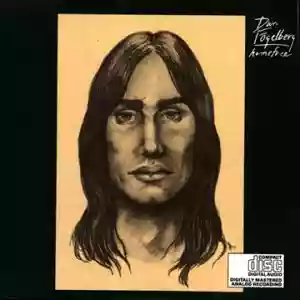
Almost six years have passed since the excellent Dan left this world, defeated by a terrible illness that he sadly realized only when it had progressed to an incurable stage. He began in 1972, with this album that, in the manner of Joni Mitchell (one of his reference points), also sees him as a self-portraitist, in a melancholic expression that will characterize, and perhaps make a tad cloying, a significant part of his music.
Fogelberg, born in Illinois, was fortunate to have as his university mate in Urbana-Champaign a certain Irving Azoff, still today one of the most successful American music managers (Eagles, Van Halen, Alter Bridge...), who in one of his early career initiatives sent him to Nashville, putting him in the hands of the up-and-coming and still affordable producer Norbert Putnam (a former bassist for Elvis Presley), financing this debut record.
Son of a pianist and a band leader, Daniel from a young age handled guitars, keyboards, and singing with equal skill. And it shows... it doesn't seem at all that a twenty-one-year-old is making his debut: a mature and well-controlled voice, a velvety touch on the acoustic guitars and piano. Putnam sets up the arrangements, oscillating them between country rock and singer-songwriter pop, delivering both styles with the highest technical standard of the Nashville studios, probably still the best in the world today.
The grand orchestra is involved in three of the eleven tracks, adding a touch of magnificence to the more romantic compositions, the most successful of which opens the album and is titled "To The Morning" and has an unusual and reprehensible connection to our bumbling country: the exquisite melody and delicate piano of this song favorably impressed a certain Nicoletta Strambelli, who fancied herself as Patty Pravo (or perhaps her producer at the time, a certain Gianni Nocenzi an eminent pianist of Banco del Mutuo Soccorso? Oh, to know...).
An Italian lyric was commissioned to songwriter Franca Evangelisti, and with nonchalance attributing the music of "Pigramente Signora", the diva plagiarized the song in front of the vast audience of the Sanremo Festival 1987. Like a good arrogant, assuming her ignorance was widespread across the country, she had calculated she could get away with it... instead, someone who knew the song was outraged. And denounced: Patty was warned, accused, and discredited, had to pay damages to Fogelberg, and was shown the door by her record label.
Speaking of the opening song, other notable numbers are the arpeggiated "Stars", the lush "Hickory Grove", the romantic "Looking For A Lady". There is very little rock attitude in this debut work, just the concluding "The River", otherwise too protracted beyond seven minutes. The change of producer, from Putnam to Joe Walsh for the second album "Souvenirs", will introduce a bit of beneficial electric fire into part of his compositions. Fogelberg will know how to wisely range in the continuation of his long career, eventually recording works completely dedicated to country ("High Country Snows", 1985), decidedly pop ("River of Souls", 1993), even instrumental ("Twin Sons Of Different Mothers", 1978).
The record in question, of tepid success at the time of its release, over the years has benefited from the momentum generated by the more fortunate subsequent works, eventually selling over a million copies. In Italy, it is known by very few... perhaps they become eight after this review.
Loading comments slowly
Summary by Bot
Dan Fogelberg’s 1972 debut album 'Home Free' showcases his mature musical skills and melancholic style, blending country rock with singer-songwriter pop. Produced by Norbert Putnam, it features orchestral arrangements and standout tracks like 'To The Morning.' Despite moderate initial success, the album gained recognition over time, aided by later works. An interesting plagiarism incident involving one song added to its story. This record remains a significant piece for fans and newcomers alike.Tracklist Lyrics Videos
Dan Fogelberg
Dan Fogelberg (Daniel Grayling Fogelberg) was an American singer-songwriter and multi-instrumentalist from Illinois, known for soft/folk/country rock ballads and sophisticated arrangements. His best-known songs include Longer, Leader of the Band, and Same Old Lang Syne. Active from the early 1970s until his death in 2007.03 Reviews
