
 •
Rating:
•
Rating:
THE REVIEW
Cypress Hill is an atypical rap group. Atypical not to say different. They are white (2 out of 3), Hispanic, and appreciated by a heterogeneous, musically demanding, and open-minded audience.
Our guys: B-Real, Sen Dog, and DJ Muggs belong to the rap generation of the early Nineties. To be clear, those who come from the ghetto, who rap in the ghetto and are angry with the whole world. There were no Puff Daddy, Eminem, and 50 Cent, and the guys didn't start writing rhymes and freestyling because they hoped to get rich, change a girlfriend every night, and do a line of cocaine every 20 minutes. Rap wasn't listened to as background music in malls and wasn't danced to in clubs. Sure, there had been EPMD and RunDMC in the '80s, but if we compare their earnings and success with today's rappers, it brings a smile. In short, those who made music back then, did it almost exclusively out of passion.
Cypress Hill debuted in 1991 with their eponymous album. An absolutely crazy and brilliant album. Funky, rap with a Latin flavor, something absolutely unrepeatable. Two years later, they released 'Black Sunday', and it was already evident that something was changing. The atmospheres became darker, the rhythms tighter, the rhymes sharper. The songs took on a more defined and recognizable shape, and the unmistakable bass loops, which would characterize their future productions, emerged. A little masterpiece, previewing what would come and be covered in this review: "III - Temples Of Boom".
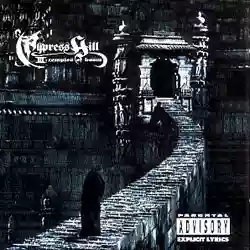
The cover immediately clarifies what the album's atmosphere will be: dark and dreamy. The image of the long bridge leading to the Indian castle could fit perfectly on a late '90s black metal album. The iconography they use, skulls and skeletons, has distanced itself significantly from rap since their first album, not without a certain smugness.
But let's get to the music. The great Muggerud, in my opinion one of the best existing beat producers, does a flawless, inspired, and complete job: every song has a well-defined structure and sure personality, with varied and well-paced drumming and bass lines that create a fitting contrast with the piercing voice of the great B-Real. But it is the integration of samples of electronic sounds taken from non-existent instruments that gives an original touch and completes the personality of the production. The almost horror movie soundtrack effect, and the sensation of perceiving something mysterious, cryptic, and distant experienced by the listener, is absolutely unmatched: in Hip Hop, that is.
Well, Cypress Hill is one of those groups that to appreciate them best should be listened to in the car, with the windows down and a 200W subwoofer, perhaps in front of the bar where everyone meets on Saturday night, to put to shame those who know only the music played in the seedy venues they frequent, without knowing the titles, of course. For example, my speakers can't handle "Insane In The Brain" and so I never play it in the car.
The songs are all great, the album flows wonderfully for all 55 minutes, alternating fast tracks like the "famous" "Throw Your Set In The Air", "Make A Move", "Locotes" with slower and more paced tracks, more "stoned" in the sense of "high", ideal to accompany a cannabis-infused evening with friends, like "Stoned Raiders", "Illusions" and "Strictly Hip-Hop". Some tracks are absolutely crazy and experimental; tracks like "Boom Biddy Bye Bye" (with the fantastic and completely different version alongside the Fugees, on the subsequent album) or "Funky Freakers", extremely slow and more hallucinatory than usual, are not at all disturbing, rather they paradoxically increase the cohesion of the musical proposal.
The lyrics, written and sung with impeccable flow by B-Real, the Cuban rapper with an inimitable voice, mainly talk about weed, getting high, and street stories, but in a definitely more cultured and refined way than a Snoop Doggy Dogg (I’m talking about the one from 10 years ago, nowadays I really don't know what he's up to). Notably, the track "Killa Hill Niggas", featuring U-God and RZA from the Wu-Tang Clan, almost reminding us that after all, CH makes rap, and they do so standing tall alongside the best on the scene at the time.
Regarding historical importance, this album and "Enter The Wu-Tang" changed the history of rap, placing the production of musical bases in a more central position than it was in the past. Five years later decreeing the commercial success, thanks to increasingly catchy and memorable bases, and the musical and spiritual ruin, which we can all listen to on the radio and see on television. Both Cypress Hill and Wu-Tang stayed out of all this. We can be certain that the girls who love to brush against the beat of the latest single are unaware of both the former and the latter.
In conclusion, listening is mandatory for all those who love good music: particularly that which is genuine and free from record-commercial influences, which besides making a lot of money, poisons the true soul of music.
Loading comments slowly
Summary by Bot
Cypress Hill's III (Temples Of Boom) marks a dark, innovative chapter in 90s rap, combining sharp lyrics, inspired production by DJ Muggs, and a distinctive mysterious atmosphere. The album offers a mix of energetic and stoned vibes, standing out for its originality and cultural significance. A must-listen for fans of genuine, underground hip hop.Tracklist Lyrics Videos
Cypress Hill
Cypress Hill is an American hip hop group from the Los Angeles area, formed in 1988. The core lineup features B‑Real, Sen Dog, and producer DJ Muggs, with percussionist Eric Bobo joining in the mid‑1990s. Known for Latin influences, bass‑heavy beats, and cannabis‑themed lyrics, they broke through with Black Sunday and earned acclaim for the darker III: Temples of Boom.05 Reviews
Other reviews
By Yosif
III Temples Of Boom is a milestone, a timeless masterpiece, an original journey made into music.
The beats and bass so powerful you’ll beg for mercy for your poor subwoofers.
