
 •
Rating:
•
Rating:
THE REVIEW
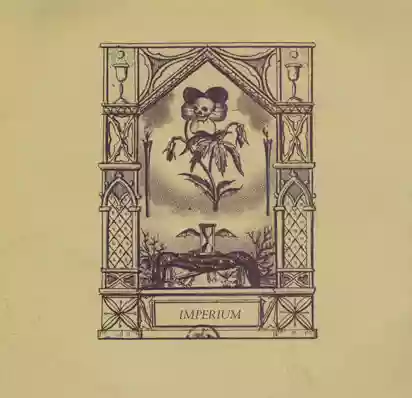
A cover in intense ivory-colored rough cardboard: on it, an ink illustration... a pansy with a skull inside its corolla, suspended in the air between two lit torches... below, a winged hourglass resting on the drapery of an altar... in the background, dead trees.... all around the architecture of a small temple.
This is “Imperium”, an album by Current 93 of David Tibet, released in 1989 and an indisputable manifesto of a stylistic shift, as well as the definition of a new musical genre that with the subsequent “Svastikas for Noddy” will become a sure thing. Apocalyptic Folk, they called it. A balanced mix of acoustic sonorities, chant-like voices, and electro-industrial incursions proposed in the most classic song form: the so-called ballad. Among the influences cited by Tibet for his advanced project are writers like Lautremont and Blake; and then traditional folk and liturgical music. All that in a more radical and experimental dimension was found in albums like “Nature Unveiled” and “Dogs Blood Rising”, in “Imperium” becomes rarefied to metaphysical and mystical levels, leaving aside exorcistic and pseudo-demonic provocations to find a linear, almost intimate direction, minimizing the sound environment and bringing to the forefront the atmospheres woven by David Tibet's sad and biblical litanies.
Some die when they are in the womb
Some on the ground where they are born
Some die just as they learn to crawl
And some as they learn to walk
Some die old and some die young
Some in the very prime of life
All people pass in turn
Just like the fall of ripened fruit
As all ripe fruit
Always falls and rots
So all who are born
Are always by their deaths destroyed
These are the verses already printed on the album package and also read in one of the tracks. Sufficient to synthesize the contents and sensations of this work, which slowly drags the listener into a foggy limbo of tearful and unescapable emotions, casting a disenchanted look at the fate of the individual and the grotesque paradoxes of his life. The first part, titled "Imperium" and divided into four simply numbered parts, is a melancholic and tragic excursus, mild in rhythm, intensely atmospheric, played on guitar strings, voice, and arcane wails and cries of a child, deformed and extended. A suite with biblical but also kabbalistic scents, inspiring an immersion into the depths of the cover illustration, darkening the ivory of the cardboard and drawing absurd clouds on a horizon of Dantean beginnings.
“Imperium” requires concentration and relaxation. Everything passes through the understanding of the cantilevered texts by Tibet and the overlapping of timbral planes. Musically, there seems to be very little, but one must abandon every preconception and think that this is not music intended for entertainment, nor for dancing. In the second part, the supernatural and prophetic tone intensifies, reading between the lines of almost inexplicable moments the possible interpretations of the titles.
The tracks are
1. Be
2. Locust
3. Or
4. Alone
What else to say?
Current 93 remains, despite everything, one of the most original and interesting projects of the last twenty years. In “Imperium” we find what previous works had pushed to extremes to gain attention and what subsequent albums have partly rehashed, still emphasizing the stylistic minimalism of apocalyptic folk. Tibet has long fluctuated between taking himself seriously and declaring the substantial irony of his ideas and his mystical approach to certain themes. But if the irony is traceable in some of his works, titles like "Imperium" leave no doubt about the truthfulness of the inspiration. The skull in the flower's corolla grins marbly, drawing sap from the passage of time and glimmers among the flames of the torches, illuminating the mists of our beliefs and the instability of our certainties.
In the unspeakable sadness of the dirge, the dream everyone has disperses under the wing beat of the only tangible truth.
As all ripe fruit falls and rots, all those who are born are then destroyed by their own deaths.
Loading comments slowly
Summary by Bot
Current 93's 1989 album Imperium marks a key shift toward apocalyptic folk, blending acoustic, chant-like vocals, and subtle electro-industrial influences. The album evokes a melancholic and mystical atmosphere with biblical and kabbalistic lyrical themes. Imperium demands focused listening to appreciate its layered sonic textures and emotional depth. David Tibet’s poetic vision and the album’s art contribute to a profound exploration of life, death, and spiritual paradoxes.
Current 93
Current 93 is an English experimental music group formed in 1982 and led by David Tibet. The project moved from early esoteric/industrial collages (Nature Unveiled, Dogs Blood Rising) into apocalyptic folk, dark chamber music, and various experimental forms across decades, often collaborating with figures such as Steven Stapleton and Michael Cashmore.55 Reviews
Other reviews
By Cervovolante
Imperium, a foray into the realm of shadows, reveals itself as a darkly enigmatic masterpiece within the vast discography of Current 93.
Each track deserves to be described in detail... creating an atmosphere that goes beyond mere listening.
