
 •
Rating:
•
Rating:
THE REVIEW
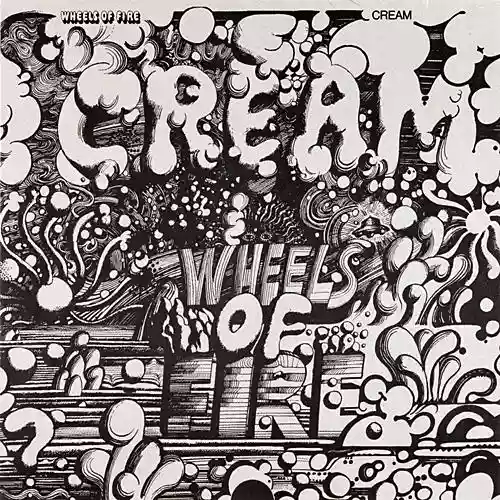
A parallel dimension, a hell/paradise populated by strange figures, explosions of fluids, acidic clouds, monochromatic beams of light. A three-eyed mask, smiling, vanishes in an orgasmic and acidic triumph of lysergic memory. The perfect cover for an album that is the explosion of creativity, the definitive break from the old schemes of music understood as "blues".
Year 1968, symbolically at the center of the new culture: a year earlier, the Summer Of Love; shortly after, in '69, the Jefferson Airplane, on the other side of the world, will shout to "tear down the wall", while the Zeppelin will begin the inexorable takeoff, destined for unimaginable feats. Year 1968, "Wheels Of Fire" by the British Cream. The pinnacle of their short but very dense career.
An LP divided into two: the modern anarchy of studio experimentation, the battle between the three members of the band; the visceral live compositions violated, at the Fillmore, where the old blues is dismembered and reassembled with crazy distortions (for the time). "White Room", a sharp blues-rock penned by Jack Bruce (with lyrics by Pete Brown), inaugurates the studio-recorded part, continuing with the bluesy "Sitting In The Top Of The World": for a few months, they truly were, on top of the world, alongside Hendrix, the Doors, and a few others blessed by the adoration of the crowds. Each member has their moment of release: Ginger Baker, a versatile drummer, has his "Pressed Rat And Warthog", with a tribal rhythm and a precious and discreet brass section (Felix Pappalardi); Eric Clapton elevates the old tracks with his incandescent guitar, providing solos respectful of the classics to "Born Under A Bad Sign". Bruce's voice stands out clean while his bass becomes a soloist for much of the duration.
The second half of the work, the live one, turns out to be incredible, historic. An "Spoonful" stretched beyond 16 minutes where the crack that will sink the ensemble becomes evident: each member wants to dominate, Clapton and Bruce challenge each other in endless solos, while Baker gives (demands) 16 minutes of a tribal solo with drums pounded without grace. Not forgetting a famous "Crossroads" dedicated to the densest blues-rock. In "Traintime" Bruce sets aside the bass to bring a bit of old-style with his harmonica.
This monumental fresco will remain the epitaph of the group, not counting posthumous live (and the negligible "Goodbye"). Exaggerated, verbose, exceptional despite its excesses: it lacks the spontaneity of "Fresh Cream" and the right measure of "Disraeli Gears", in this "Wheels Of Fire" there is everything, and even too much.
Loading comments slowly
Summary by Bot
Cream's Wheels of Fire, released in 1968, represents a pivotal moment in psychedelic blues-rock with its innovative studio and powerful live tracks. The album showcases each band member's distinct talents through experimental compositions and extended live solos. Despite its occasional excesses, Wheels of Fire remains a monumental work that pushed the boundaries of the genre.Tracklist Lyrics Videos
Cream
Cream were a British rock power trio formed in 1966, known for electrified blues-rock, psychedelic-era experimentation, and extended live improvisations. The classic lineup was Eric Clapton (guitar), Jack Bruce (bass/vocals), and Ginger Baker (drums).12 Reviews
Other reviews
By floyd
Clapton’s guitar melts into a slippery wah-wah, it indulges, rages in his virtuosity.
If Disraeli Gears is a masterpiece, Wheels Of Fire is no less.
