
 •
Rating:
•
Rating:
THE REVIEW
The group "the Cream" places its work as the cornerstone of the transition between blues and rock, which took shape in England in the mid-'60s. In reality, more recent musical criticism speaks of a revival scene that, in an already progressive context, seeks to recapture the inspiration and balanced energy that distinguish the blues, breaking away from its established patterns. Whichever vision one chooses to embrace between the two, they undeniably converge on the end of the blues, with rock choosing the paths opened by Hendrix's guitar or the psychedelia of the Floyd, which in their intersecting generate a flow of currents that light music will never know again. While it is true that some characteristics are still recognizable today, it is also true that we can identify 1966 as the starting point, when the genius that shatters the Yardbirds takes shape in the creations of its inventors.
In an interview released this April, Jack Bruce explains to Ernesto De Pascale how "... the Cream wanted to be a group of 'contemporary' purists and I believe that no one understood this and few have been able to read it in our repertoire even if the imprint of the first album seems clear to me."
In his reflection, one can easily grasp the bitterness of that great musician to whom the experience with the Cream did not grant enough expression spaces to allow him to stay at the top of the scene at its end, yet it is certainly a lucid analysis. In fact, the intuition of a trio playing blues but in an "electric" way belongs to Ginger Baker, the sound reached in its most mature moment possesses the inimitable characters of (slowhand) Eric Clapton; in reality, when the latter assumes, with the blessing of the record label's president, also the role of vocalist originally intended for Bruce, the Cream project marks both the beginning of its commercial success and its end.
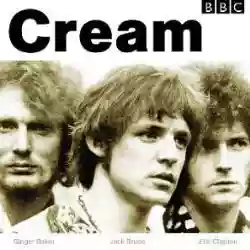
The BBC sessions gather 22 unreleased tracks and a booklet with photos and interviews from that era, far from exhaustive. Certainly, it's not the group's best album, and for recording quality, it is undoubtedly the worst. The songs sound "dirty" and do not provide any notable insights compared to the versions on the regular albums. Certainly, those wishing to approach Cream as novices should prioritize long and repeated listens of "Disraeli Gears" and "Wheels of Fire," with the first one in particular, homogeneous and all studio, which releases such a richness of sounds and colors that it can hardly fail to turn into a passion for those who listen to it. But for a die-hard listener, after having exhausted the scarce material our band recorded in less than three years of partnership, after having learned to recognize groove by groove the crackles of one's own vinyl, as sometimes only a condom can take away more flavor than digital does; having resigned themselves to chewing and digesting what they find as if they were hamburgers, listening to the BBC sessions allows them to follow the evolution of Cream's sound with the participation with which one observes old class photos from primary school that occasionally come to light in the cellar. In the features of every child that was, you think back to their story. In the same way, in the blurred sounds of Cat's Squirrel, you find the cousin of the Led Zeppelin that have marked you so much; in the non-singing of Sweet Wine, you finally understand, after so many years, why you found writings saying Hendrix appreciated and followed them; Rollin' & Tumblin' and Lawdy Mama, with their archaic blues, make you think of the masters, and, even, from the emotion, you seem to recognize the Radiohead in the drum attack with the bass line of "I'm so glad"!
A CD that deserves a place in the best collections of those who know how to appreciate quality music.
Loading comments slowly
Summary by Bot
The review examines Cream's BBC Sessions as a crucial yet raw artifact of the band’s role in evolving blues into rock during the 1960s. While the sound quality is poor and not the band's best work, the collection offers valuable insight for die-hard fans and collectors. The review highlights Jack Bruce's reflections on the band's artistic aims and situates the Sessions in the broader musical landscape influenced by Hendrix and Led Zeppelin. Overall, it is recommended for dedicated listeners who appreciate the gritty origins of classic rock.Tracklist Lyrics
02 [Eric Clapton interview 1] (00:54)
04 Rollin’ and Tumblin’ (03:03)
05 Steppin’ Out (01:50)
07 Cat’s Squirrel (03:38)
09 I’m So Glad (04:22)
11 [Eric Clapton interview 2] (00:48)
16 [Eric Clapton interview 3] (00:44)
18 We’re Going Wrong (03:25)
19 [Eric Clapton interview 4] (00:37)
26 Steppin’ Out (03:36)
Cream
Cream were a British rock power trio formed in 1966, known for electrified blues-rock, psychedelic-era experimentation, and extended live improvisations. The classic lineup was Eric Clapton (guitar), Jack Bruce (bass/vocals), and Ginger Baker (drums).12 Reviews
