
 •
Rating:
•
Rating:
THE REVIEW
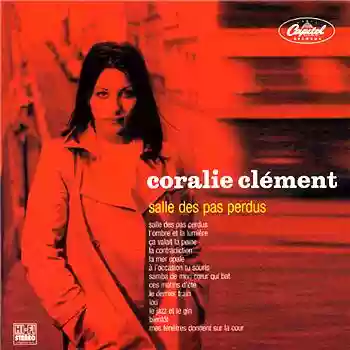
She was supposed to be the next big thing in chanson française when at just 19 years old she burst onto the scene with "Salle Des Pas Perdus," an extremely light album, harmless, certainly not what we could call a demanding record. However, it was precisely that simplicity that was the charm of that album, ultimately a positive debut compared to other things that were trending, such as Carla Bruni with her fake pseudo-French pose and related (terrible) debut album.
The young Coralie is truly 100% French, and also of the most classic archetype: prissy girl from an intellectual image, voice so 'coquettish' it's deadly, with obvious references to the likes of Françoise Hardy and Jane Birkin. Adorable, but it must be acknowledged how she has lost her way with her latest records, adopting an overly pop direction (Bye bye beauté) and at times playful in the true sense of the word (the mediocre Toystore actually featured arrangements with toy instruments). That said, the first album, with its 40 minutes full of short songs, as the French tradition dictates, deserves consideration if you appreciate certain "smooth" and luxurious atmospheres.
Clearly inspired by 1960s French music, the album is essentially a sort of collaboration between Coralie and her brother Benjamin Biolay, a highly regarded multi-instrumentalist in his native land, who produced the record gifting his sister 13 tracks where the acoustic Parisian charm and strictly retro arrangements take center stage in a context that is sometimes indiefolk, where what stands out is the sister's seductive voice.
Yes, because while Benjamin's work is well done, deliberately behind the times (as it's practically impossible to spot a glimpse of sound technology), the fundamental figure is that of the latter, who displays a frail and delicate little voice, almost intangible but damn (and stereotypically) sexy in her innocent and sweet style ("Lou," "La mer opale," "À l'occasion tu souris"). All this, needless to say, in the most classic exaggerated quote and "whispering" style (if you permit me the term) reminiscent of Gainsbourgian memory.
Let's be clear: the album, except for the impractical "Ça calait la peine" (a sterile waltz) and "Le dernier train" (an avoidable duet à-la Je t'aime moi non plus) does not present itself as the classic second-wave chanson, sweetened and poorly aged, nor the ridiculous adolescent and savvy French pop à-la Alizee. It's easier to associate it with the classier and more intimate Scandinavian releases (Hanne Hukkelberg, for example) or the early gentle Cardigans (those of Life).
The common denominator is certainly refinement in the strictest sense of the term: indeed, if soft accompaniments+vintage harmonies+sensual voice are a recurrent and overly used classic of the genre, it should be emphasized how this formula - even often exaggerated - knows how to renew itself while maintaining that usual savoir-faire, greatly aided by the numerous echoes of Franco-Brazilian bossa nova (especially on "Samba de mon coeur qui bat"), those jazz influences very present ("La contradiction," "Bientôt," "Le jazz et le gin"), and the instrumentation (almost always played by Benjamin) which, with a saxophone here, a little flute there and a large presence of strings, confers further elegance to Coralie's debut. A debut that partly made itself felt even here, with the delightful "L'ombre et la lumière" written by Keren Ann, (an author of several interesting works in recent years) which made the fortune of the smooth night-relax-addicted acts like Radio Monte Carlo. Worthy also is "Salle de pas perdus," with its calm demeanor. Clearly, there will not be any overly sweet and indigestible moments, halfway between (it is subjective) melancholy or exasperating: in cases like "Ces matins d’été" or "Mes fenêtres donnent sur la cour" I stand on the latter category.
Final verdict? Very nice, excellent in its genre (3.5): flows like water and is really pleasant to listen to! After all, we are dealing with a French record... ultra-glossy... pleasant background... light... delicate...etc. etc. etc. (who knows why when discussing this genre we always write the same things). Nothing pretentious, nothing new, indeed. But after all, we don't expect these albums to provide blast beats, distorted synths, or cavernous growls.
And besides, growls get on my nerves.
Loading comments slowly
Summary by Bot
Coralie Clément's debut album 'Salle Des Pas Perdus' is a delicate and charming work rooted in classic 1960s French chanson. Produced by her brother Benjamin Biolay, the record features refined acoustic arrangements and a soft, coquettish vocal style. While simple and light, the album stands out amid contemporary trends by offering smooth, vintage atmospheres infused with jazz and bossa nova influences. It's an elegant and pleasant listen for fans of refined French music.Tracklist Lyrics Videos
Coralie Clément
Coralie Clément is a French singer whose elegant blend of chanson, pop, bossa nova and jazz emerged in the early 2000s. Her debut, produced by her brother Benjamin Biolay, introduced a refined, understated style that she has continued to explore.01 Reviews
