
 •
Rating:
•
Rating:
THE REVIEW
The roar of a whisper can be unbearable.
Especially in the cold of an empty room. The voice is faint but, stubborn, does not give in; the notes of a guitar fill the space between the words. Words that are dry, direct, sharp: “sono una donna che non sa stare al suo posto, ma quando esco dai binari che mi hanno assegnato, c'è sempre qualcuno disposto a riportarmi a casa.”
The only things listening are the walls of a kitchen, and to them, Connie Converse throws the truth of her life in their face: Connie has always been a stray woman, she knows it, it pains her, but she wouldn’t know how to give it up.
Her official name was Elizabeth Eaton Converse, and she was born on August 3, 1924, in Laconia, New Hampshire, the daughter of a Baptist pastor—a stern man who believed in strictness the way others believe in doctrine. The girl grew up learning, first, silence, then music, and finally—later and at great cost—the difference between the two. There is little left of that childhood: a few photos, a letter or two, the fragmented memories of those who knew her.
That sweet big girl from New Hampshire—steeped in Baptist faith, valedictorian of her high school, scholarship student at Mount Holyoke—one day left college the way you leave a station you’ve reached on the wrong train.
She crossed the country. She reached New York. And decided that, from now on, she would be just Connie. Because you don’t use real names when you have something to hide, even if it’s only your own beauty, even if it’s only your voice. She started drinking, she started smoking, she started writing songs no one wanted to hear. It was 1954 and the world just stood there, scratching its ass, whistling, and she, meanwhile, was inventing modern singer-songwriting in a Manhattan kitchen. Alone. With no one asking her to.
“Vaghiamo dove regna il buio. Andiamo per sentieri notturni. Non come fanno gli amanti, a coppie, intrecciando i passi; ma da soli, Uno per uno.”
In the Big Apple, Connie worked as an editor, a researcher, a printer, and—by night or on those quiet afternoons—within four rented walls in the Village, she would pick up her guitar and sing her songs. Her melodies had the open, moving quality of an old Carter Family recording, but with a gentle fingerpicking and a harmonic motion reminiscent of Hoagy Carmichael. The traditional elements were stitched together with such sophistication that the whole thing sounded absolutely original, even modern. These were songs of lovers quarreling, of loneliness, of women walking the world alone. Everything we appreciate today in singer-songwriters—the personal perspective, the insight, the originality, the empathy, the intelligence, the subtle humor—already lived in her music.
Only, the world was not yet ready to hear her.
In 1954, Gene Deitch—a cartoonist, a man with large, curious eyes—recorded her in his kitchen with an old Crestwood 404. Gene kept those tapes because he understood, perhaps better than anyone at the time, that he was holding onto something rare. That same year Connie appeared on CBS’s The Morning Show, seated next to Walter Cronkite, singing her songs in that brutally lit studio, as all TV studios are lit, with a light that forgives nothing and transforms everything into evidence. The audience did not react. The record men judged her: “too hard to sell.”
To sell.
“Pensavo ai gigli, sai loro non fanno mai fatica, fioriscono soltanto. Non sentono mai freddo, né sono stanchi, né sciocchi. E non gli serve molto spazio. Così ho pensato ai gigli. E vorrei che mi dicessero, che mi dicessero, come si fa.”
In 1961, she said goodbye to Greenwich Village, packed her bags, and moved to Ann Arbor, Michigan, where her brother Philip had put down roots. A few weeks later a certain Robert Zimmerman happened by those same parts. But Connie was already gone, a moment before everything she had first envisioned began.
Philip is someone who teaches at the university, he’s famous, he studies how Americans vote and knows the names for so many things. His home is orderly, there’s a kind of peace, there are schedules, the solid and just a bit suffocating comfort of someone who loves you and does not understand why it’s not enough. And there, the next thirteen years passed, in a way perhaps comprehensible but heartbreaking: Connie threw herself into work and ended up directing the Journal of Conflict Resolution, and giving public lectures without a degree, as if she had decided to use the intelligence she had consecrated to music for something more urgent, more immediately necessary. I do not know if she was happy. Nobody knows. Her mother said she drank and smoked more than before. A friend said she seemed tired.
And her guitar remained in a corner.
Like the volume of a radio dialed down gradually to silence. Philip’s world worked, it was recognizable, it made sense. Connie’s music didn’t, it never made sense to anyone but her, and maybe that was easier: to stop carrying around something nobody knew how to see.
But there was a price to pay: without her music to soothe her soul, only alcohol and depression remained. Two sweet poisons that do not kill you immediately. They sit next to you and wait for everything to fade away.
No, there is no love in this story. Connie never found it, but, pay attention, what matters is not the abandonment but the grace with which she bore it.
“Io non ho trovato mai un posto dove stare e non ho più nessuna canzone da cantare.”
Towards the end of 1972, the offices of the Journal of Conflict Resolution moved to Yale, “sold at auction” without her ever being told. The kind of small, silent betrayal that sticks between your ribs like a thin pry. Friends scraped together money, gave her six months in England, but England doesn’t heal anything.
Then the ending came.
In 1974, Connie’s fiftieth birthday knocked at her door, along with a diagnosis ending in the word “hysterectomy.”
And she wrote farewell letters.
She wrote them to everyone she loved but not to her mother. They were all handwritten and all lucid prayers: “Lasciami andare, lasciami essere se posso, lasciami non essere se non posso.”
She loaded her Volkswagen Beetle. She drove toward something that didn’t have a name yet, along those long American roads that seem to go nowhere, full of abandoned motels and exits to nowhere. Maybe she drove toward the sea. Maybe toward a room where no one would knock. Or maybe nowhere at all, to some place with that kind of light and that scented air, where it might be beautiful to write the word “end.”
No one ever knew where Connie went.
“Sono così stanca. Sono stanca, oh così stanca, di questo eterno lottare (...) ma non c’è nessuno a cui dare la colpa, non c’è nessuno da odiare.”
And so, the world went back to scratching its ass and whistling and not giving a damn, not just about Connie but about the rest of us, too.
Then in January 2004, Deitch—the cartoonist with the large, curious eyes—was invited by New York music historian David Garland to his radio show “Spinning on Air,” and he remembered those tapes, Connie’s, the ones recorded in his living room with an old Crestwood 404 tape recorder.
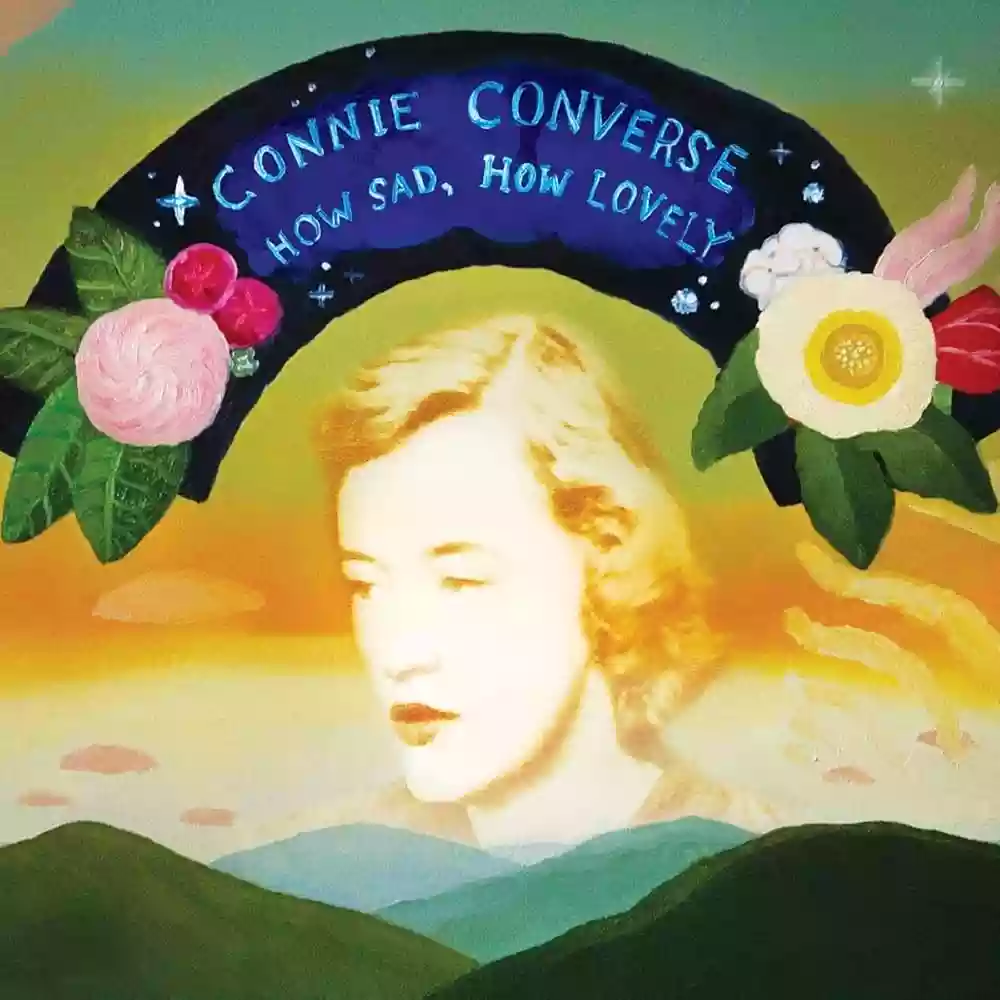
What happened next could almost seem natural: producer Dan Dzula and his friend David Herman, dazzled by that music, decided to produce that album that was never released. “How Sad How Lovely” saw the light of day in March 2009.
Whoever listened to it could not stay indifferent. That music began to travel, and as it traveled found the right hands: Karen O, Mike Patton, Laurie Anderson sang her songs. Julia Bullock won a Grammy singing "One by One." John Zorn in 2017 recorded a tribute album. Howard Fishman in 2023 wrote her biography. In 2024, the centenary year of her birth, someone staged a one-hour show about her story—an entire hour for a woman who did not have even a single minute.
"How Sad, How Lovely" was reissued by Third Man Records in March 2026.
After more than fifty years.
It takes that long for the world to learn to listen to women who speak softly.
Loading comments slowly
Summary by Bot
This review celebrates Connie Converse's 'How Sad, How Lovely' as a forgotten masterpiece. The emotion, vulnerability, and honesty of her songwriting are praised. The reviewer highlights the unique place Converse holds in folk history. The album's intimate sound and thoughtful lyrics stand out. The review encourages listeners to experience this folk treasure.
Connie Converse
Connie Converse (born Elizabeth Eaton Converse, 1924, Laconia, New Hampshire) was an American singer-songwriter whose intimate 1950s New York kitchen recordings went unheard for decades. Recorded by Gene Deitch and briefly featured on CBS’s The Morning Show with Walter Cronkite in 1954, she left music, moved to Ann Arbor in 1961, and worked at the Journal of Conflict Resolution. After leaving farewell letters, she disappeared in 1974. Her recordings were compiled and released in 2009 as How Sad, How Lovely.01 Reviews
