
 •
Rating:
•
Rating:
THE REVIEW
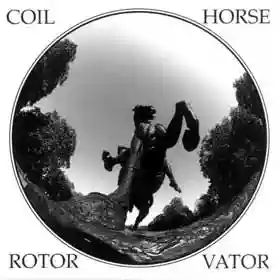
The Coil was born in the early '80s from the meeting of the already seasoned talents of John Balance (former Psychic TV, recently deceased) and Peter Christopherson (former Psychic TV and founding member of the seminal Throbbing Gristle). Their music presents itself as a bizarre alchemy of industrial sounds, electronics, and dark wave. Anyone wishing to delve into the insane and perverse world of Coil must necessarily pass through this "Horse Rotorvator", a 1986 work considered by many (including myself) to be their absolute masterpiece. Less dirty and unhealthy than their debut (the valid "Scatology," released two years earlier), it represents a significant step forward both in songwriting and in the care of arrangements and production (listen to how it sounds and then reflect on the fact that we're in '86!), with attention to detail so great it seems miraculous. The sensation one has listening to these notes is hard to define because rarely does one encounter such an intrinsically contrasting work, the fruit of two profoundly antithetical yet complementary personalities, the wild Balance and the more organized and rational Christopherson (his is the merit of channeling, developing, and dressing in formal perfection the overflowing, immediate, and anarchic creativity of the former).
Their work, capable of carrying within itself distant and clashing elements: refined and at the same time kitsch, intellectually high and at the same time vulgar, to the point that it feels like being fucked hard in the clean toilet of a contemporary art gallery. What surprises most is that in the Coil dimension, the worlds of Eros and Thanatos are not in contrast at all; rather, they coexist, indeed coincide, and are the same thing, sublimated in the concept of excess. Everything is excessive in Coil. If they deserve a label, it is certainly "excessive music": the themes are those classic ones of love and death, but here they are transfigured and extremized by madness and drug addiction, so that the former can only become perversion and the latter can only be violent. From here, the reflections on death, the taste for sexual perversion, all addressed with an intellectual flair and the language of art and literary references, especially those to the work of William Burroughs.
From a strictly musical point of view, we are faced with varied and complex music, which defining as industrial could be misleading, as it manages to absorb in itself the most disparate genres, from sophisticated electronics to the darkest ambient, from jazz to Dadaism, from noise to gothic. Concrete examples? Well, it's fair to say we are not far from what was proposed by Virgin Prunes in "If I die, I die", a group and album our artists draw heavily from. But that's not enough; Coil takes us further still, and to get a proper idea of their music, we must take the same Virgin Prunes and blend them with Cabaret Voltaire, Throbbing Gristle, Einstürzende Neubauten, Can, Kraftwerk, and Depeche Mode. Another important note: since Balance frequently collaborated with Current 93 and Death in June, I would also throw a handful of mysticism and a pinch of apocalyptic folk into the mix (not surprisingly, the same album title is taken from biblical verses of the Apocalypse). However, beware, we are not dealing with singers of the end of the world, even if, often erroneously, Coil is considered part of the apocalyptic folk cauldron, precisely by virtue of the friendship that linked their leader with David Tibet and Douglas P.: sure, the tones are unhealthy, but the atmosphere only becomes excessively tense in bits and pieces, and sometimes you might even find yourself laughing since there is a good dose of (black, obviously) humor functioning as an antidote to diffuse the tension.
The music of Coil is therefore essentially a schizophrenic entity, elusive, dominated by sudden mood swings, in which a more grotesque, almost surreal side, which we can even find entertaining, coexists with a disturbingly morbid side, so morbid that it can truly frighten, precisely because it's unexpected. All seasoned with a pronounced taste for excess, for mockery, and for kitsch, which should not lead us to mistakenly think that Coil's music is not serious: quite the opposite; their music is serious, very serious, because we are dealing with well-prepared and competent musicians who carry with them years of experience (let's not forget that Christopherson himself was a pioneer in the use of tapes and samplers), musicians with real talent who know what they are doing and possess full command of their expressive capabilities.
If you still haven't decided on an outright purchase, then I will have to indulge in a track-by-track scan because I would feel guilty if I didn't convince you that this work is truly a must-have, regardless of the music you listen to! It begins with the fairground atmosphere of "The Anal Staircase" (the title itself is already a program!), a mad fanfare in which tribal drumming and Balance's possessed singing lead a merry parade of trombones, bells, children's uproar, and noisy intrusions of every kind. With "Slur", we have continuity in the tribal element, but the tones soften into a kind of electronic pop (?!) with well-cared-for and incredibly original sounds, vaguely reminiscent of "Sweetest Perfection" by Depeche Mode: it has the same hypnotic pace, and the voices, Balance's suave and dark one and Marc Almond's (here as a guest) eunuch-like one, recall the much better known Gahan and Gore. "Babylero" is a brief and freaked-out interlude highlighting Christopherson's talents, who here is intent on violently assaulting a cheerful nursery rhyme. The noises of a quiet summer evening (the singing of crickets, a distant Latin guitar, a barking dog) introduce the Mediterranean atmosphere of "Ostia (The Death of Pasolini)", a masterpiece within the masterpiece, the ultimate tribute our artists pay to the great Italian artist assassinated under unclear circumstances right on the Roman coast: it is an enveloping requiem where the minimalist keyboard plots of Christopherson intertwine with a well-suited arrangement of strings with an Eastern European flavor. The melancholy and oblique vocals do the rest, revealing a sensitivity and a touch one would not expect from someone like Balance. "Herald" is another short and festive interlude that portrays the joyful chaos of a ragtag village band, reminding us fondly of the atmospheres dear to Bregovich: the task is evidently to relieve the tension accumulated with the previous track and open to the threatening and violent pace of "Penetralia", a long instrumental track. The massive beat of the drum machine dominates here, accompanied by the ruthless strikes of an electric guitar and the devastating electronic intrusions by the two multi-instrumentalists. The dissonant clarinet solo by Stephen Thrower (already present as a guest on the previous album and now a full-time group member) joins the sonic orgy, allowing a brief interlude trespassing into the lands of avant-jazz. The noise experiments continue, albeit with a more minimal approach, in "Ravenous", another instrumental, where it is possible to follow the evolutions of not exactly definable sounds, perhaps verses of cats, elephants, and birds scuffling in a tangle that, if not for the disturbing keyboard plots (which put the song's content under the unsettling optics of a ritual), would not be out of place on an avant-noise album like "Creatures Comfort" by Black Dice. "Circle of Mania" is instead a mad and unpredictable piece (it's no coincidence that Jim Thirlwell aka Foetus is involved!) dominated by the singer's mood swings. An almost swing-like cabaret feel (complete with thumping bass and exhilarating winds) serves as the backdrop for an euphoric and over-the-top Balance who's venting all his expressive range: whispers, winks, demented falsettos, sudden screams, hysterical laughter, cries, howls, moans, delusions of all kind, and perversions of all sorts for a performance that seriously embarrasses people like Mike Patton and Jonathan Davis: listen to him simulate intercourse with the shout of "Fucking the ground, fucking the ground, the hole in the ground!" and you will understand. Certainly, one of the craziest moments in rock history!
The euphoria turns into chill with "Blood from the Air," a macabre interlude, where Christopherson's cold electronics paint nightly and apocalyptic landscapes, while Balance's voice becomes controlled and threatening again. The creaking of the electric guitar and the sudden explosions of uncontrolled noise make this piece truly unsettling. A verse like "Death, he is my friend, he promised me a quick end," in light of what will happen one Saturday afternoon 19 years later, takes on the tones of a sinister prophecy. Then it's the turn of the cover of the famous "Who by Fire" by Canadian singer-songwriter Leonard Cohen, here in a funereal and slowed-down version, but still recognizable, even if stripped of its acoustic guitar and cloaked in cold synth sounds: another calm track, with a mystically and threateningly biblical pace, where Marc Almond's delicate embroideries accompany Balance's askew croak. It concludes with two instrumentals: the first, the apocalyptic "The Golden Section," with its marching trump and drum pace reminiscent of certain atmospheres dear to Death in June. Actor Paul Vaughan has the honor of narrating, among strong orchestrations, the chronicle of the end of the world. The second, the somewhat banal "The First Five Minutes After Death," perhaps the negligible episode on the album, closes the dances with gothic, somewhat baroque atmospheres reminiscent of a horror movie. What can I say, an absolute masterpiece, a pyrotechnic work, extremely detailed in every aspect, delivering artists in a state of grace.
A work filled with winning solutions and mood changes that keep the listener's attention heightened from the first to the last minute, in which you won't count even one real moment of failure. A must-have, without ifs and buts! "And murder me... in Ostiaaaaaaaaaaaaaaaaaaaaaaaaa!"
Loading comments slowly
Summary by Bot
Coil’s 1986 album Horse Rotorvator is hailed as their masterpiece, blending industrial, electronic, and dark wave with rich thematic depth on excess, death, and perversion. The album shows remarkable production and songwriting advances over earlier works. With intricate moods ranging from grotesque humor to unsettling morbidness, the album offers a unique listening experience. The review highlights the standout tracks and the powerful contribution of both band members. Overall, it is a must-have for fans of innovative, intense music.
Coil
Coil was a British experimental music group formed by John Balance and Peter Christopherson, active from the early 1980s until 2004. They are known for blending industrial, ambient and electronic approaches and for a later "moon-music" phase.35 Reviews
Other reviews
By caesar666
"Horse Rotorvator stands as an essential milestone in 'Industrial' music, as well as the musical apex of Coil."
"The absolute 'Must' of the album is undoubtedly 'Ostia' (The Death of Pasolini), a sad and moving elegy."
