
 •
Rating:
•
Rating: THE REVIEW
A strange group, not at all predictable or identifiable. They started with a noisy free collage, at times dispersive and chaotic, and then moved on to a post-punk tinged with dark. We are in the period of "Advantage," namely 1983, when many bands were still anchored to a bland synth pop.
Clock DVA, on the other hand, prove to be completely forward-thinking and obsessive in their choice of sounds, enough to make the elaborated trips of the Pop Group's "Y" jealous. There is not only the dub bass and the alienated voice in the style of the Sheffield combo. Personally, I don't place them above Underwood and his associates, as some ideas from "Advantage" onwards may not fully satisfy. What is certain is that we are talking about a chameleon-like reality, never content with what it gathers, and therefore in constant evolution.
"Buried Dreams" updates the futuristic journeys of Cabaret Voltaire's "The Voice Of America" and "2x45." The 1989 album is the forerunner of dark industrial, so close to Front 242's patterns, and by now very far from the afro funk of "North Loop" or "4 Hours." The tight rhythms, the cybernetic atmospheres, and Adi Newton's classic menacing voice are certainly Clock's strong points, but it's evident how all this is expanded and restructured in a new guise.
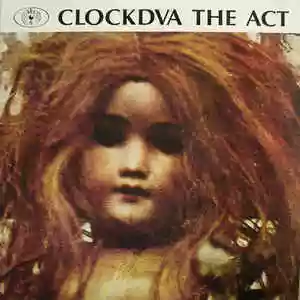
A year earlier, the two singles "The Hacker" and "The Act" were released. The latter is a surprising turn for the sound. Just what everyone was waiting for. The cyborg saga begins, and there couldn't be a better band to inaugurate a future decade of varied electronic music, with a thousand facets.
No ambient house or the like, here there's industrial at its fullest. We don't find variations or strange influences to spice up the sauce. "The Act" perfectly introduces Clock's future path; a sea of masochistic, obsessive sequences that do not relent for a moment.
The bass lines are the true builders of the sonic circularity, where Newton's prophetic declamation intervenes. A great work that closes the eighties giving much hope. In reality, in the following decade, there will be numerous productions by Clock DVA, also characterized by an excessive insistence on a precise line. With "The Act," however, we are far from boring repetitions and hateful clichés.
Loading comments slowly
Summary by Bot
Clock DVA's album 'The Act' showcases a forward-thinking and obsessive approach to dark industrial music. The album marks a significant evolution from their earlier post-punk and experimental roots. With tight rhythmic structures and Adi Newton's distinctive voice, it stands as a pioneering work that shaped 1980s and future electronic music. The review praises its relentless energy and innovation, noting it avoids clichés and boring repetition.
Clock DVA
Clock DVA is an English industrial/post-punk and electronic group from Sheffield, formed in 1978 by Adi Newton and Steven "Judd" Turner. The band is noted for fusing industrial sound design with post-punk, jazz-inflected textures and later EBM/cyberpunk aesthetics, releasing key albums such as Buried Dreams, Advantage, Man-Amplified, Thirst and White Souls in Black Suits.07 Reviews
