
 •
Rating:
•
Rating:
THE REVIEW
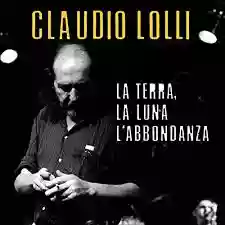
On this day of strong mistral winds, I find myself reviewing a record that is not a record. At least not in the classic sense of the term. Released in 2003, attached to a book, it is titled “La terra, la luna e l’abbondanza” by Claudio Lolli. A unique album because it was recorded here and there across the Peninsula without, among other things, knowing in which city this or that track was recorded. An almost clandestine album where a poet sings in a delicate and sublime manner, with anger and love, 10 beautiful songs accompanied only by Paolo Capodacqua, a brilliant guitarist.
The album starts with "Curva sud," which Claudio himself described as a return of man to the bestiality of war, referencing the events of the 1990s in then-Yugoslavia. A return of barbarism, like the man in the stadium, on the curve, who abandons his status as sapiens and transforms into a beast. A punch in the stomach, believe me. "La fine del cinema muto" is a song about the need for silence, a metaphor for modernity, with silent film actors who, with the arrival of sound, lost their jobs and ended up working as ushers in cinemas out of passion, out of nostalgia ("they say this future will feel like a bomb to us"). The record contains an old anarchist song written after the death of Giuseppe Pinelli, who fell from the fourth floor of a government building, set to music by Lolli like a lullaby. That same power is narrated in "Analfabetizzazione," the opposite of literacy: with words they have conditioned us, shaped us, tamed us, and Claudio's only way to oppose it was to change the sense of the alphabet ("I called my mother 'stone' so she would be durable, yes, but not alive; I called my friends 'feet' because I was happy only when setting off"). After the poignant "Io ti faccio del male," originally played almost like a blues, you can listen to "Dita", a flutter of wings, a leap of the heart, a precious gem where Lolli draws inspiration from a phenomenon he saw in Volterra, where from a group of clouds perched on a mountain, he saw the sun's rays emerge like fingers. The melancholic part reaches its peak in "Quando la morte avrà" dedicated to his father with whom he had a conflicted relationship, and "Angoscia metropolitana," the song that, more than any other, captures man's sense of bewilderment regarding the society in which he lives. A track from 1972 that is more relevant than ever. The reading closes with that “Borghesia” so fought against and criticized to the point of feeling almost defeated. The lyrics, in fact, have slightly changed in the chorus: "vecchia piccola borghesia, vecchia gente di casa mia, per piccina che tu sia il vento (forse) ti spazzerà via" and with "Adriatico," another song about power, which manifests in our lives in an insidious manner, with a terrible calmness, like a calm sea.
Honor to Claudio, far from the spotlight and close to the anguishes of humanity.
Loading comments slowly
Summary by Bot
Claudio Lolli's 2003 album 'La terra, la luna e l'abbondanza' is a uniquely recorded and deeply poetic work. Featuring 10 songs with delicate yet powerful lyrics, it touches on themes of war, silence, social conditioning, and personal struggles. The music is minimalist, accompanied only by guitarist Paolo Capodacqua. The album resonates with emotional depth and political commentary, making it a memorable, clandestine gem.Tracklist Videos
Claudio Lolli
Claudio Lolli (Italian; Bolognese singer-songwriter) debuted in the early 1970s and became known for stark existential writing and openly political, communist-leaning themes. Reviews highlight major peaks in the mid-1970s and a final acclaimed album released in 2017, shortly before his death in 2018.20 Reviews
