
 •
Rating:
•
Rating:
THE REVIEW
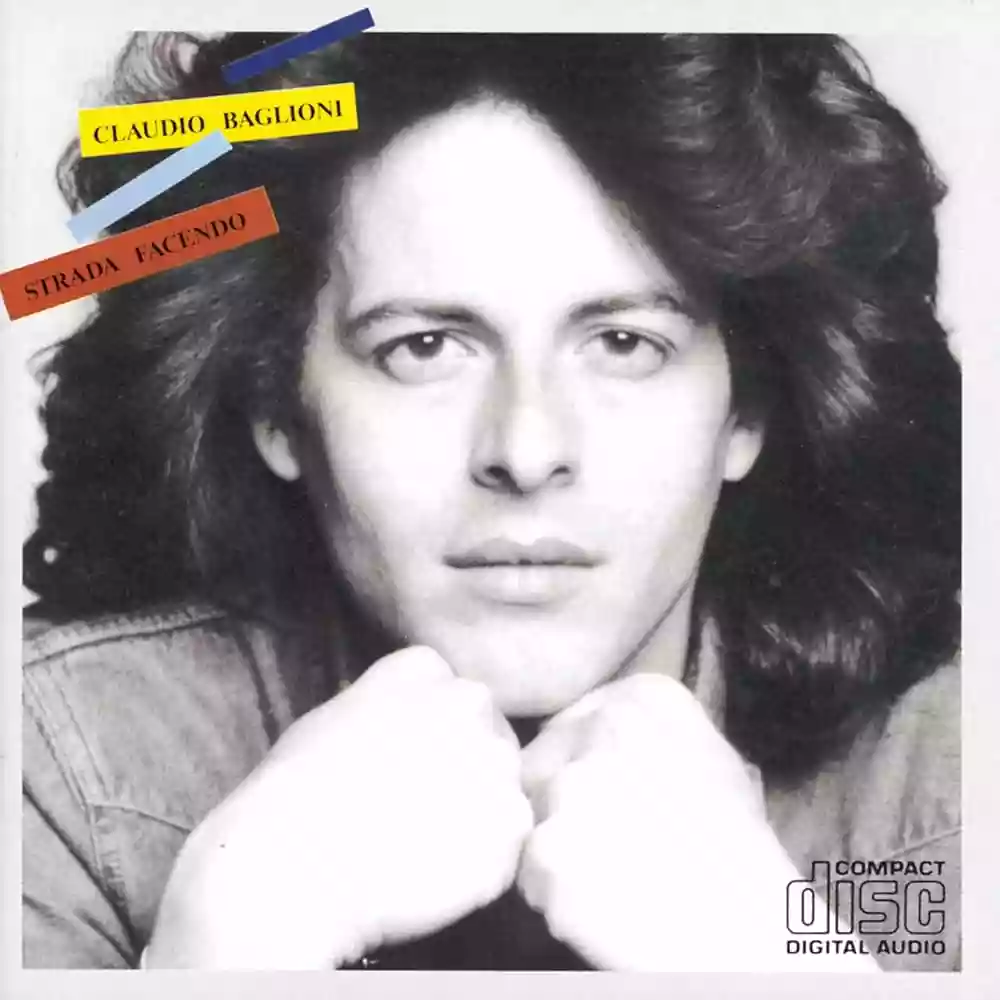
STRADA FACENDO (1981) 7/10
Maybe it would deserve a higher score (8) but I don’t want to contradict myself: I am firmly convinced that Baglioni’s best album, as I said some time ago, is “Anime in gioco” (1997), and that’s final. Of course, his albums from the late '70s up to the first half of the '80s aren’t to be thrown away either, before the “intellectual hangover” of “Oltre” in 1990. Let’s be clear: they’re not perfect records, they have a few too many indigestible tracks, and the lyrics often go off on decidedly irritating flights of fancy, but there are good ideas at play here, and all things considered I don’t see why they should be scorned (especially since Baglioni is rarely discussed on this site).
In 1981, “Strada facendo” marks the definitive affirmation (in primis commercial) of Baglioni, who had already sold a lot even before (Baglioni is the Italian artist with the most albums sold ever in Italy) but with one and a half million (and maybe more, unofficial numbers) copies sold, he paved the way for the triumph of the following live “Alé-Oó” and for the almost 5 million records sold in the next “round”: “La vita è adesso”, 1985, the best-selling Italian album of all time (though much inferior to “Strada facendo”, a pale copy). Only Dire Straits’ “Making Movies” would surpass it in the hit parade, but 1981 truly explodes as the year of Baglioni-mania. The Roman singer-songwriter, at the time just 30, pleased daughters, mothers, aunts and, essentially, the whole united clan, just like his soothing love songs: no sex, no risqué themes, all very “Democristiano”. Which wouldn’t necessarily be much of a compliment if it weren’t for the truly excellent musical performance (he recorded it in London, to be on the safe side).
Now, in 1980 Battisti had somewhat “shuffled” the cards of Italian music: Mogol had been “put out to pasture” and Geoff Westley, with whom the singer-songwriter from Poggio Bustone had recorded his last two albums, was free (so to speak—let’s just say he wasn’t working with any Italian artist post-Battisti). Mogol is “snatched up” by Cocciante, Westley teams up with Baglioni. In an interview a while back, Westley sprinkled sweet words in regard to Baglioni and less so about Battisti. He said that, at first, he didn’t know either of them (fair enough), but while Baglioni was interested in every detail of the album, even the most insignificant or negligible sound, Battisti apparently delegated a lot to his collaborators and to Westley himself, asking him to “pack” the sound as much as possible to increase, in his opinion, the emotional impact (and in fact, “Una giornata uggiosa” is quite a pompous album, more often than not). Is this true? We can only trust Westley on it.
Of the 12 tracks, at least half are truly excellent, even if one stands out above all (it’s usually liked even by non-Baglioni fans): “Fotografie”. The beginning, development, and end of a love story seen through the images of some photographs is certainly an emotional piece but is developed, in its musical cohesion, in an extraordinary way, crowned by that final coda—an arrangement by Westley himself, who had already “placed” something similar in “I vecchi” (the latter a bit too much of a tearjerker on command). Everybody, even rocks, knows the title-track, and yet Phil Palmer’s electric guitar stands out—and even more memorable is that riff in “Ora che ho te”, one of the most recognizable in Italian music. Baglioni is also inspired lyrically, sometimes he does go over the top, it’s true, but all that youthful (sometimes ridiculous) language that pervaded his early albums (“Accoccolati ad ascoltare il mare...”—well, here such a “decadent” lyric is missing, not to mention the equally questionable “Passerotto, non andare via...”) is eliminated in favor of more mature and less adolescent texts. In this sense, I find the sweetness of “Ragazze dell'Est” (on piano, as usual, Westley) fantastic, as well as the enumeration, often amusing, in “Notti”.
Other aspects are less convincing. The ending entrusted to “Buona fortuna” is weak, almost evanescent and rather opportunistic; the 4 interludes where he recounts his childhood (from birth until age 15) in a totally autobiographical way with just voice and guitar are sincere, authentic as far as that goes, but get tiresome in the long run; the semi-rock of “Via” (an ultra, über, hyper-famous track) is proof that rock has never really been his thing. But, I repeat, it’s one of his best works: the flair, back then, was definitely still there.
Loading comments slowly
Summary by Bot
The review offers a balanced look at Claudio Baglioni's album 'Strada facendo.' It assesses the album's musical direction and overall impact. Main themes include songwriting and stylistic choices. The review acknowledges strengths but also notes limitations. It's aimed at fans and newcomers to Baglioni's discography.Tracklist Lyrics Videos
Claudio Baglioni
Italian singer-songwriter and performer from Rome, active since the late 1960s. Known for melodic concept albums and stadium-scale tours, with major hits across the 1970s–1980s. Co-hosted the TV show Anima mia (1997).29 Reviews
Other reviews
By dosankos
Today I feel like a feather floating, swimming suspended in the air, and trying to grasp that "hook in the middle of the sky."
The Roman minstrel accompanies me, with his ode to the old, the girls of the east, and those nights of an unfortunate love and bitter nights waiting for you.
