
 •
Rating:
•
Rating:
THE REVIEW
"Without you, I would die/without you, I would explode/without you, I would burn/all my dreams..."
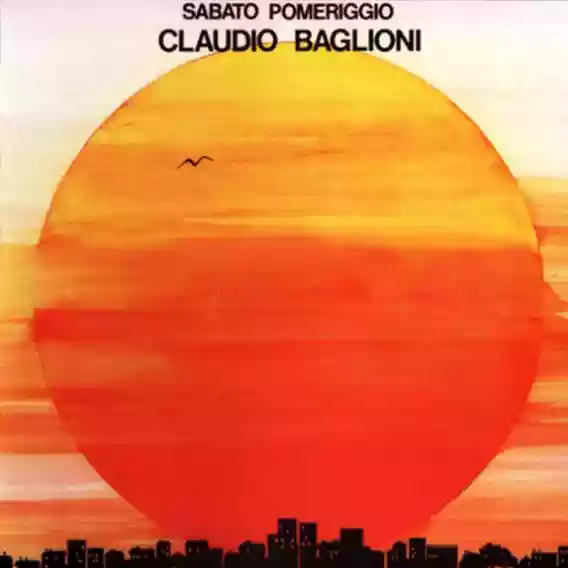
One of the most famous refrains of Italian music, in another album of gems like "Saturday Afternoon". Yes, I listened to it again recently, and there's not a note or song that's out of place in terms of level, quality, and strength...everything works well.
The French treatment for Baglioni served its purpose: after "And You..." another album of maturity in the form of a concept, where all the songs are linked by the theme of "waiting" (which gives the title to the introduction and reprise track of the album).
And within the man's waiting, one travels through a twilight, Gozzani-style song, very beautifully set in Rome and not Turin: "Carillon": an elderly woman looks at all the old things listed in the song*, remembering beautiful moments from the past and now feeling useless like "...an old music box/that no longer works".
From a past, dusty atmosphere to a more lively one about a southern worker but too much of a dreamer ("Get Up Giuseppe"): many desires and projects, but nothing concrete. He is invited to get up, to get on with it and no longer wait.
We arrive at the waiting of a man sitting at the subway stop looking at a poster of a vacation spot and, by staring at it, wanting to escape far away ("Poster"). But at the same time around him are various other people and situations...
An interlude where it is sung that boys play boys' games and girls play girls' games. And both reason that the grown-ups play "mom and dad" ("That's All!").
Then the pearls start again ("That's All" for me is not): in "Doremifasol" the man confesses to his love that he didn't manage to tell her a few things because in his musician's mind there are only the seven notes.
A love appointment (the "first time") disappointed for the girl waiting for the boy under the Osram Lamp, installed in Rome for the 1960 Olympics, marked by the passing minutes and small situations in that wait.
We return to the desires for a better life, to a lively atmosphere with "21X", about a worker hoping to hit the jackpot in the soccer pools to satisfy some desires (a small villa with a pool, a two-month vacation in Val Gardena etc...**), forgetting about the millions attracted by the smell of ragù and giving a little kiss to his children.
As for "Romanity" Baglioni does not give up, writing a piece about Sixtus V, a sixteenth-century pope who, in a period after the Reformation, fought the spiritual and moral decay of the city with serious and energetic measures, attracting the ire of the population as well as important figures of the Church.
In the second stanza of the piece, the pope is asked to close his eyes and pretend nothing happened ("...less judgment/more faith rules the Holy Office...") and to keep silent, if "you don't want to end up like a roast lamb" (doesn't it sound a bit mafia-like?).
In the final stanza, someone is asked (ironically?) to pray and mind their own business ("pray a lot/and live little").
As in the previous album, here too Baglioni returns to the area of the first wife, born on the Belluno Alps.
"Lake Misurina" is the reworking of one of the legends about the birth of the lake: Misurina is a little girl who walks on a meadow, stopping at the same time each day on a cliff.
She is spied on by a certain Sorapis (in the legend, the father) who watches her every day, until one fine moment she finds herself in his arms.
Sorapis closes his eyes, bows his head, and waits every day and night until he becomes stone. The tears streaming from his eyes form a green lake (that of Misurina).
And waiting (a long wait!) while everything passes ("the barred 9, Paradise, Spring etc...").
And it ends with the end of love, among memories of a good time and an invitation not to leave, as the day wanes (naturally, "Saturday Afternoon"!).
"Alone", two years later, seems to be a "narrative" posthumous consequence. The first golden period is over, but our Claudio will continue to reap successes.
*Remember Gozzano's "Grandma Speranza's Friend"
**In those years Pasolini talks about the "embourgeoisement" of the working class.
Loading comments slowly
Summary by Bot
This review praises Claudio Baglioni’s 'Sabato Pomeriggio' as a cohesive and poetic concept album centered around the theme of waiting. The songs blend nostalgic storytelling with social and personal reflections, showcasing Baglioni’s musical maturity. Tracks highlight diverse characters and vivid Roman settings, tied together with emotional depth and timeless musical quality. The album remains a significant work in the Italian music canon.Tracklist Lyrics Videos
Claudio Baglioni
Claudio Baglioni is an Italian singer-songwriter from Rome, a leading figure in Italian pop since the early 1970s. His 1972 concept album Questo piccolo grande amore launched him to national fame; La vita è adesso became Italy’s bestselling album. Through the 1990s he explored denser writing and global sounds with works like Oltre and major tours.28 Reviews
Other reviews
By Kyrielison
Saturday afternoon, within that 'Saturday afternoon,' I discover a humanity that spends its time waiting for something, just like me.
Baglioni is the Pascoli of Italian song... The singer of small things. It is not necessary to fly to the sun, after all, just crawl on the ground to a clean little spot where sometimes the sun appears and one can warm up a bit.
