
 •
Rating:
•
Rating:
THE REVIEW
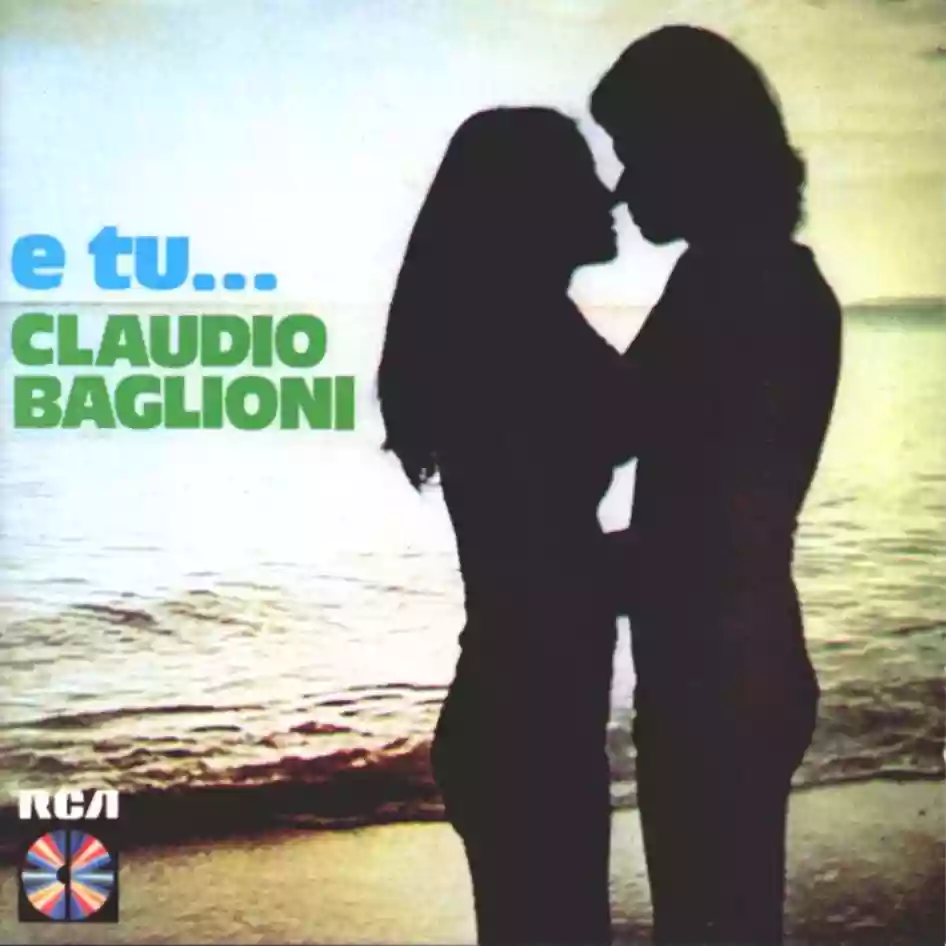
After two concept albums, Baglioni moves to Paris with the intention of producing a rock opera. Meanwhile, the not-bad "Gira che ti rigira amore bello" did not keep up in sales with the previous "Questo piccolo grande amore."
He meets Vangelis, a former member of Aphrodite's Child (the band of Demis Roussos), a multi-instrumentalist to whom he proposes to produce a rock opera, but which will never be made.
Nevertheless, an album of songs is produced, divided between the theme of love ("E tu...", "Chissà se mi pensi") and some memories of the past ("Oh Merilù"). There's also room for a musical reworking of a composition in Roman dialect by Trilussa ("Ninna nanna dalla guerra") (titled "Ninna nanna nanna ninna"), probably to, as I happened to read in a magazine some years ago, respond to De Gregori who seemed to have claimed in the '70s "wanting to pollute the river of Baglioni's love song and similar").
After listening to this album several times over many years, I must say it is very beautiful, surpassing the two previous ones. If "E tu" is by now a classic love song, alongside "Questo piccolo grande amore" and "Sabato pomeriggio" (not forgetting "Amore bello"), there are some other pearls or almost pebbles here. But let's take it in order.
"Oh Merilù" brings back the passion of many young Italians who played music in the basements of buildings to the notes of great hits from the Beatles, Rolling Stones, or similar. The Merilù must have been a crush for the singer-songwriter.
"E me lo chiami amore" brings back the great or small misunderstandings that then end a love. Beautiful melody - lyrics: a vent and reflections of the singer-songwriter on love, which doesn't seem to be love, with his beloved.
"Ad Agordo è così" Baglioni sings about his small experiences and the habits of the people of the small mountain town in the Belluno Alps, where the parents of his then-wife, Paola Massari, were born.
"Ninna nanna" is a beautiful musical exercise on an anti-war text, but which in the mouth of Baglioni at the time seems unsuitable in my opinion. However, in the choir there is something modernly and youthfully popular (from the seventies).
"Chissà se mi pensi" I see as a continuation and development of "E me lo chiami amore": having recomposed the unpleasant situation of "E me lo chiami amore," the protagonist asks his woman if she's thinking of him and if there's still a place in her heart (and if there is, not to keep it hidden any longer). Beautiful.
"A modo mio" is a quiet track that then opens up on a slightly wider emotional horizon, in which Baglioni expresses all his romantic charge, especially in the finale ("...and then you came/my love"). In my opinion, one of Baglioni's greatest jewels, beneath the major classics between '72 and '75 and before "Avrai" and "Strada facendo", the two other great Baglioni classics of the '80s.
"Il mattino si è svegliato" the verses recall a certain 19th-century poetry, whose stylized images of nature are fascinating in their progression, thanks to the music and voice of our Claudio.
"Quanta strada da fare" I still remember as the first track on side b, present in a cassette compilation of songwriters that my father received as a gift from the gas station, every time he filled up. I was little, but this song had conquered me from the first listen. Years later, listening to it again (2002), I notice certain passages that remind me of the music from '70s police movies, American cop films and (especially) Italian poliziotteschi. Regarding the lyrics, I read that it's a kind of "on the road" adventure: each quatrain of the lyrics is a voice in the list of things the protagonist sees along the way. We are facing a very dated track, but very beautiful.
The youthful and somewhat hippy spirit of the previous decade characterizes "Canto", where the following words are uttered: "All is loving all is love/.../never lose your faith in love". In an interview, Baglioni would have recalled that in 1968, he doesn't remember where, many young people sang these words. A nice ending to a very, very enjoyable album.
I have always thought that Baglioni was the first purely and strictly youthful singer-songwriter in terms of strong immediacy and identification, having no disciples who almost entirely followed his example except Max Pezzali from "Uomo Ragno" to "La dura legge del gol". I thought about it recently: Baglioni and Pezzali are two different worlds of two different decades; yet I find the same youthful feeling and living in the small things and situations of life that I have absolutely not found in other great singers and songwriters of the decades from the '70s to the '90s.
Ah, yes, I believe there is something that links them: the use of jargon more or less present within the songs. On this comparison, I think there will be someone who agrees with me...
Loading comments slowly
Summary by Bot
The review praises Claudio Baglioni's album 'E tu...' as a beautiful and timeless collection surpassing his previous works. The album mixes themes of love, memory, and personal reflection, enriched by meaningful melodies and thoughtful lyrics. Highlights include classic love songs and storytelling tracks rooted in Italian culture. The reviewer appreciates Baglioni's youthful immediacy and lyrical style, comparing him uniquely to Max Pezzali.Tracklist Lyrics Videos
Claudio Baglioni
Italian singer-songwriter and performer from Rome, active since the late 1960s. Known for melodic concept albums and stadium-scale tours, with major hits across the 1970s–1980s. Co-hosted the TV show Anima mia (1997).30 Reviews
