
 •
Rating:
•
Rating:
THE REVIEW
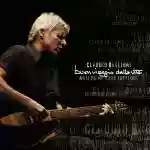
The recently released triple box set by Baglioni "Buon viaggio della vita" was advertised as a "live" album, but according to those who have listened to it, it actually sounds like a studio-recorded album with the addition of a jingle—always the same—of fake applause, added in post-production.
I haven't bought it nor do I intend to; I limited myself to the legal download of 6 tracks from its CD3, namely "'51 Montesacro" (beautiful, evocative, and much renewed in arrangement, it also reunites—for the first time—three out of four of the autobiographical "skits" contained in the 1981 album "Strada facendo"); "Dov'è dov'è" (lively, vaguely folk, but I still prefer the original contained in the 1990 album "Oltre", or the 1996 live version contained in the double CD "Attori e spettatori", which is a very successful ska); "Naso di falco" (here slightly touched with world music as a novelty, yet once again, the original contained in the album "Oltre" fears no comparison, in my opinion); "Pace" (now dressed with an arrangement whose pomp, so little in line with the meditative theme of this strongly autobiographical song, referring to the exhausting search for inner peace by the doubtful and lost narrating self, leaves me with an unpleasant aftertaste, unlike the sublime original version contained in the album "Oltre"; if I really have to think of its rearrangement, then hurrah for the extraordinary, almost moving, live solo piano version of 2001, contained in the triple album "Incanto - tra pianoforte e voce"); "Acqua nell'acqua" (hardly different from the thousand other previous versions); "Fratello sole sorella luna" (ditto).
These that I've mentioned are the only tracks my friends have pointed out as being a tad more original in arrangements, and I have to say that not even all six are; I nonetheless downloaded them at the price of €0.99 each.
While I write this (for me, a devoted fan of Baglioni's work for over 30 years) unhappy review, the box set stands third (behind "Papito" by Miguel Bosé, stationary on the lukewarm summer podium for two uninterrupted months, and behind "La Finestra" by Negramaro, stable on the said podium for a whole month) according to the FIMI chart, which is the only official chart here in Italy. Not everyone might know, however, that the aforementioned chart excludes all compilations (which have a separate FIMI chart; here it is), including the Fiorello & Baldini album featuring the best of last season's "Viva Radio 2", and including the two Festivalbar compilations - red and blue.
According to the unified chart of the specialized magazine Musica & Dischi (which includes the aforementioned compilations), for example, the new entry BVDV placed tenth in the album sales.
This doesn't cheer me up; on the contrary; I am sorry to see the name of an artist like Claudio Baglioni, whose work I greatly appreciate—again—for over thirty years and of whom I own almost all albums (except this one and the equally useless triple box set A-Live from 1998), associated with a sales result that is decidedly not brilliant already from the first week (as it is known, the chart position doesn't matter in this regard, rather the number of actual copies sold: nowadays, in summer - very differently from what happened in the '70s and '80s—you can be first with just a few thousand copies; at Christmas, it’s very different). Nor have I ever believed that the number of copies sold could be any index of the quality of an artistic work (otherwise the singer-songwriter dearest to me together with Claudio Baglioni, that is Enzo Jannacci, should be considered for more than 40 years - with the exception of Vengo anch'io, no tu no - a nobody, and not the great artist he is).
However, this gives me one more reason to question:
- the informational value of the bombastic press release sent to the singer-songwriter's fans, at lightning speed, the very afternoon of the FIMI chart publication by Baglioni’s official newsletter, info@patapan.it, which reads, among other things, that this third place in the FIMI chart "is the umpteenth great result achieved by Claudio Baglioni" (!);
- whether it was indeed worth it for this great figure of Italian music to bear mockery, jibes, and assorted harsh journalistic criticisms (an example, merciless in this regard but in my opinion very fitting, is the review that appeared in Il Giornale) just to release this product for which I can find no sense.
Such a recording operation does not seem motivated by any specific urgency and/or artistic need (the arrangements of the tracks, except for the rarest cases mentioned above, which can be counted on one hand, are always the same; nor can it be said that it is a "souvenir" of the past triumphant "Tutti Qui" tour, as it was not recorded during any of those 70 concerts, but clearly in a studio; moreover, it includes tracks that are not part of the tour setlist, conversely excluding in the piece "Io Sono Qui", the only true novelty of the tour in terms of arrangements, namely a very distinctive intro, made with a dozen different guitars in rapid succession); nor does this operation appear—more generally—endowed with any other specific reason: reasonably, in fact, it might not have even been commissioned by the record company (since he should have already amply fulfilled -one presumes- any possible contractual obligation on his part, having already released, before printing this triple, two double CDs, two triple CDs, a triple DVD, and a double DVD since early 2005!).
In short, this album does not seem—actually—to have any other motivation except the purely economic one, whereas every previous release by Claudio Baglioni (even the much-maligned box sets "Tutti qui" and "Gli altri tutti qui", as well as the '60s cover album "Quelli degli altri tutti qui", in addition to the numerous "real" live albums—each very different from the other in arrangements—made over the years) had had, even when it wasn't an album of unreleased tracks, much more sense than this.
The two collections of his greatest hits in original studio edition were, record-wise, practically inevitable, and they nonetheless filled a gap in that sense, as they were aimed at a wide, precise target of sympathizers-but-not-fans (before the merger between Sony and BMG, indeed, it wasn’t possible to unite all the original editions of the RCA and CBS periods); as for the double album of covers (magnificently interpreted by a voice in great shape, though the undersigned harbors more than a reservation about some of the arrangements by the Claudio Baglioni-Paolo Gianolio duo), it was—a classy tribute, in my opinion—to a great era of Italian music that Baglioni had already shown his love for in unsuspected times.
This one, on the other hand... well, I just can’t find it a meaning ("Voglio trovare/un senso a questo disco/ma forse questo disco/un senso non ce l'ha..." Vasco Rossi might say); not even a purely commercial meaning, given the not exciting—but sincerely quite predictable—sales figures for an album containing just a couple of tracks capable of somewhat distinguishing themselves from everything that, of Claudio Baglioni, already existed on record store shelves. And I say this with genuine regret.
Loading comments slowly
Summary by Bot
The review critically examines Claudio Baglioni's triple box set 'Buon viaggio della vita,' highlighting that it sounds like a studio album with fake live applause. The reviewer, a longtime fan, finds most arrangements uninspired compared to earlier versions and questions the artistic purpose of the release, suggesting a primarily commercial motive. Despite the album charting well, its sales figures and reception disappoint fans and the reviewer alike.Tracklist Lyrics
Claudio Baglioni
Italian singer-songwriter and performer from Rome, active since the late 1960s. Known for melodic concept albums and stadium-scale tours, with major hits across the 1970s–1980s. Co-hosted the TV show Anima mia (1997).30 Reviews
