
 •
Rating:
•
Rating:
THE REVIEW
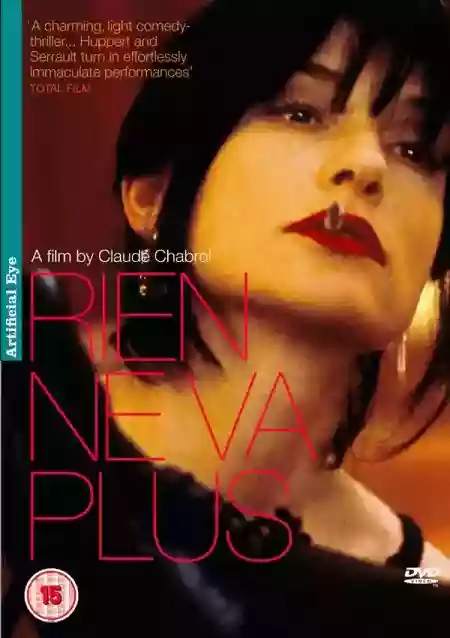
And here comes Chabrol, nonchalantly providing us with a true Pulp Fiction stripped of Hollywood's cabalistic sensationalism, where the die is cast and the roulette consistently lands on 23, "a stroke of luck"...
Where Quentin gives us a Disney-esque cartoon, Claude presents the true essence of mockery. Where Tarantino tries to twist the inevitability of everything happening into a violent preach of free will, Chabrol, with the playful indifference of someone who loves their own boredom, unfolds the events impersonally, opting for a vade retro to the illusory considerations of the "I am".
Success, every man for himself, machinations, calculations, plans, action, all go up in smoke with the Frenchman in the cauldron of the dispensable, where instead you draw the bluff and mischief of the momentary whims of the Gods, who decide (depending on their whim at that moment) whether you'll get away or not. Less cold-bloodedness, more sacrifices, less consideration of self-preservation, more passes to higher levels of fear, otherwise there's a danger that "words will gush forth with the gray matter".
Everything decisively hinges on the improbable, eschewing plausibility, to shed light on concrete realities where the factor of time is excluded simply because it doesn't exist; the "living room" of "Mr. K" demonstrates that. You float in an "I hope I make it out" that creates a sharp, unknown enjoyment, that playful indulgence in the cynical and ruthless jesting as only the wise angels can do.
And salvation comes through burning your anal hairs, not with the flames of hell, but with a paradisiacal light that doesn't spare bouts of vomiting amidst frantic blessings. And what is a broken finger compared to the ice-breaking chisel lodged in the brain of the hapless mafia "bagman".
The main actor's (Michel Serrault) ability to "fall from the clouds" is delightful as he evolves his innate deceitful nature, aided by the blood tie of the daughter, friend, partner, companion (an elusive Huppert), who bolsters the pursuit of lifelong trickery, not directly at the person of the moment, but at life itself. The package, double package, and counter-package set up so that, if need be, not to avoid death, but to have the detachment to offer it an aperitif.
And I assure you that for that thirst accumulated over eternity, "La Secca" will not disdain a momentary refreshment, sparing you amusedly, gifting you moments of corporeal immortality that tickle the resurfacing of a shelved soul and its hidden triumphs in consciously soiling oneself.
The panaché offered by the Transalpine gives us the same effect. Champagne!
Loading comments slowly
Summary by Bot
Claude Chabrol's 'Rien ne va plus' offers a detached and cynical view of fate and human machinations, contrasting sharply with Hollywood sensibilities. The film blends dark humor and existential themes with unpredictable outcomes, showcasing strong performances, especially by Michel Serrault. Its impersonal storytelling highlights the randomness and ruthlessness of life and death. A distinctive French thriller with a unique philosophic edge.
Claude Chabrol
Claude Chabrol (1930–2010) was a French film director and a key figure of the Nouvelle Vague. Renowned for cool, incisive thrillers and psychological dramas that dissect bourgeois society, he frequently collaborated with actors such as Isabelle Huppert.03 Reviews
