
 •
Rating:
•
Rating:
THE REVIEW
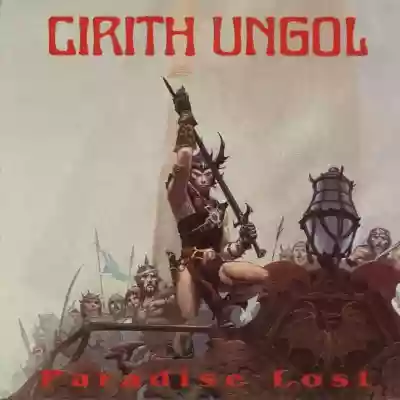
The final yet underrated effort from the fundamental Heavy/Epic Metal band known as Cirith Ungol, "Paradise Lost" was released in 1991 under Restless Records. This label, aside from hindering the album's production in every way—compromising mixing and recording quality and neglecting the band itself—later refused to reissue it. Given that the '91 release had a limited print run, this made every copy of Cirith Ungol's last work a rare and prized collector's item. The absence of Jerry Fogle's mephistophelian guitar is also notably felt, replaced by a certain Jim Barraza, as well as the historic bassist Michael Flint, replaced by Vernon Green: due to this, the lead guitar on the album does not match the illustrious predecessors of the Californian quintet, and the bass is professional but lacks character.
Cirith Ungol make one last, futile attempt to achieve the much-deserved fame from their decades-long career; stylistically, and despite the difficulties, "Paradise Lost" represents the most Epic, most engaged, most pathos-laden point of their discography. One could say it is a worthy epitaph to a genre that, in its classic form, was in those years heading towards its demise, buried by Grunge and alternative music along with many others. Unfortunately, the album was released to general indifference and was only rediscovered recently. The opener is the compelling anthem "Join The Legion," a classic epic ride passionately performed by Tim Baker, whose voice is shrill and energetic as always. The second track is the dark and paced "The Troll," with its powerful riff and an atmosphere reminiscent of the "Frost and Fire" works in many ways. This is followed by a magnificently executed cover of Arthur Brown's "Fire," a nice tribute to the unique yet little-known English psychedelic singer. Worthy, to say the least. "Heaven Help Us" revisits the theme of the epic ride, which, thanks to the great prowess of the group, manages not to bore; enriched by experimentation, as Baker sings cleanly (!), temporarily abandoning his inimitable hoarse and shrill tone, gifting the listener with a pleasant surprise. Two filler songs, "Before The Lash" and "Go It Alone," follow; the latter remains, albeit less demanding, an interesting point of listening as it is completely different from all the others, with a melodic imprint that borders on '80s commercial Hard Rock.
From track no.7 onwards, the CD's crown jewel comes to light, shining with all its sulfurous splendor: three songs, one might say three acts, all linked together and inspired by the poem (an epic poem, naturally!) by J. Milton that gives the album its name. "Chaos Rising" is indisputably a masterpiece of epic metal, with an engaging expressiveness: among guitar gallops, arpeggios, and crescendos of power and atmosphere, Cirith Ungol take us on an 8.42-minute journey through the gates of musical mysticism. Following is the equally epic "Fallen Idols," which worthily succeeds the previous song without allowing the just-created atmosphere to dissipate. Definitely more straightforward and slower-paced. The title-track "Paradise Lost," one of the band's best pieces, closes the epic parenthesis. Although praised far and wide by admirers, it personally seems less indispensable than the first act. Nonetheless, it is a marvelous song, characterized by a crescendo of U.S.A.-styled epicness that seems to catapult within the poem's verses themselves.
In conclusion, an album worthy of its predecessors, capable of leaving us with the memory of a band that will never again take the stage, a band that never sold out, threw in the towel, and that deserved fame and recognition a thousand times more than many other Epic acts. Only the death of Jerry Fogle prevented the reunion and halted them. I close the review with a proposal: try reading Milton while these tracks play on your stereo, and pay attention to what you feel.
Loading comments slowly
Summary by Bot
‘Paradise Lost’ is Cirith Ungol’s underrated final album, marked by production struggles and lineup changes. Despite these, it stands as their most epic and passionate work. The review highlights key tracks, including a Milton-inspired trilogy, and praises Tim Baker’s vocal performances. Though initially overlooked, the album has grown in appreciation as a worthy epitaph to classic epic metal.
Cirith Ungol
Cirith Ungol are an American epic/doom heavy metal band formed in Ventura, California in 1971. Defined by Tim Baker’s unmistakable high, rasping vocals and Jerry Fogle’s acidic guitar work, they released a run of cult albums from 1981–1991 before disbanding. Reuniting in 2016, they returned to the studio with Forever Black (2020) and Dark Parade (2023), continuing their dark, fatalistic brand of metal often linked to Michael Moorcock’s Elric imagery and Michael Whelan’s cover art.05 Reviews
