
 •
Rating:
•
Rating:
THE REVIEW
If in the cradle of rock and roll Elvis Presley put his face, hip movements, and that charisma that made him a typically American legend, it is undeniable that few like Chuck Berry can claim to have placed their heart. Charles Edward Anderson Berry was certainly among those fundamental "breakthrough elects" who laid the cornerstones of pop and rock in the 20th century.
Chuck Berry remains the unsurpassed icon of rock and roll: he holds the formula of this bold and dangerous alchemy, having shaped the expression and definitive language of the main instrument in such a liturgy: the electric guitar. As is known, in the mid-50s that strange hybrid between country and blues that Alan Freed first defined as Rock rapidly abandoned that musical ghetto made of labels like "Race" or "Rhythm and blues" where record companies placed products destined for poor African Americans. In a flash, this genre became a universal musical language and a generational common denominator, although particularly addressed to young whites. Berry's six-string became the symbol of this epochal change. From it converge and radiate deadly and alien riffs and solos, fleshy blues scales sublimated in the fast and frenzied carousel of the boogie step, capable of stunning an entire hemisphere and pushing all those who later celebrated the genre, from Keith Richards to Hendrix, to pick up the instrument.
Berry, the black artist loved even by WASPs, the first stage animal thanks to various rituals that exalted the deadly messianic power of his instrument (his "duck walk" is famous), is also among the first to create his own imaginary, sensitive to changing times. In the years of "A rebel without a cause", he understands that the secret of rock lies in capturing the impulses of the teenage audience, completing Presley's work and laying the foundations for that proto-sexual liberation through rock and roll that in the following decade would find full realization with the Rolling Stones and The Doors. Symptomatic in this sense is all his "school" theme as a seasoned sly fox, with pop archetypes such as "School day", "Sweet little sixteen" or the lewd nursery rhyme "My Ding-A-Ling", even though in Berry's extensive catalog there are plenty of anti-racist anthems like "Too much monkey business", intimate derivations like "Deep feeling", or even gloomy and obsessive moments like "Memphis Tennessee".
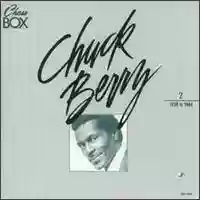
It's impossible to choose just one album: it's much better to recommend a comprehensive retrospective like "The Chess Box", in which obviously all his imperishable warhorses appear, almost all rendered syncopated and feverish by Willie Dixon's bass, Fred Below's pyrotechnic drums (listen to the already mentioned "School day") and Johnnie Johnson's piano. One cannot fail to mention at least "Maybellene" (his first great success from 1955, the paradigm of our musician's sparkling solos), "Roll over Beethoven", "Johnny B. Goode", "Carol" and of course that "You never can tell" whose appearance in the dance scene of "Pulp Fiction" only confirmed the eternal freshness of Chuck Berry's repertoire.
Loading comments slowly
Summary by Bot
This review celebrates Chuck Berry as a foundational figure in rock and roll, highlighting his innovative guitar work and cultural impact. The Chess Box is praised as an essential compilation capturing his timeless classics. It emphasizes Berry's role in shaping youth culture and the universal language of rock music.Tracklist Lyrics
Chuck Berry
Chuck Berry (1926–2017) was an American guitarist, singer and songwriter, a pioneer of rock and roll. With riff-driven hits like Maybellene, Roll Over Beethoven, Johnny B. Goode, Sweet Little Sixteen and You Never Can Tell, he defined the electric guitar’s role in popular music and influenced generations of artists.06 Reviews
