
 •
Rating:
•
Rating:
THE REVIEW
I really enjoyed the concert that Cross and his band performed a few months ago at the Naima Blues Club in Forlì: class and musical intelligence in abundance, but also some less expected or even surprising elements, such as the absolute charm of his backup singer and pianist Kiki Ebsen, a fifty-something from Los Angeles with a captivating smile, fluid piano playing, and a precise, effective vocal timbre only slightly husky, making the whole even sexier. Worth marrying! (perhaps if you're a bit older...).
Much less alluring (except musically) is the good Christopher, overweight as usual and on this occasion wearing a funny bowler hat to hide his advancing baldness. His chubby hands skillfully caressed the Stratocaster or the acoustic Taylor, his absurd mezzo-soprano voice rang out, tuned and unmistakable, over those hyper-melodic and impeccable compositions, chosen from the ten albums released over his thirty-year career.
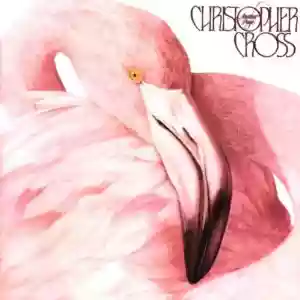
This album takes us back almost to the beginning of that career (1983) and is a classic sophomore work, dealing with the honor and burden of following up on a hugely successful debut (four American Grammies earned from his first album "Christopher Cross" in 1980). "Another Page" sold a lot at the time... millions of copies, though not as much as the previous album, and I would say it's his best, perhaps tied with the excellent "Window" from 1995.
We're well into the eighties here, so obsolete bell-like synthesizers and brash snare drums treated with gated reverb predominate. As with the debut album, it starts with a pair of somewhat unimpressive songs, but then the inspiration soars and maintains through to the end, with three or four melodies that, to my taste, stand out particularly... and which I will certainly highlight here.
The first of these is "What Am I Supposed To Believe," a duet with Karla Bonoff, a country-pop singer who was then competing with the more successful Linda Rondstadt and the more talented Emmilou Harris in that genre. Cross's feminine voice has no trouble alternating with the guest's on the same tones: first verse to Cross, second to Bonoff, the third together and it's done.
The same successful formula applies to "Think Of Laura," essentially Cross and his acoustic guitar at their best in a sublime melody inspired by the tragic fate of a girl killed by a stray bullet: California pop at its zenith, cunning and sweetened for detractors, exquisitely refined and the quintessence of intelligent and avant-garde easy listening (for the time) for enthusiasts.
"All Right" attempts to repeat the glories of the famous "Ride Like the Wind" (covered by everyone, even by the Saxons!) from his debut album. It too is a rock-funky-blues-pop in the Californian manner, with its emphatic and round swagger, very danceable. Cross's half-blues and half-intimate singing becomes syncopated and irresistible in the choruses, reaffirming a true standard of entertainment songs, surpassed today but not improved by much less interesting pop and dance productions.
My favorite among the ten songs on the album is nonetheless the ballad "Nature of the Game", due to its stunningly emotional vocal blend featuring the main voice alongside a good half of the Eagles entourage (Don Henley, Glenn Frey, and John David Souther) on the choruses and supporting closed-mouth harmonies on the bridges.
I'll conclude with a quick list of the musicians involved in the album, practically the best high-profile session men from Los Angeles, plus some established colleagues, all eager to participate in the project since at that time Christopher Cross was the state of the art in light music but with talent: for the vocals, besides those already mentioned, Art Garfunkel, Carl Wilson of the Beach Boys, Michael McDonald of the Doobie Brothers also contribute; the electric guitars are in the hands of Jay Graydon and Steve Lukather of Toto; the bass is handled by Abraham Laboriel and Mike Porcaro (also Toto); the drummers are Steve Gadd and Jeff Porcaro (naturally Toto); Tom Scott and Ernie Watts are the saxophonists; Paulinho da Costa and Lenny Castro are the percussionists, crucial in Cross's arrangements; Rob Meurer and producer Michael Omartian finally program and operate the keyboards.
A real drawback of this album is the mastering of the ten tracks that make up the CD: very low, muted. It’s a shame because the mixes are impeccable, and so are the instrument timbres, considering them from an eighties perspective and within the context of the round and discreet pop style pursued by the artist... one of the least "sonorous" albums in my collection, absolutely in need of remastering.
Loading comments slowly
Summary by Bot
The review praises Christopher Cross' 1983 album Another Page as a classic follow-up to his Grammy-winning debut, featuring polished and melodic soft rock. Highlights include emotional ballads like "Nature of the Game" with notable guest vocalists. The album showcases highly skilled Los Angeles session musicians. Despite its excellent compositions and arrangements, the album suffers from low and muted mastering that detracts from its sonic quality. Overall, Another Page remains an intelligent and refined pop record emblematic of 1980s California sound.Tracklist Lyrics Videos
Christopher Cross
Christopher Cross is an American singer-songwriter and guitarist known for elegant soft-rock hits such as Sailing and Ride Like the Wind. His debut album earned multiple Grammy Awards, and he co-wrote and performed Arthur’s Theme (Best That You Can Do), which won the Academy Award. Active since the late 1970s, he continues to record and tour.05 Reviews
