
 •
Rating:
•
Rating:
THE REVIEW
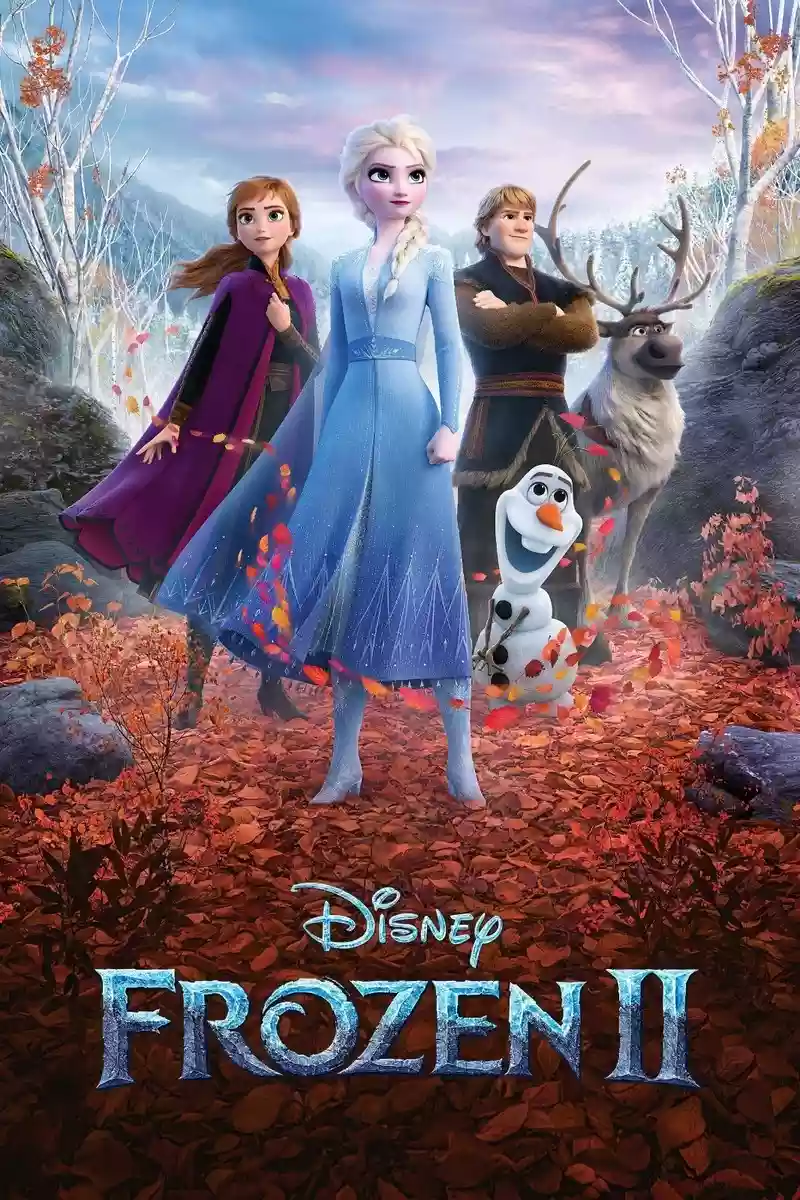
An unwritten rule states that if the original movie is mediocre, its sequel will hardly be any better. There are a few exceptions (“Wreck-It Ralph”), but generally speaking the rule holds true and can, with some confidence, be applied in the diverse world of entertainment. And then, something happens like “Frozen 2: The Secret of Arendelle” grossing 300 million dollars worldwide and becoming the highest-grossing animated film of all time—and since it’s an awful film, one wonders how it’s possible. Of course, the success of the original (already questionable in itself), “Frozen” (2013), had a major impact, as did the character of Elsa, who is no longer a Snow White waiting for a prince to come and save her life, but a brave and cunning heroine who puts all the men (almost all of them idiots, ça va sans dire) in her pocket and proves that women have a courage and a stubbornness that men can only dream of. These days, that’s the rule, and the message can even be acceptable, but what’s less acceptable is the musical form it’s given, or the use of comic relief characters with no substance (and terribly drawn), like Olaf, the disassemblable and reassemblable snowman, who doesn’t manage to land a single good gag, not even by accident. At least in the first film he had some supporting characters who were at least amusing, but in the second he’s left totally alone: the comic moments all belong to him, and, as a result, you never actually laugh.
The screenplay by Jennifer Lee (also director, together with Chris Buck) and Allison Schroeder tries to take more grown-up paths, presenting the protagonists with not-so-trivial choices, such as growing up and the transition from adolescence to adulthood, and dealing with “serious” themes like the loss of a loved one, grieving, and even the subject of genocide. Great idea (even if, in reality, most kids are more interested in other things), too bad that the musical format here becomes even more overwhelming, with characters chirping every ten minutes (whereas, at least in the first movie, most of the songs were clustered in the first half), and not one of the songs is ever truly memorable (no, there’s nothing here like the earworm “Let It Go,” clumsily replaced by “Into the Unknown,” which is the same old gruel, only worse), and—an enormous mistake—they are never sung in chorus or duet as in the most classic Disney tradition, but always solo, as if they were minor (and frankly didactic) underlinings of what’s happening on screen at that moment. Equally inconceivable (despite the potentially interesting idea) is the lack of an actual villain: our heroes, in fact, are fighting against a returning past (a painful family matter Elsa knew nothing about), and the only real “villain” (so to speak) is Zephyr, the wind, as Olaf calls it. And the 103-minute runtime, more often than not, feels endless.
As usual, the Italian edition manages to make things even worse. The dubbing is not without its flaws, especially technical ones, which are inconceivable in 2019: the adaptation of the songs is often mismatched with the lip movements, and the Italian voices don’t always work, starting with Olaf/Enrico Brignano (who, unfortunately, as in the first film, also sings here), and the decision to entrust Giuliano Sangiorgi of Negramaro with the final song, “Nell'ignoto,” over the end credits, is debatable to say the least.
Characters and voice actors (original/Italian): Elsa (Idina Menzel/Serena Autieri); Anna (Kristen Bell/Serena Rossi); Kristoff (Johnathan Groff/Paolo De Santis); Olaf (Josh Gad/Enrico Brignano); Iduna (Evan Rachel Wood/Joy Saltarelli); Agnarr (Alfred Molina/Stefano Benassi); Yelena (Martha Plimpton/Rossella Izzo); Grandpabbie (Ciarán Hinds/Massimo Lopez).
Loading comments slowly
Summary by Bot
The review expresses strong disappointment with Frozen 2. It criticizes the film for not living up to the original. Weaknesses include story, character, and overall execution. The reviewer found little magic or charm in the sequel. Frozen 2 is ultimately deemed forgettable.
Chris Buck; Jennifer Lee
American animation filmmakers best known for co-directing Disney’s Frozen (2013) and Frozen II (2019). Lee is Chief Creative Officer of Walt Disney Animation Studios (since 2018); Buck previously co-directed Tarzan (1999) and Surf’s Up (2007).01 Reviews
