
 •
Rating:
•
Rating:
THE REVIEW
I have the impression that Francisco Buarque de Hollanda, known as Chico (pronounced "sheeko") Buarque, is less famous than his compatriots Caetano Veloso and Gilberto Gil, yet he is more familiar with our country, having lived here for several years, starting in '53 when his father was invited as a professor at the University of Rome and returning in '69 for a brief period of self-exile during the Brazilian dictatorship. His high-born origins did not compromise his rebellious nature; Chico would not hide in bourgeois hypocrisy, he would not seek refuge in comfort, but rather he would step into the arena taking advantage of the initial privilege of coming from a cultured family. His creativity and refined taste would not be limited to the musical field, but would also embrace literature and theater, thus diversifying his decades-long and now acclaimed career.
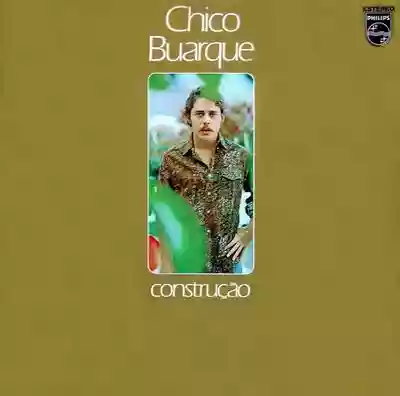
I decided to start talking about Chico, beginning with "Construção" from '71, his tenth album, because it is one of his best works; it is the album where Chico manages to go beyond bossa nova and samba canção, without ever renouncing them because he is their son and eternal debtor. It is also the comeback album after the exile (excluding Vol. 4, considered a transitional work), where many accumulated tensions converge. The return to his homeland is indeed a touching moment; it is the re-immersion into his own reality after a period of detachment and reflection and thus the accumulation of ideas and possible solutions that, like seeds left to mature, encounter a new fertile soil.
It is an album that would deserve an analysis of every track, because each song tends to stimulate a different point, to touch the most known and universal sensations with unique beauty.
But I will talk about just one song; the one that gives the album its title, a musical and literary masterpiece, arranged around two chords, maintaining a melancholic, gently angry flow, in an orderly crescendo of schizophrenic brass.
The text is composed of 41 verses, all ending with a three-syllable word with the accent on the first syllable (proparoxytone, uh!). In the second and third part of the text, Chico manages to redirect the conveyed sensations by changing the position of the last words that conclude each verse. Brilliant!
Other songs are already MPB classics, one is a version of 4/3/1943 by his friend Dalla, some were composed with Vinicius De Moraes, and one with Tom Jobim; perhaps the most traditional, tenderer, and subdued ones where for a few minutes you feel in love or overwhelmed by nostalgia, that famous "saudade" that no one like a Brazilian far from his homeland knows how to describe.
Magical and moving, it could be an excellent start for those who want to approach Brazilian singer-songwriter music and perhaps even to learn a little Portuguese.
Loading comments slowly
Summary by Bot
This review highlights Chico Buarque's 1971 album Construção as a masterpiece blending refined musical talent with poetic and political depth. It praises the album's unique mix of bossa nova and samba styles while emphasizing its literary creativity, especially in the title track. The review also situates the album within the artist's complex history of exile and cultural reflection, recommending it as an ideal introduction to Brazilian singer-songwriter music.Tracklist Lyrics Videos
Chico Buarque
Chico Buarque (born 19 June 1944, Rio de Janeiro) is a Brazilian singer-songwriter, novelist, and playwright, central to MPB. Renowned for poetic, socially attuned lyrics and the landmark album Construção (1971), he has collaborated with figures such as Vinicius de Moraes and Tom Jobim and is a recipient of the Camões Prize (2019).01 Reviews
