
 •
Rating:
•
Rating:
THE REVIEW
It starts like The Black Saint And The Sinner Lady, composed just a few months earlier. The same. The same chord, the same melody. And then it goes somewhere else. Somewhere different. Here it's called Myself When I'm Real.
The year is still 1963. I - instead - for years, thought it was a later album. That it was linked to Charles's physical condition. I know that at the end of his life he couldn't carry a bass with him anymore.
(How awful it must have been - Charles - to leave this way. To lose strength. Every day. For someone who calling him a volcano, a cyclone, a force of nature has always been an understatement. Ending up not being able to even move a finger.)
Instead, no. It's an album of a Mingus who is well here. An album that - as often happens when dealing with a genius - is completely different from what you expect.
Mingus, certainly, is a thousand things. A thousand people, a thousand ideas. But also one. Take Phitecantropus, for example (and maybe indulge yourself to listen to it again). It's a fury, a runaway train, a hurricane. It's a thousand variations, improvisations, even screams. It's a man. It's like saying, this is me. All of this, all this magma, incandescent, irrepressible. This.
But it's also, and above all, rhythm. If one didn't know, they wouldn't have a hard time understanding it was written by a bassist. Because that's precisely the secret, of that wonder. That always, under the screams, under the roar of the earth, there's a bass, commanding everyone like a maestro. Leading and directing. And calling to order. To an order certainly bizarre, certainly unrepeatable. An order, in all this chaos. An order named Charles Mingus.
Here, though, no. Here, upon close listening, you realize something. That there are themes, maybe known, maybe some standards (like Body and Soul, like I'm Getting Sentimental Over You) that you recognize, and some new, something of his. But there's one thing missing, entirely.
The rhythm.
Well, I don't know about you, but it makes me a bit tender imagining him, Charles, playing the piano, with those big fingers, used to violently pluck the strings of a bass. All by himself, in a studio, him and a piano. And I also wonder if he managed to hold out for long, sitting there, almost calm. Calm? Mingus and calm. In the same sentence. Strange, really strange.
As strange, really strange, are the versions of the pieces he presents. It seems, upon careful listening, it seems like it's an album of Mingus thinking. Taking some pieces, some famous, some his, stripping them down. Putting them there. And looking at them. And starting to think over them. And discovering something. Something different, something genius. And then leaving it there. Leaving that idea there, maybe for the future, maybe for those who come after. Leaving it there, and moving on to something else. To another idea, to another thing. And the rhythm, the one that's missing, the one you don't hear in the middle of the tracks, is another. It's the rhythm of his thoughts. Only that. Like a negative of Pithecantropus, there the rhythm, the tone of the bass, was Mingus's heart beating. It was what held everything together. Here it's his thought.
There you have it, something like that. Strange and difficult. And beautiful. And mysterious. And unique.
An album by Charles Mingus, who is a thousand people, a thousand ideas, a thousand things. And also just one. And I - mistakenly, but perhaps I don't know - have always thought that this was Mingus, when, in Mexico, unable to move anymore, he stayed there, and his head wandered. This, this stuff here. Strange and difficult, beautiful and mysterious. And unique.
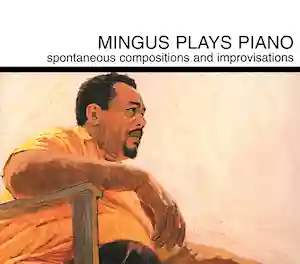
Mingus playing.
Piano.
Loading comments slowly
Summary by Bot
This review highlights Charles Mingus’s 1963 album 'Mingus Plays Piano,' portraying a profoundly different side of the artist. Unlike his bass-centered work full of rhythm and chaos, this album reveals a calm, introspective Mingus exploring themes quietly on piano. The album is described as strange but beautiful, embodying Mingus’s genius in a unique and thoughtful way.Tracklist Videos
01 Myself When I Am Real (07:38)
02 I Can't Get Started (03:43)
03 Body and Soul (04:35)
04 Roland Kirk's Message (02:43)
05 Memories of You (04:37)
06 She's Just Miss Popular Hybrid (03:11)
07 Orange Was the Color of Her Dress, Then Silk Blues (04:18)
09 Old Portrait (03:49)
10 I'm Getting Sentimental Over You (03:46)
11 Compositional Theme Story: Medleys, Anthems and Folklore (08:35)
Charles Mingus
Charles Mingus (1922–1979) was an American jazz double bassist, composer, and bandleader, widely regarded as one of jazz’s major figures. Reviews highlight his intense personality, his blend of rigorous composition with collective improvisation, and a sound rooted in blues and gospel while reaching toward freer forms.12 Reviews
