
 •
Rating:
•
Rating:
THE REVIEW
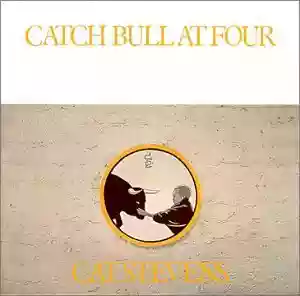
In the wonderful '70s, a vivid and original album titled “Catch Bull At Four” was released, born from the work and renewed reflection of a genius and generous artist like Cat Stevens.
Cat Stevens has always attracted me for the taste for exploration he has been able to transpose into music and words. Other explorations for other greats, but no one like him, no one with the ability to reevaluate all of life, to truly follow the barren path of his own spirituality, posing certain questions in the incessant attempt to improve himself as a man before as an artist. Restless soul that he was, Stevens quickly tired of Pop Star fame and of the shallow songs that brought him to the limelight, transforming over time into an Author capable of wisely using his art to reflect and narrate his personal spiritual journey, making his music an incessant quest for a home, a place of the Soul, an adequate spirituality, to the point of determining the death and disappearance of a character and style and the well-known rebirth in the sacred guise of Yusuf Islam.
In 1972, “Catch Bull At Four” was released, and with this album, Cat Stevens puts a lid on his previous production, giving life to a path of spiritual exploration in music. An album that in its restless and markedly multicultural features expresses the sense of deep exploration, the blend of styles, religions, cultures, and moods. The songs become more difficult and winding, yet alive and intense, increasingly resembling every Man's path towards Truth. The sound environment in this work is sparse, allowing for simple things among which the soul can rise free from earthly ties. The voice is an expression of vigor and roar, the tool of an inspired man eager to look beyond with new eyes. The writing is lively and haughty. Introspection, reflection, and communication come together in the album that becomes at once meditative and energetic, aimed at opening many questions without closing any answer, but which, despite its transience, in being a step of a far higher journey, expresses a clear charm and a clear message.
The very first song speaks, in some way, of Conversion. In “Sitting,” Stevens sings with great strength about life changing and opening to new questions.. a subversive song full of the atmospheres of those open and gray years, a defiant song in which the “awakening” is still attributed to the celestial intervention of generic stars..
“Oh I’m on my way I know I am, but times there were when I thought not, bleeding half myself in bad company, I thank the moon I had the strength to stop..”
“The Boy With A Moon And Star On His Head” is a sort of parable, an oriental-tinted revisitation of the nativity scene, reflecting on the concept of Love.. We are catapulted into an eastern village where the birth of a child with the moon and star on his head shakes customs..
“I got down on my knees and kissed the moon and star on his head. As years went by the boy grew high and the village looked on in awe, They’d never seen anything like the boy with the moon and star before. And the people would ride from
Loading comments slowly
Summary by Bot
Cat Stevens' 1972 album Catch Bull At Four marks a significant evolution in his career, blending folk rock with rich spiritual and multicultural themes. The album reflects his restless soul seeking deeper truths beyond pop fame, characterized by thoughtful lyrics and a minimalist sound that elevates the soul. Songs like 'Sitting' and 'The Boy With A Moon And Star On His Head' highlight his artistic exploration of life's deeper questions. Overall, this album captures a powerful stage in Stevens' journey toward spiritual awakening.Tracklist Lyrics Videos
Cat Stevens
Cat Stevens (born Steven Demetre Georgiou) is a British singer-songwriter whose early-70s acoustic albums—blending folk-rock with Mediterranean color—made him an international figure. After a late‑70s conversion to Islam, he adopted the name Yusuf Islam, later resuming recording and touring as Yusuf/Cat Stevens.07 Reviews
