
 •
Rating:
•
Rating:
THE REVIEW
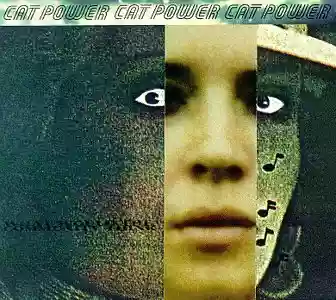
Chan traveling among skeletons of (un)fulfilled loves and cursed poet(esses)/s. Schizophrenia is now not even latent anymore. The disturbances are, in fact, the purest and deepest ever, already (in)citing and (in)capable of taking a definitive position beyond or this side of the line that divides mental (in)sanity from daily life. The morbid feeling (love, of course) that populates some of these twelve (ultra)terrestrial creatures ("Bathysphere", cover from the eccentric "Wild Love" by Smog, at first martial and playful, is now rendered liquid but cosmic and chaotic by uncontrolled electric(al) echoes) is indeed unraveled with measure between punk rock, folk, and blues, yet still remains a jumble of genres and mental disorders (even just think for a moment of the Harvey of "Rid Of Me") that shows no sign of diminishing (and indeed amplifies) not even in the (un)happy epilogue (with conversing voices as a counterpoint) of "The Coat Is Always On".
The problem does not lie so much in the quality of the record: the problem (which is not really a problem, in the end) lies more in the fact that the sound does actually resemble little more than a rough demo. Many times, the choruses fall back on incredibly drastic solutions ("Water & Air" is a ritual of self-destruction, a woman wallowing in her own pain or, seen otherwise, screaming her unhappiness drunkenly), at other times, -and there are many- they simply do not exist, as they are diluted in their own non-sense despair (the sinister "In This Hole" is marked by off-key bells). Marshall must be credited for becoming aware of her phobias and oppressions, but not for giving the proper weight to her skill as a songwriter, constrained as she is (by someone or simple personal indecision that still does not lead her to acknowledge the validity of her means) to play covers (of excellent names to boot) to embellish the work. Like a delirious Capgras, however, Marshall seems at least convinced of her capability as a leader, and perhaps sees in her "Nude As The News" (the usual electric guitar intro that explodes, with her voice never so howling, in a disruptive mess of drums) an anthem of rebellion for generations to come. After all, much like Harvey (and many others, especially Germano), Marshall has brought pain into music. Far from excesses like the idea of an unattainable icon so dear to the eighties (Kate Bush and Debbie Harry teach us so), we can finally say we are faced with a woman like many others. Like all. Who suffers, cries. Grows.
Loading comments slowly
Summary by Bot
This review dives into Cat Power's album 'What Would The Community Think', highlighting its raw, demo-like production and intense emotional content. It explores themes of mental health, pain, and genre fluidity, comparing Chan Marshall's approach to other alternative artists. Despite production flaws, the album is praised for its haunting depth and powerful expression of vulnerability.
Cat Power
Cat Power is the stage name of American singer-songwriter Chan (Charlyn) Marshall. Emerging in the 1990s with stark, minimalist records, she reached wider acclaim with Moon Pix (1998) and You Are Free (2003), embraced soul-inflected arrangements on The Greatest (2006), and explored electronics on Sun (2012). Later releases include Wanderer (2018) and Covers (2022).09 Reviews
