
 •
Rating:
•
Rating: THE REVIEW
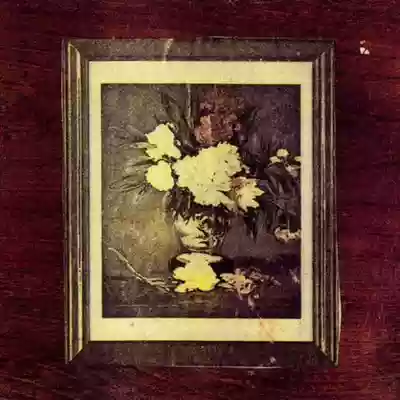
It seems that the chronic outbursts of "Myra Lee" were recorded during the same sessions that generated Cat Power's first album: "Dear Sir". Yet the tracks on "Myra Lee", released a year later in 1996, turn out to be more cerebral, like dark, torrid storms raging relentlessly over the tempo and lyrics of the songs. Demonic beats and muffled opaque distortions rage and disappear at will, in the grip of insane and uncontrollable tempestuous whims. It is precisely in the midst of this sound apocalypse that we find her: Chan Marshall, also known as Cat Power, who sings her disillusionment with exasperated cries, as if she had a sharp, vile piece of glass lodged between her ribs. And there must be, I'm sure, some perverse demon that enjoys twisting it among her wounds. Because her voice contorts, occasionally resettles, and then falls back into cries that are sometimes almost inhuman. And it’s as though I can see them, her veiled lips, parted in grimaces of pain, while they birth and at the same time repudiate those sick and unreal phrases.
Quite some time has passed by now, and Cat Power’s laments seem to have quieted definitively. Her latest works show us that: "The Greatest" and "Jukebox", exquisitely subdued for sure, like her current voice, but perhaps too weak in certain aspects. And I miss the "first" Cat Power. Not only the one from "Myra Lee" but also (and perhaps even more so) the one from "Moon Pix", which I consider her ultimate and absolute masterpiece. Not to mention, of course, "You Are Free", which of all the distinctive elements of her early career, represents the perfect synthesis. And who knows, maybe those of "Myra Lee" were just adolescent spasms now overcome, unlikely to return.
But fortunately, music is capable of preserving and accompanying its offspring intact over time. Some age well, others remain trapped among the dazzling fashions of their time, and others, like "Myra Lee", do not age at all. This is why when we re-listen to "old" albums like this one, we often find them incredibly younger and more alive than those present. I have often wondered what the secrets of this perfect preservation might be. Most probably, the sincere necessity to express oneself through music with universal themes and a significant detachment from the influences that poison our time are fundamental ingredients. And the shocking and debilitating cries of "Myra Lee", raw and unadulterated as presented by the American singer-songwriter, are not temporally placeable. They were an integral part of her state then, and they might well be part of ours now. And it is precisely the spontaneous and uncontrolled liberation that is the best way to express one's condition in music. Only this way can the listener, unconsciously and immediately, recognize themselves in what they hear. Cat Power did all this excellently in "Myra Lee" and the beauty is that most likely she couldn't help it.
Loading comments slowly
Summary by Bot
Cat Power's Myra Lee captures a raw, intense soundscape shaped by dark distortions and anguished vocals. Released shortly after her debut, the album highlights Chan Marshall's emotional outpouring, portraying a turbulent artistic phase. Though her later works are subtler, this album remains a timeless, powerful expression of pain and authenticity, resonating beyond its era. It stands as a vital snapshot of her early emotionally charged style.Tracklist Lyrics Videos
Cat Power
Cat Power is the stage name of American singer-songwriter Chan (Charlyn) Marshall. Emerging in the 1990s with stark, minimalist records, she reached wider acclaim with Moon Pix (1998) and You Are Free (2003), embraced soul-inflected arrangements on The Greatest (2006), and explored electronics on Sun (2012). Later releases include Wanderer (2018) and Covers (2022).09 Reviews
