
 •
Rating:
•
Rating:
THE REVIEW
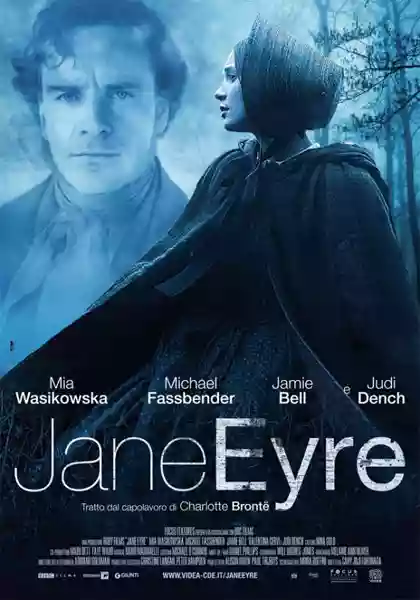
I don't think I'm the only one who approached this umpteenth adaptation of Jane Eyre with a mix of skepticism and perplexity, given that it's one of the most famous novels, a symbol of a tormented love story, and considering that the genre it belongs to is almost saturated, so to speak. The hidden threat around the corner is undoubtedly that of falling into the empty sentimentalism that characterizes many of today's film releases.
However, to dispel this threat, there are important names behind this production, including Dario Marinelli for the soundtrack, who already worked on "Pride and Prejudice" and "Atonement"; in addition to a decent level cast that includes among others Judi Dench. Even director Fukunaga seems to handle himself well in a continent different from his own, in a nation with a solid cinematic tradition; rounding off with the splendid aristocratic residences as the final piece, perhaps the most prominent, for a decidedly successful venture.
The first sequences of the film, consisting of flashbacks, immediately immerse the audience into the story, presenting the protagonist as an adult (for that time) who struggles along the moorland battered by harsh weather conditions and the rarefied atmosphere of Derbyshire. A place very similar to where the book's author and her sisters grew up, surrounded by a cemetery and little else; although in reality much of what is seen, at the photographic level, is the result of digital effects, darkening the sunny springtime landscapes during the film's shooting. Despite the story itself, which follows Jane Eyre's childhood of unhappiness and abuse; the passage from her aunt's country estate (Haddon Hall) to the austere Lowood Institute; until reaching Rochester's residence as a governess - dealing with usual love problems between discordant social classes, and that hint of mystery leading to the final twist - could have led the film towards excessively dark tones, even to appeal to the young supporters of the dark genre inaugurated by works of lesser caliber. A purpose from which the film rightly seems to distance itself, favoring the more refined aspect, given that jolts are ultimately absent among those rooms and corridors lit by dim candles and lamps.
The sentimental aspect of it all is also relegated to the background through the scant chemistry between the protagonists (practically none): the young actress Mia Wasikowska (Jane Eyre), and a Michael Fassbender who departs from improbable situations of being a handsome and tormented figure, properly embodying the affliction and guilt of a distant repressed past, in Rochester's shoes; in fascinating contrast with Jane Eyre's not dissimilar state, often perched by the window dreaming of a serene life in less secluded places. Meanwhile, the director's merit seems to lie in the intimacy of the subjective view that imposes the protagonist's personality, letting more traditional solutions and approaches slip by to give color to the film. The result is that of a gaunt film, opaque, based on the moral compass of the latter, determined not to be subdued by passion or compromises and jealousies, although in love with Rochester; and initially understandably so, perhaps aspiring more than anything to recover from her unhappy childhood (eloquent in this sense is the scene where she removes her wedding dress as if it were burning).
All this might actually displease various target audiences, although in my opinion, it represents an essential peculiarity to add something to what has already been seen in the realm of period films made in England, even though ultimately it's not anything essential.
Loading comments slowly
Summary by Bot
Cary Fukunaga’s Jane Eyre navigates the challenge of adapting a classic romance without falling into typical sentimental traps. Supported by a strong cast including Mia Wasikowska, Michael Fassbender, and Judi Dench, the film emphasizes refined aesthetics and the protagonist’s internal moral compass over passionate chemistry. Though it may not satisfy all fans of darker or more emotive renditions, the film offers a visually striking, intimate portrayal with subtlety and restraint. It stands out as a distinct but not essential take on this well-known story.
Cary Fukunaga
Cary Joji Fukunaga is an American director, writer, and cinematographer known for Sin Nombre, Jane Eyre, Beasts of No Nation, the first season of HBO’s True Detective, and the James Bond film No Time to Die.03 Reviews
