
 •
Rating:
•
Rating:
THE REVIEW
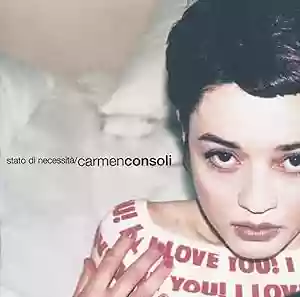
If we exclude the debut that went unnoticed ("Due parole", 1996), with the exception of the single "Amore di plastica", it is with the second album, "Confusa e felice" (1997) that Carmen Consoli becomes Carmen Consoli, or as a critic of the time defined her, while reviewing the album, "[...] it is the closest thing to what Alanis Morissette is singing in America [...] a curious chant perhaps related to Dolores O'Riordan of the Cranberries".
Hyperbole aside, that album established her, she then risked losing her way with the subsequent "Mediamente isterica" (1998, a half flop) and returned to, not even so ancient, glories with "Stato di necessità" (2000), to date her best work. Perhaps because it does not limit itself to proposing the usual pop rock singer's energy but mixes, with evident talent, other genres. Thus, soul, jazz, the most orthodox Italian tradition, and Latin music make an appearance. All of this is shaken in a blend of sounds and words that surprised the audience not accustomed to certain contaminations in the Italian pop realm, or at least not so frequently.
The most famous track is "L'ultimo bacio" (oh my God, Muccino), violins by Modugno are mentioned and then on to fawn over, as it is said, but, upon closer inspection, it is the weakest track of the album, almost disappearing when compared to pieces like "Bambina impertinente" or "Equilibrio precario". Under the (disguised) appearance of a very 'love' album, hides a mix of erotism and passion hardly spiritual, typical of Latin peoples and therefore of Sicily, exuding sex from every verse: in "Sultano (della Kianca)" a passage says: "Sono infuocata se penso ai cinque grammi di virilità, sono turbata al pensiero di una lama in profondità", just to say.
A sanguine album, a sort of dreamlike journey between Sicily and certain Arab countries, with the dream of transporting oneself and letting go, like the big single "Parole di burro", with a video, not by chance, shot in Marrakech. Yet from dreams, one wakes up and lets oneself be lulled by memories, or by little songs of past loves. A wingbeat separates the rockish "In bianco e nero" (brought to Sanremo with timid success) and the very delicate "L'epilogo" ("La dolce evasione e il rientro, la porta di casa, la luce ed il gas, le solite foto sul frigo, e il pensiero di essere altrove").
Everything, ça va sans dire, played very well, with some remarkable musical intuitions (the beautiful, (semi) airy piano of the final "Non volermi male") and a sonic taste so Mediterranean, despite predominantly rock guitars and drums, that Consoli herself over time has abandoned in favor of works, in my opinion, more pretentious and far too self-absorbed, as if the circle was closed here, halfway through. What a pity.
Loading comments slowly
Summary by Bot
Carmen Consoli's 2000 album 'Stato di necessità' is hailed as her best work, showcasing a rich mix of pop rock, soul, jazz, and Latin influences. The review highlights its passionate and Mediterranean soul, with standout tracks like 'Bambina impertinente' and 'Parole di burro.' While 'L'ultimo bacio' is noted as weaker, the album overall represents a bold artistic blend that contrasts with her later, more self-absorbed works.Tracklist Lyrics Videos
Carmen Consoli
Italian singer-songwriter from Catania known for blending rock, folk and Sicilian/Mediterranean influences; rose to national prominence in the late 1990s.27 Reviews
Other reviews
By Coelum
"The album is perhaps the most beautiful work by the singer-songwriter, demonstrating the 'maturation' that occurred compared to 'Mediamente isterica.'"
"Tears come with 'Orfeo,' where the poor Eurydice calls her lover to help her, but she is unaware that he will not succeed (and this is what is most heartbreaking)."
