
 •
Rating:
•
Rating:
THE REVIEW
The Camel, fresh from the monumental instrumental concept-album “The Snow Goose”, immediately return to the recording studio to release another work. It is 1976 and the progressive rock phenomenon is winding down. Some historical bands have quit or are about to do so (King Crimson, Gentle Giant, Focus), others are preparing to change course to reach more accessible “ports” (Genesis, Yes, Jethro Tull), while others decide to continue their own “progressive journey”, and the Camel belong to this latter category, alongside the Van der Graaf Generator of the ever praised singer Peter Hammill. Much of the music that developed in the second half of the ‘60s and the first half of the ‘70s is canceled or scaled down in the eyes of the public by the intrusion of genres such as Punk, Disco, and Reggae.
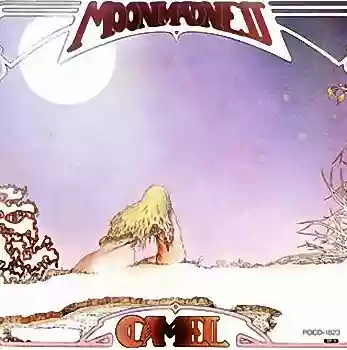
However, less than a year after the previous effort, the quartet from Guildford releases “Moonmadness”. The title suggests that the Moon is the focal point of this musical structure, but despite this, we are not talking about a true concept album: the songs are unconnected, lyrics appear on few occasions, and do not support any narrative plot, upon which every thematic album worthy of its name takes root. The lineup is the historic one, which, unfortunately, will begin to disband right after the tour of that year. Indeed, bassist Doug Ferguson comes into conflict with the other members and leaves the band. The reason for this sudden farewell is due to the band appearing determined to venture into other musical dimensions; the subsequent “Rain Dances” and “Breathless” are the fruits of this change, which does not spark the interest of the historic bassist. In my opinion, “Moonmadness” is the epitaph of that Camel that entered the elite of the progressive, becoming, along with the “Gabrielian” Genesis, the standard-bearers of the romantic-dreamy wing. Of course, there will be excellent works in the future, but they will merely echo the roar, the subdued regret of an era now vanished.
The product is compact, has no weak points, and fits perfectly into the dreamlike and dreamy system built by the melodies. “Song Within a Song”, a prelude to the lunar dream, filled with vaguely Crimsonian melodic ideas, opens subtly with flute and the brief lyrics sung by D. Ferguson, then rises in tone thanks to the outbursts of P. Bardens. “Chord Change” is a powerful instrumental with a rhythmic section in top form that accompanies Latimer's solos, this time clearly inspired by funk, broken by Bardens’ digressions on the Hammond organ. “Spirit of the Water” is an episode of notable intensity, even though its duration barely exceeds 2 minutes. Bardens, who sings on this track, turns out a melancholic piano melody, which the flute then joins. “Air Born” is an ethereal composition, which in its epic lightness almost seems to caress the Moon. The intro entrusted to the transverse flute is striking and is followed first by a very short guitar solo by A. Latimer and then by the lyrics, always sung by the leader, interspersed with faint “Bardensian” strokes. “Lunar Sea” is the entry into the rugged yet fascinating lunar world, a long and choral instrumental detour. It begins with the sidereal sounds of Bardens’ keyboards, which then leave space to the leader’s six-string, this time furious and distorted as never before.
In conclusion, “Moonmadness” presents itself as an album with bright, engaging, dreamy sounds, which captivate the ears of those who care about genuine, emotional prog-rock that doesn’t succumb to excessive virtuosity. Surely there are better albums in terms of genius, technique, epicity, and innovation in the progressive field, but overall, it results as a homogeneous, sober album. The instrumental parts are impeccable, striking the listener's imagination both for their technical prowess and for the emotional rate infused within. Note: I find that, in this album, the fleeting lyrical parts constitute a strength (a rare thing for Camel) and not a gap suspended between the usually long instrumental parts.
Ps.: I believe it verges on a masterpiece, so I don't hesitate to rate this album with a 5. With this review, I conclude my “Camel trilogy”, hoping not to have bored you too much, and will try to get myself noticed by analyzing works of other artists.
Loading comments slowly
Summary by Bot
Camel’s 1976 album Moonmadness represents a pinnacle of dreamy, emotional progressive rock. Released during prog's decline, it features a balanced mix of instrumental prowess and fleeting, effective lyrics. The album is compact and consistent, showcasing the band’s technical skill and melodic depth. Despite upcoming lineup changes, Moonmadness remains a testament to Camel's artistic integrity and lasting impact.Tracklist Lyrics Videos
Camel
English progressive rock band formed in 1971, led by guitarist Andrew Latimer. Associated with the Canterbury scene and known for melodic, guitar-forward instrumental work and concept albums.30 Reviews
Other reviews
By Old King Cole
Truly fantastic: Bardens unleashes all his creativity by playing with his synth, while Latimer showcases his great talent by making his guitar speak.
An album that is a must for fans of the band, but could also very much appeal to a simple lover of less harsh and difficult Progressive music.
By Hetzer
"It is useless to insist on their dry but perfect style, on the simplicity and evocative power of their melodies, on their impeccable instrumental mastery."
"Only progressive rock could reach so high, and albums like this and many of its contemporaries render what music has produced after '77 superfluous and chaotic."
