
 •
Rating:
•
Rating:
THE REVIEW
[So: the author of the album reviewed here has expressed political positions and has committed (and encourages others to commit) actions that DeBaser finds repugnant. Ultimately, however, we're talking about music: so we still publish the review. /DeBaser]
Kristian Kvisling Larsson Vikernes, also known as Count Grishnackh, as "Varg" Vikernes or more simply as Burzum, the name he gave to his musical project, is not a shallow artist or easy to listen to. His music is allegorical and very deep on a conceptual level as well as sound-wise, and the album "Burzum/Aske" is the perfect example of this, also because it is the union of the first official work with one from the following year, as such it is possible to discern the evolution that distinguishes this author and the listening key to all subsequent works.
It's the early '90s, more precisely 1992, when the album "Burzum" comes out. The darker events of the Norwegian Black Metal scene had not yet occurred, Varg Vikernes was working on his solo project, Burzum to be exact, and in the meantime, he was dabbling in playing bass with Euronymous's Mayhem and had left the guitarist role in Old Funeral about a year prior.
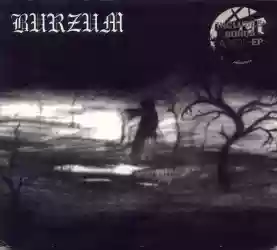
The album Burzum is the impulsive, violent, and lacerated sublimation of Black Metal, with its initial nine songs (tracks that will increase to 11 with the 1995 version "Burzum/Aske") which represent the ferocious violence and anger of Burzum, possibly also named Varg for this reason ("Varg" means Wolf). The album begins with "Feeble Screams From Forests Unknown", aggressive from the start and filled with hate with its obsessive riffs and ever-pushing drums, it represents the despair of a lone spirit that shows its hatred and torment for the reality surrounding it, but which does not belong to it. The second track, "Ea, Lord Of The Deeps", fully shares the spirit of hate that pervades the entire album and shows the Count's side directed towards mythology, particularly the iconographic kind, speaking symbolically of the sea monster "Sassu Wunnu". This passion will then evolve into the deep respect increasingly shown in subsequent albums towards Scandinavian mythology and the great past of his land. The third track, perhaps one of the most famous, "Black Spell of Destruction" instead represents the mystical and demonic side of Count Grishnackh, slow and dark, but at the same time desperate; it is the straining invocation of a change, the violent scream of the desire to destroy the world's rot and erase humanity corrupted by values like Christianity. The fourth track: "Channelling The Power Of Souls Into A New God" represents the part that would develop toward the end of Burzum's career, the passion for Ambient Black (a genre inextricably linked to him). As in a process, the fourth track represents a solution Varg finds to a reality too distant from him, too different. As the title and the only phrase of the song ("Worship Me") clearly say, it is a passage to a new situation, the absorption of values, and the total detachment from the conformist mentality of the masses. The fifth track: "War", indeed as famous as the third, is the practical representation of the change that occurred in the previous track. Desperation for reality converges into pure, fierce hatred, the solution to everything is practical, it is "War", (a concept that a big branch of Black Metal would follow - listen to "Black Metal Ist Krieg" by Nargaroth for understanding). The sixth track is "The Crying Orc", a small ambient pearl of about a minute in which it reconnects to Nordic and Tolkienian mythology with the figure of the Orc, which in the end is none other than Burzum himself represented on the cover as a solitary wandering specter in a desolate and foggy reality. It's incredible how it manages to give the impression of weeping and how it manages to convey the state of mind in less than 60 seconds of song. The seventh track "My Journey To The Stars", perhaps one of the most suggestive of the album, concretely represents the inner change projected onto the diversification of outward reality, the reaching of consciousness and the understanding of the radical change is seen as on a screen in the different perception of the world. Burzum's wild and angry cries are the materialization of the sentiment of hate expressed throughout the album and particularly focused in this track, followed by heavy and obsessive guitar riffs and the angry drums that pound like the adrenaline produced by rage. The eighth track "Dungeons Of Darkness" is another flash of Black Ambient, a crescendo of dark and heavy sounds like a deep and slow vibration of the earth, the pinnacle of the deep and sinister darkness of this album, placed as a connection between the first reaction to the change that occurred in Burzum and the more established awareness of Aske (in fact following a year after Burzum). The ninth track: "Stemmen Fra Taarnet" is indeed the first of Aske, and the sonic and conceptual diversity between the nine tracks of Burzum and the three of Aske is evident. First of all, a return to his own language, from the English of Burzum to the Norwegian of Aske, the more lacerated, less impulsive screaming, the slower but insistent, constantly furious drums, the increasingly distorted guitar almost gives the sensation of a single agonizing scream. But it is the continuation of the change that occurred in Burzum, it is the call of a voice that guides him through difficulties, that guides him towards what is the essence of Black Metal, the philosophical and conceptual core of the genre. The tenth track: "Dominus Sathanas" is a sonic diminuendo of violence, the absorption of the impulsive rage from the beginning of Burzum into a more subtle, less evident, but more deeply rooted rage, a total and profound, desperate, exacerbated hatred. The last track, the eleventh, "A Lost Forgotten Sad Spirit" is the piece of communion between "Burzum" and "Aske", between "Darkness" and "Cinders" and indeed it is a return to lyrics in English with the sonic characteristics seen in Aske. There is no longer impulsive rage, but it is pondered and rooted in existence, it is subtle and venomous, it is a rage produced by pure hatred, by the deepest darkness that the Count could sublimate.
Some say it is one of the Count's best albums, in my opinion, it is simply the first move, necessarily linked to all the other albums as in a journey and as such must be listened to.
It is not merely music, as well as all quality Black Metal, it is a philosophical concept translated into notes, the expression of a condition more than simple or trivial and Burzum is a master in expressing this.
Without a doubt a masterpiece of Black Metal, a product that conveys hatred and anger, just as Uncle Burzum was able to do.
Loading comments slowly
Summary by Bot
Burzum/Aske is a foundational black metal album blending raw aggression, mythology, and philosophical depth. The review highlights the evolution of Varg Vikernes' sound and themes across the tracks, from furious hate to subtle rage. It views the work as more than music—a conceptual expression of existential darkness. Despite the artist's controversial background, the album stands out as a masterpiece in black metal history.Tracklist Lyrics Videos
Burzum
Burzum is the music project founded by Varg Vikernes in 1991. It is widely cited as a pioneering and influential act in early Norwegian black metal; later releases explored ambient and Nordic‑inspired sounds.41 Reviews
