
 •
Rating:
•
Rating:
THE REVIEW
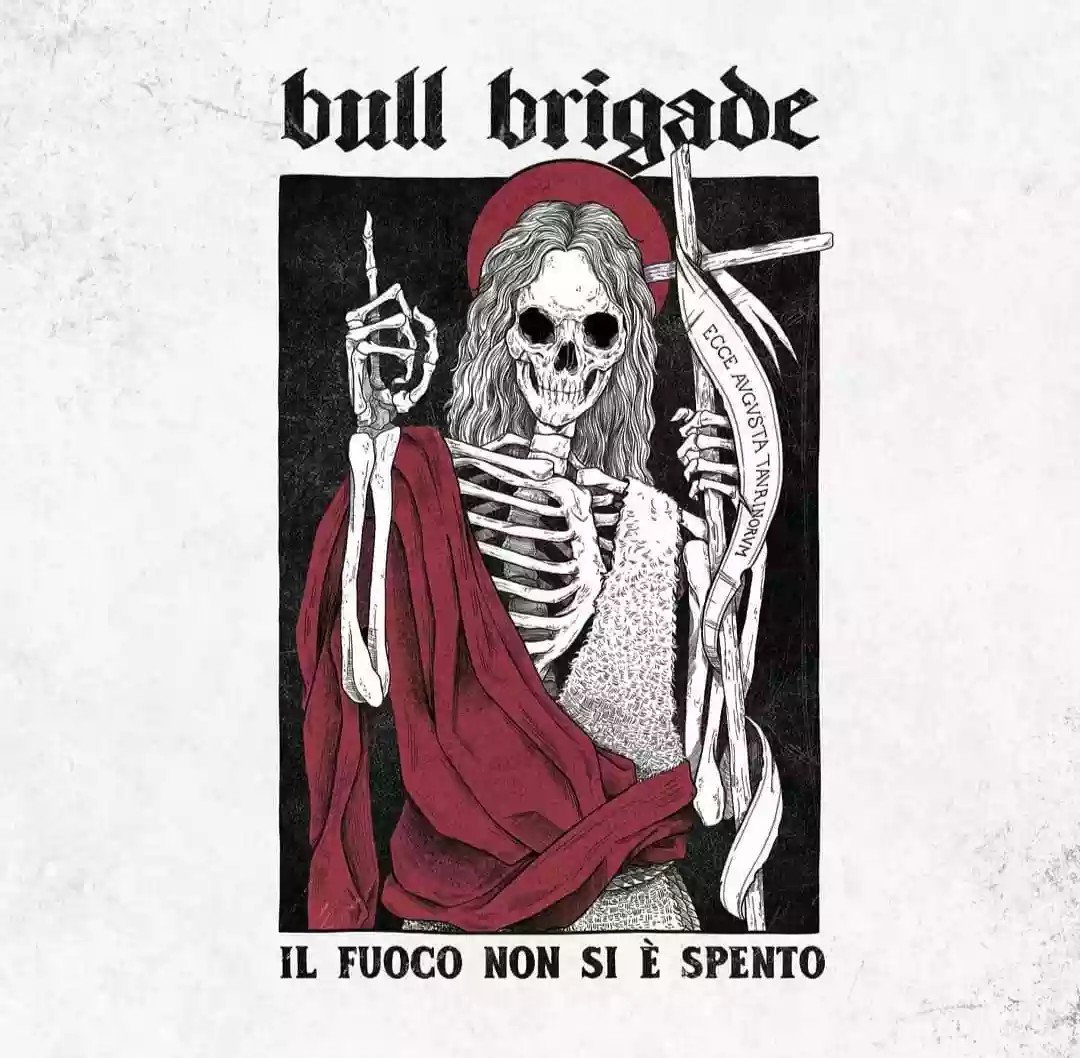
This is the third LP from one of the most iconic Italian punk bands: one of the few groups that, gritting their teeth, withstood the storm that swept away Italian antagonism and the underground scene, a band able to rise again when all seemed lost. One man, Eugenio Borra, who, despite his wounds and the weight on his shoulders, always managed to get back on his feet, to the cry of "Torino Oi!" that always beat in his heart.
So, what do we have with this LP: it is well known among punks that as his career progressed, Eugy made a concerted effort to soften the sound, to bring street punk to a less hard-core dimension and try, at least a little, to open things up to a wider audience. Personally, I think there’s a great idea in that; he didn’t want to bow to the alternative “fricchettone” vibe of those who wear Sex Pistols hoodies but don’t even know the punk bands from their own city: he tried to carry on his own sound and with it, his history. What I struggle to ignore, however, is that behind this there may be a not entirely transparent distancing from the punk scene, a certain softening of the sound in the worst sense of the word, a choice to face the masses even at the cost of sacrificing brutality, a foray into other genres that is not always very successful and, finally, I’m sorry, but even a bit of aging that brings with it the desire for a little extra cash. In fact, this record will definitely appeal to those kids who listen to Offspring and Blink, but also to the fans of Punkreas and some indie fringes.
Does this mean it’s a bad record? No, it’s not that it’s a bad album. But it’s no longer that furious, in-your-face Oi! of the early days. Is this a fault in itself? No—maybe the real fault would have been never to change, actually. Still, I’m sorry, but as I hinted just a moment ago, this really isn't the best change they could have made; in fact, putting all commentary and stylistic choices aside, it’s a step down from their debut. The songs lack bite, mostly mid-tempo with drum/voice verses like you might hear on Radio Italia (okay, maybe not Radio Italia…), riffs with a rock-ish inspiration, choruses that no longer sound like head-on five-person shouts but rather like groups of kids singing on the beach to Latin-American music, lyrics that sound mellow even when the words are still hard. Is the record only this? Obviously not, it has plenty of nice moments, but it’s not enough. What you feel is the lowered and mature gaze—mature, but also aged—of a forty-year-old, not the angry, tearful eyes of a twenty-year-old. Don’t expect this record to give voice to your wild, desperate screams in the rain, in your city sacred to every step you’ve taken, the one that’s swallowed up your thousand disappointments, as you walk and reflect on your struggles and frustrations: this album doesn’t do that. At least, not for those who loved “Strade Smarrite” with visceral passion and madness (and especially for what it was); those people will have tied their memories to that brutal sound. For everyone else, well… we’re talking either about Bull Brigade fanboys, about folks who simply don’t have that anger, or—let’s face it—people who aren’t all that street punk.
“Ultima città” is a good start but not a miracle. “Cuori stanchi” seems to power up the sound and flows well, but the bridge with the chorus and handclaps—pass, thanks. “Quaranta” has lyrics that express exactly what I was saying about age: Eugenio faces his demons with great honesty and courage. The result, though, leaves something to be desired (just check the chorus at the end and compare it to a summer hit). The title track, on the other hand, is a knockout, a song that should head straight for a greatest hits collection. The refrain, dark, singable, and aimed directly at its target, makes an impression the way it should. The following track “Ansia” is also good. Truly mediocre, instead, is “Strenght for life”, and even the otherwise nice “Sommersi” lacks anything amazing, though it has a few clever rhymes. “Partirò per te” also does not excite, recounts the ultras’ glory days but can’t stand up next to the iconic “Sulla collina,” before closing with the likable but certainly not great “Anche se.” The lyrics are still well-crafted but have lost their former visceral savagery.
The album, then, certainly contains several moments that will allow you to let loose your emotions—but also plenty that, well… Some parts sound like hardcore tracks produced by a trap producer, others like trap songs reimagined in Oi! style. There is a less hard-core side of Oi! and this is fair, but the evolution this band’s sound has taken goes in another direction. In my view, there are albums that can make you feel a certain atmosphere even if you’ve never known it, never wanted it, you weren’t even there—and then there are albums that only deliver if you already know that world, already live it, and so on. “Strade smarrite” belonged to the former group; “Il fuoco non si è spento,” the latter. This is, basically, where the difference lies; only certain people will be able to turn a blind eye to some questionable choices.
But in the end, it’s good to see that the fire still hasn’t gone out: let’s be careful though—it needs to stay high, not just keep burning.
“Vernice sul cemento, nebbia poi vento, il fuoco non si è spento: nostro tormento.” Rating: 72/100.
Loading comments slowly
Summary by Bot
This review evaluates Bull Brigade’s album ‘Il Fuoco Non Si È Spento’, offering a balanced analysis of its style and impact. The reviewer provides insights into the music’s strengths and possible shortcomings. Given a middle-ground rating, the review appears thoughtful and measured. Overall, it's a useful read for those interested in Italian punk rock. The tone is objective and informative.
Bull Brigade
Bull Brigade are an Italian Oi!/street punk band from Turin, led by Eugenio Borra. Emerging from the Youngang/Banda del Rione lineage, they’re known for the city-centric classic Strade smarrite (2008), followed by Vita Libertà (2016), the melodic-leaning Il Fuoco Non Si È Spento (2021), the English-language Stronger Than Time (2020), and Perché non si sa mai (2026). Their lyrics revolve around Turin, friendship, love, and working-class pride, while their sound evolved from Oi! toward more melodic punk/hardcore.08 Reviews
Other reviews
By Kiodo
The Bull Brigade have raised the bar for themselves and for the entire underground movement.
This record takes on the honor and burden of marking a before and after.
