
 •
Rating:
•
Rating:
THE REVIEW
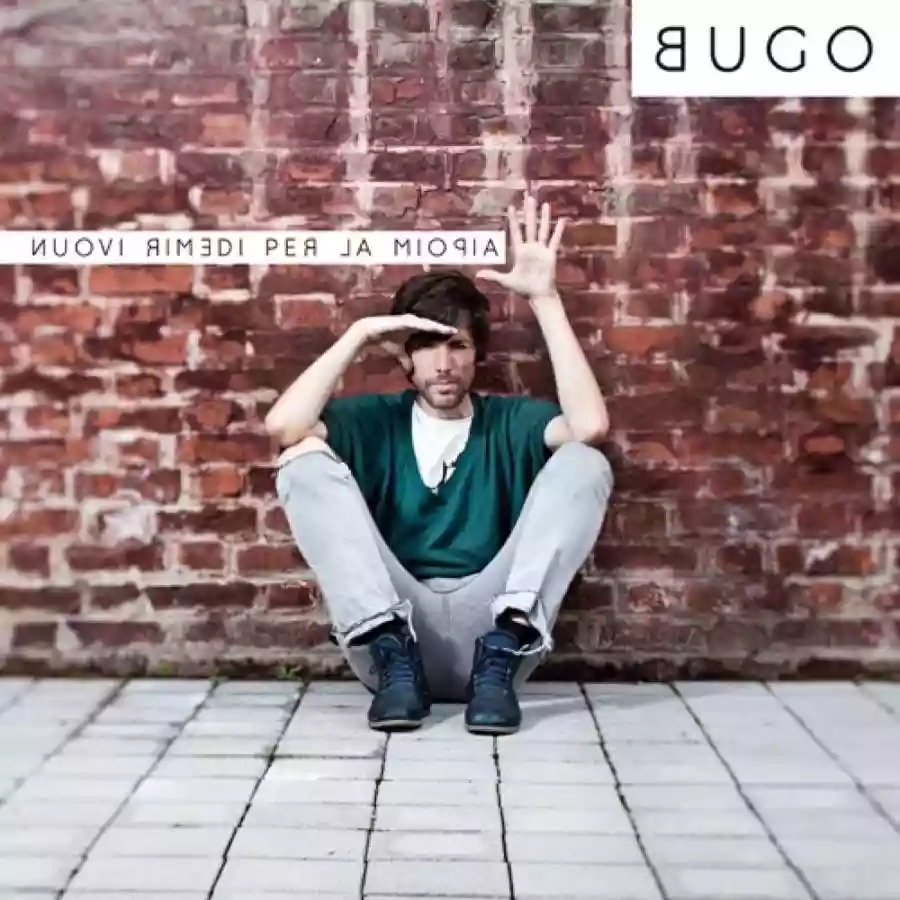
A.D. 2011: Bugo releases "Nuovi rimedi per la miopia", produced by Saverio Lanza, but no one expects it. Partly because of the lack of promotions and announcements before the release, partly because the album itself is a different album from others by Bugo: he has made a "Christian Democratic album," "he has sold out to the majors," he is a visual artist, and as if that wasn't enough, he suddenly moves to India (!) and even gets married.
The album opens with "Nonhotempo", an up-tempo track that well expresses the author's situation, always on the run; the escape from the previous environment is also discussed in "E ora respiro", perhaps one of the cornerstone tracks of the album. "I miei occhi vedono" is the track that inspired the album's title, perhaps Bugo's first true romantic ballad (a track dedicated to his wife) and with a sound between Lennon's "Oh My Love" and Beck's "Cold Brains." "Mattino" is an euphoric song, almost annoying for the average Milanese all routine and hassles. "Il sangue mi fa vento" dates back to 2004-05, but remained unreleased and is published years later in this version that floats in the air and has one of the most beautiful arrangements of the album. After the carefreeness, "La salita" opens the darker section of the album: "a cross to bear," "the wind blows against," Bugo against the many who do not understand him and the struggle of daily life. "In pieno stile 2000" talks about the man of 2011, his neuroses, his boredom that leads him to be full of things, full of himself but empty inside. "Comunque io voglio te" is the other love song of the album: not at all spiritual, very concrete, it talks about the struggle of couple life and the fact that love, before being a feeling and a pleasure, is a vital bond, a need, and a struggle. "Lamentazione nr. 322" is a prayer to God on an electronic base, testifying to the fact that Bugo is not (anymore?) an existentialist. To close the album, "Città cadavere": if the previous track was a prayer, now Bugo declares that here, in today's world, "God is not here, or it's his revenge." In other words: where are we heading?
The album can be summarized in 4 concepts: change, struggle, blindness, liberation.
Some define it as a flat and soulless pop album, but for me, it is one of the most genuine and profound albums Bugo has made.
Loading comments slowly
Summary by Bot
Bugo's 2011 album 'Nuovi rimedi per la miopia' marks a distinct evolution in his music. Produced by Saverio Lanza, it reflects themes of change, struggle, blindness, and liberation. The album features heartfelt love songs alongside socially reflective tracks, balancing personal and existential topics. Though some critics see it as flat pop, the review highlights its depth and genuineness.Tracklist Videos
Bugo
Bugo (Cristiano Bugatti) is an Italian singer-songwriter from the Novara area, often associated with lo-fi experimentation, irony, and sharply observed everyday storytelling. Reviews describe frequent stylistic shifts (from lo-fi rock and acoustic songwriting to synth/electro-pop), and live shows marked by improvisation and multi-instrument performances.23 Reviews
