
 •
Rating:
•
Rating:
THE REVIEW
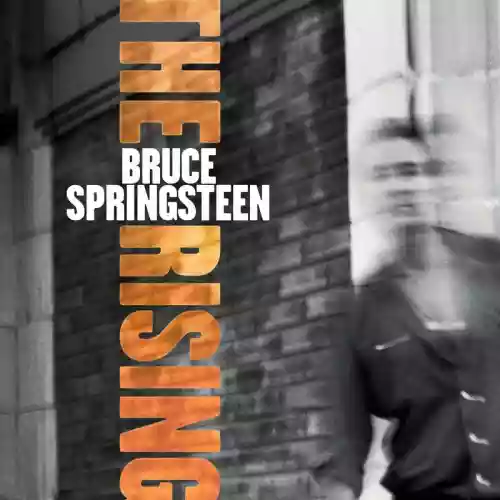
Bruce Springsteen and September 11. Springsteen enters the recording studio and responds to the attack with an album about the wounded pride of the United States. The Boss, the voice of America that lifts its head. Healing the nation, as the title of an article on “The Rising” suggests. Mmmmhh... I wondered: is it really true that this is a themed album about September 11? Could Springsteen be so cunning and populist? Of course, it's possible, "Haters" would say. Springsteen raw, populist, a rockstar for musical illiterates, blah blah blah. Ok, let's directly analyze the song lyrics. Hear, hear: of 15 songs, only 1 can be considered on-theme: Into the Fire, an explicit homage to the firefighters who intervened at the Twin Towers. Then only vague hints: Empty Sky, where it reads Blood on the streets / Blood flowin' down, and Worlds Apart which, even without specific references, obviously alludes to the two worlds, Western and Arab. All other tracks contain no univocal references to September 11. Springsteen talks about desolation and hope, his favorite themes, without precise historical references. As he's always done.Take Paradise for example. Almost everyone says it talks about a terrorist; however, upon closely reading the text, the identification isn't so clear. The first verse: Where the river runs black / I take the schoolbooks from your pack / Plastics, wire and your kiss / The breath of eternity on your lips, “Where the river runs black / I take the schoolbooks from your pack / Plastics, wire, and your kiss / The breath of eternity on your lips.” Plastics and wire here, do they have to do with bombs? Maybe, but who can say for certain? For me, placing them alongside schoolbooks and a kiss doesn't immediately make me think of a bomb-wielding terrorist. The second verse continues in an ambiguous tone: in the crowded market, the narrator looks from face to face, holds his breath, closes his eyes, and waits for paradise. It could be a kamikaze terrorist at the moment before the explosion, or perhaps it's just a snapshot of someone anxiously waiting for the arrival of their beloved. The following verses present dreamlike images, in my opinion, even less imaginable in a terrorist context. The meaning of the final image is clear: I break above the waves / I feel the sun upon my face, “I resurface from the waves / I feel the sun upon my face”. But let's give another example. Take You're Missing. Where is it stated that it tells of the absence of a 9/11 victim? There are no direct or indirect references to the dead of the Twin Towers in the text. It is simply a song about the loss of a family member, probably the narrator's wife (see the verses Too much room in my bed and Will you be in our arms tonight). So, does Paradise have nothing to do with terrorists and You're Missing, nothing with the victims of September 11? In “The Rising”, September 11 is the starting point, not the arrival. At the arrival, we find songs with broader breath, going beyond the specific historical event.
Springsteen is less crude than he seems, and here pardon a brief parenthesis. The problem is that many can't see beyond first impressions: since once they saw him succeed on TV with a sleeveless t-shirt and raised fist shouting a hit titled Born in the USA, from that moment he is neatly packaged and labeled: the crude guy from New Jersey, the man who if you put a shovel instead of a guitar in his hand, wouldn't notice (by the way you guitar enthusiasts, make a small effort and check out Prove It All Night live 1978 or the acoustic guitar solo on Open All Night live in Dublin).
But back to the point. “The Rising” is a great album. In my opinion, it ranks second behind the trio of Springsteen masterpieces (“Born to Run”, “Nebraska”, “Darkness on the Edge of Town”), alongside “The River”. Some might wrinkle their noses at the comparison with the double album; well, then let's compare the pieces. On Further On (Up the Road), The Rising, and Worlds Apart, the bellows of the E Street Band blows like the old rock’n roll times (You Can Look, Cadillac Ranch, and Ramrod). Waitin' on a Sunny Day repeats the magic of Hungry Heart, and it's no blasphemy: just see the reception it gets at concerts. Mary’s Place or Lonesome Day stand up well in comparison with Two Hearts or Out in the Street. The sense of anguish in Paradise recalls that of Point Blank. And then You're Missing. Touching as Independence Day. Of course, there's no classic like The River; and maybe this is the only reason why in the tower game (which one would you throw off?) the 1980 album would win.
In any case, in “The Rising”, there are all substantial tracks, except for Let's be Friends (Skin to Skin), decidedly too light although catchy, and perhaps the vaguely rhetorical Countin' on a Miracle. But I ask: weren't there also I Wanna Marry You and I'm a Rocker in “The River”? In short, there are beautiful songs, there's the E Street Band and producer Brendan O’Brien does a good job (unlike, in my opinion, in “Magic”). The result is one of the best Springsteen albums ever.
Loading comments slowly
Summary by Bot
The review explores how Bruce Springsteen's The Rising, often seen as a 9/11 themed album, more broadly addresses themes of hope and desolation. Only a few songs explicitly reference the attack, while others tackle universal emotions. The album ranks highly among Springsteen's works and features strong contributions from the E Street Band and producer Brendan O’Brien. Despite some lighter tracks, it remains one of his best efforts.Tracklist Lyrics Videos
Bruce Springsteen
Bruce Springsteen (born 1949 in Freehold, New Jersey) is an American singer-songwriter and bandleader best known for his work with the E Street Band. His career spans from the 1960s/1970s to the present, with landmark albums such as Born to Run, Darkness on the Edge of Town, Nebraska and Born in the U.S.A.90 Reviews
Other reviews
By marcogaudenzi
This album makes you sing, cry, dance, get angry. Yet it makes you reflect since Springsteen draws inspiration from current events, politics, civil society and channels it all into music and words.
Here is a case where art provides answers to society and in doing so influences it.
