 •
Rating:
•
Rating:
THE REVIEW
Drunk and intoxicated by success, Bruce Springsteen decides to take a moment to reflect, to think, perhaps to temper his joys and disappointments.
"Born to Run" was already legend, and rock seemed destined to change, to undergo structural modifications both from a musical and conceptual point of view. These are years of enormous changes: the crisis of the Rolling Stones, the success of Queen and U2, the assertive dance of Michael Jackson and the romantic and youthful language of Duran Duran. Useless, Bruce must have thought, to remake a second "Born to Run."
And so, harmonica and guitar, he decides to retreat for a while, to think and reflect on his own mistakes, on the future of men and Nations, on war, peace, tranquility, and defeatism made in the USA. He waves goodbye to the E-Street Band (but it won't be a farewell, more simply a see you later), and he tries, but always without getting a big head, to retrace the steps of old idols and great legends: Bob Dylan and Woody Guthrie.
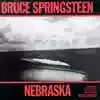
From this almost metaphysical introspection, an album destined for great praise and few (often irritating) criticisms is born: "Nebraska." The Boss sets rock aside, but doesn't abandon poetry. This time, however, the words are harsher and edgier: there is no vibrant and hammering backdrop of electric guitars and drums, there's just a guitar and a harmonica. But every song possesses its own indelible authenticity: simple stories, often tragic, but true stories of an America that is not only New York and The Big Dream.
Everything recorded alone, at home, with a modest four-track almost pioneering. There's someone who has to go to the electric chair and reflects on their own life ("Nebraska"), all told in the first person, in a sort of participatory pathos; there's hope ("Atlantic City") for a perhaps better future, an image very Chaplinesque in its simplicity and rigor; there's the despair of unemployment ("Johnny 99") and the tragedy you can never dodge; there's friendship and brotherhood ("Highway Patrolman") between a policeman and the delinquent brother; there's someone hoping to win the lottery and fix a few things ("Used Cars") and someone who realizes, too late, that they never loved the person they most had to protect, the father ("My Father's House"); and there's the most disturbing song ("Reason to Believe"), because, Springsteen asks, despite the world's wickedness, why do so many people today continue to believe?
Perhaps faith is just a way to veer away from reality and hope for something impossible, or it's just an old tradition to cultivate in silence and without dissent. But that's not all: even "Open All Night" and "Mansion on the Hill" would deserve praise.
It is definitely the most atypical album by Bruce Springsteen: no sweet words, few certainties, almost never does a glimmer of security emerge. There's hope, but it is often tinged with black. It is, after all, a veiled, yet sharp, critique of the American political and economic system: unemployment and the misery of lives burnt between pain and the ability to hope for a better future, are the faithful mirror of a State that, in addition to proclaiming itself strong and bold, should also start caring more about its (perhaps) proud stars and stripes children.
Plagiarism of the earliest Bob Dylan? No, absolutely not. I would say more of a homage, a certain way of presenting oneself while singing. Maybe a bit boring in the long run (after all, the music is quite monotonous), but so cold and so lucid that it appears, at some points, even mythological.
But reality often wonderfully surpasses imagination.
Loading comments slowly
Summary by Bot
Nebraska captures Bruce Springsteen's deliberate retreat from rock stardom to reflect on American life and struggles. With minimal instrumentation, he crafts stark, poignant stories rooted in reality and social critique. The album pays homage to folk legends like Bob Dylan while revealing a darker, introspective side of Springsteen's songwriting. Though its monotony may challenge some listeners, its lyrical depth and authenticity resonate deeply.Tracklist Lyrics
Bruce Springsteen
Bruce Springsteen (born 1949 in Freehold, New Jersey) is an American singer-songwriter and bandleader best known for his work with the E Street Band. His career spans from the 1960s/1970s to the present, with landmark albums such as Born to Run, Darkness on the Edge of Town, Nebraska and Born in the U.S.A.90 Reviews
