
 •
Rating:
•
Rating:
THE REVIEW
Everything and the opposite of everything. Anticipation violated by the internet. Enthusiasms suppressed and then exploded. Suspected, awaited, and feared disappointments, then exploded even more strongly.
People waiting for him at the Milan Forum as if expecting the messiah, and people who believe he's over and not what he used to be.
For some, the intimate albums are much more beautiful, for others "there's no one like the E Street."
Undoubtedly, the only thing that cannot be denied is that Bruce Springsteen, the Boss, cannot help but be talked about. But again, certainly there is someone willing to spew sophisms to prove that he is a modest character, fluff inflated by the very bad market (the bogeyman that serves to dumb down the young and reassure the hysterics with his objective ultra-presence), and that he doesn't have the fresh appeal of the Franz Ferdinand (just to name a name in the very youthful and meteoric current landscape...).
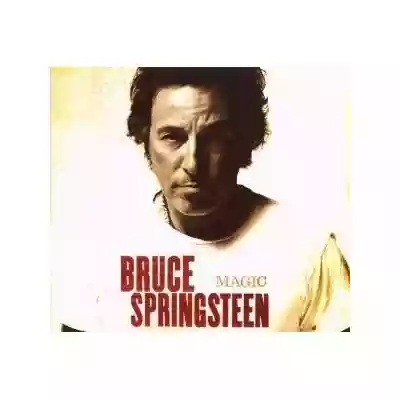
The fact remains that this story that began in the early seventies has today written another chapter, a chapter difficult to read, easy to label, in short, challenging to definitively evaluate. Yes, because the album is apparently similar to many others, with the "stadium" track, the committed and the carefree ballad, the interesting string arrangement and the thrilling guitar part, the scratched tenor riff, the protagonist's scream and whisper.
In short: the Boss is back, and moreover with the E Street, in one of those periodic comebacks that excite, annoy, bore, outrage, making people shout about both miracles and scandals.
The album, because after all it has to be talked about, is rock, provided that rock still means distorted guitars, Hammond organs, decisive drums, and ancient and solid walls of sound.
It is therefore a record "from the old days", always assuming that one convinces oneself that rock is dead (and I am quite convinced of this... or fear that, at least, it's not doing well...).
Non-trivial lyrics, catchy and singable music, diversity, and great professionalism.
Trivial things...? Perhaps. But I am convinced that, just as in jazz, it's difficult to say something with a tenor sax after Trane, in rock and songwriting it's incredibly difficult to say something new, or at least good, after the Stones, Dylan, and the few other greats who didn't just write great pages, but turned the pages, accomplishing that event today completely unknown and unprecedented which is the "step forward."
And the Boss, who has turned a few pages, says nothing new here, but what he does say, he says very well. This is the effort of honesty that should be allowed, without shame and not succumbing to pseudo-musical progressivism which often hides nothing other than the inability to accept the passage of time and the obstinacy to consider one's own era worthy of memories it can neither have nor sow.
Impossible to deny value to these tracks written by someone over fifty and played (always very well) by another handful of oldies or almost (Clemmons is heading for seventy and rumors have it this will be his last tour, Federici seems not in the best of health, etc...).
Impossible to deny that, here as elsewhere, old masters shine more, saying very well the nothing new that they say, rather than the too many young shooting stars sold to us as geniuses (understood or not understood, it doesn’t matter...), clean-shaven and warbling, academic and useless. Absolutely indistinguishable for the simple reason that distinguishing them is an activity as unnecessary as it is destined to be outdated from one week to the next.
Here there is an old house, an old couch, familiar and very comfortable. But, as often happens, if you throw it away, you immediately regret the seemingly perfect replacement from Ikea.
In America, they wrote that "rock is dead but they forgot to tell Bruce Springsteen."
A nice phrase, also interpretable in two ways, like everything concerning the Boss: rock is dead and he pathetically hasn't noticed, or it's dead, and he, rightly, doesn't give a damn?
Loading comments slowly
Summary by Bot
Bruce Springsteen’s Magic marks another important chapter in his long career, featuring solid rock music with familiar stadium anthems, compelling lyrics, and skilled instrumentation. The album recalls classic rock elements while embracing the passage of time, offering honest songwriting rather than chasing trends. Though not revolutionary, it highlights the strength of seasoned musicianship and the enduring presence of the E Street Band. The review respects Springsteen’s legacy amid evolving music landscapes and contrasts him with fleeting modern stars.Tracklist Lyrics Videos
Bruce Springsteen
Bruce Springsteen (born 1949 in Freehold, New Jersey) is an American singer-songwriter and bandleader best known for his work with the E Street Band. His career spans from the 1960s/1970s to the present, with landmark albums such as Born to Run, Darkness on the Edge of Town, Nebraska and Born in the U.S.A.90 Reviews
Other reviews
By jackpizzello
Expectations are thus rewarded by this 'Magic', which brings back to our ears the fantastic sax solos of Clarence Clemons.
An album that maintains a certain mediocrity from start to finish, pleasant, but not extraordinary, without peaks high or severe drops in style.
By Sacerdozio
Magic is therefore part of the lineage that connects Born in the U.S.A. to the underrated Tunnel of Love and Human Touch.
No one doubts that the album will be a success. For me, however, an 'owed' and transitional album.
By KillerJoe
"Magic is an album I listened to every single day of my life for two consecutive years."
"Girls In Their Summer Clothes is Bruce Springsteen’s pop masterpiece... everything here flows perfectly."
